Whether it is a quick bite of dosa, steaming idlis or spicy chaats, street food plays an integral part in Bengaluru’s urban life and culture with vendors offering diverse meals from their pushcarts and temporary stalls.
Street food vending also supports livelihoods and vendors play an important role in providing affordable meals to the city’s working population. However, these stalls may pose challenges related to urban infrastructure, hygiene, waste disposal and environmental management.
Regulations that govern urban street vending
Recognising the significance of street vendors, the National Policy for Urban Street Vendors advocates for a supportive framework while maintaining urban hygiene and minimising congestion. It underscores the need for infrastructure to support vendors and maintain public health standards. Critical areas of concern include:
- Access to potable water for food preparation
- Proper disposal of wet and dry waste
- Safe and hygienic cleaning practices
- Effective drainage systems for wastewater management
Key issues faced by street food vendors
Despite their importance, street food vendors struggle with inadequate infrastructure and regulatory inconsistencies. The following case studies highlight these challenges:
Read more: Bengaluru’s street vendors struggle with extreme heat, heavy rain, and limited options
Case study 1: Nagaratna’s stall near Krishna Rao Park:
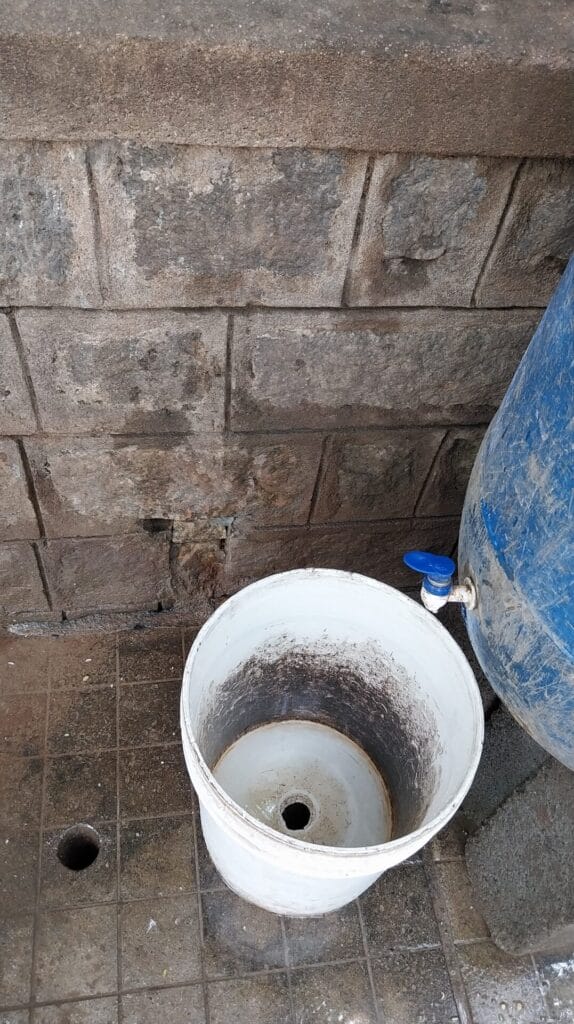
Operating for over 15 years, Nagaratna’s stall serves breakfast and lunch to nearly 150 customers daily. She ensures that solid waste is taken back and disposed of properly. However, the absence of dedicated washing and drainage facilities results in wastewater being discharged directly onto sidewalks, affecting cleanliness and hygiene.
Case study 2: Shanmukha’s stall in Jayanagar
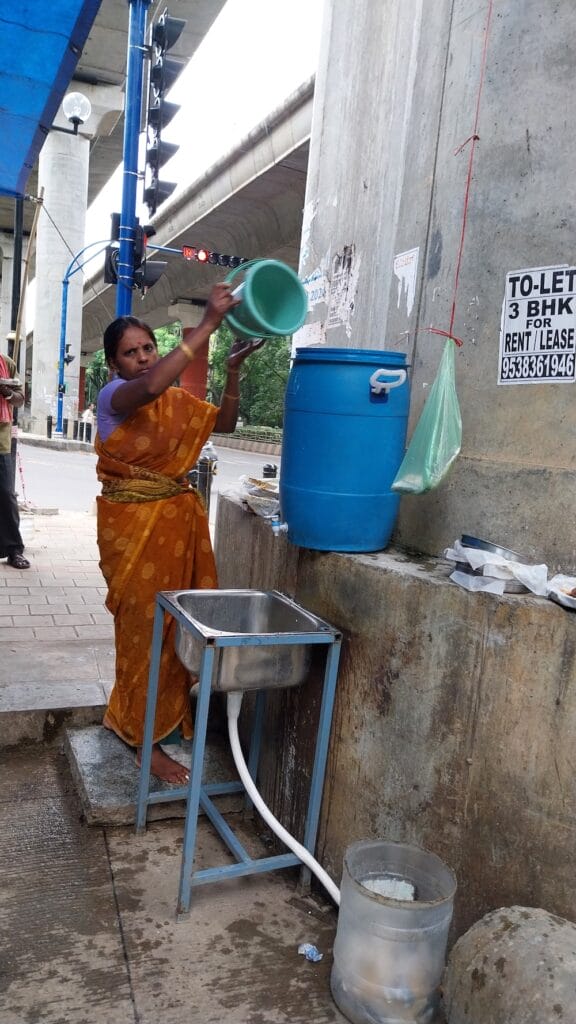
Famous for its non-vegetarian meals, this stall serves 300–400 customers daily. Cooking is done offsite, but water storage, dishwashing, and wastewater disposal occur on the sidewalk. Without designated infrastructure, water storage and waste disposal become unhygienic and obstruct pedestrian movement.
Case study 3: VV Puram Food Street
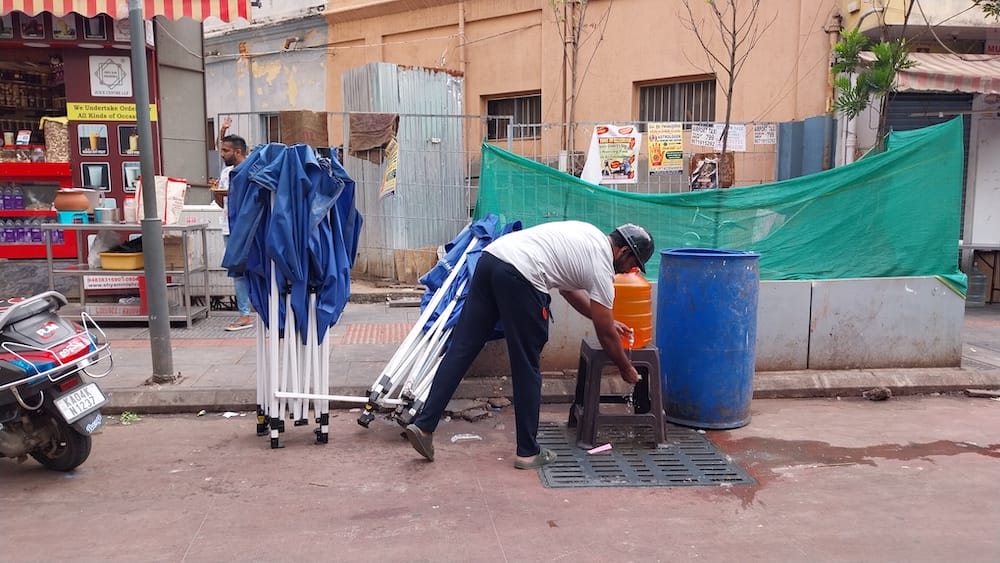
VV Puram is a well-known street food destination, active from late afternoon until midnight. While the BBMP has renovated the street with improved paving, lighting, and planters, essential infrastructure such as designated waste receptacles, handwashing stations, and drinking water facilities remain unaddressed. Vendors place makeshift water dispensers, leading to hygiene concerns and pedestrian congestion.
Read more: Bengaluru’s street vendors are the first to be impacted by climate change: Lekha Adavi
Policy and infrastructure gaps
Street food stalls impact the urban environment in multiple ways:
- Solid waste management: Vendors generate significant food and packaging waste, yet there is no structured waste collection system.
- Water access: Vendors rely on tanker water stored in plastic containers, raising concerns about hygiene and food safety.
- Wastewater disposal: The lack of proper drainage systems leads to wastewater being dumped on streets and sidewalks.
- Regulation and monitoring: The BBMP has made efforts to regulate food vending zones, but systematic identification of hawking zones and provision of basic infrastructure remains insufficient.
- Energy and cooking needs: Many vendors rely on LPG cylinders for cooking, which need safe storage and regulatory oversight.
Commercial kitchens/street food vendors produce a lot of waste, both solid and liquid. The solid waste is collected by BBMP, but the liquid is disposed of into the sewer lines (BWSSB UGD) or worse, stormwater drains (SWD).
A large part of the liquid waste from these commercial kitchens comprises fat, oil and grease (known as FOG) or Fatbergs. These fats, oil, grease or food debris from food preparation and cleaning up of food equipment, utensils and crockery end up in the UGD or SWDs.
Read more: Cooking up solutions: Addressing Bengaluru’s urban commercial kitchen effluents
Recommendations for sustainable street food management
To integrate street food vending into Bengaluru’s urban framework while ensuring hygiene and sustainability, the following steps are recommended:
- Designated vending zones: Align with the National Policy for Urban Street Vendors to officially recognise and regulate vending areas.
- Infrastructure development:
- Install public handwashing stations and access points for potable water.
- Provide drainage connections for wastewater disposal.
- Set up waste bins with frequent collection services.
- Vendor registration and formalisation:
- Register vendors and issue permits.
- Train vendors in hygiene, waste management, and food safety.
- Monitoring and enforcement:
- Implement periodic inspections by local health authorities.
- Encourage self-regulation among vendor associations.
- Community engagement and awareness:
- Promote customer responsibility in maintaining cleanliness.
- Encourage collaboration between vendors and urban planners to design sustainable solutions.
Street food vending in Bengaluru is both a cultural phenomenon and an economic necessity. However, its sustainability depends on balancing vendor needs with urban hygiene and public health. By implementing structured policies, investing in essential infrastructure, and fostering collaboration between stakeholders, Bengaluru can ensure that its street food culture thrives in a safe and organised manner.