The CEO Karnataka recently published the final rolls for Karnataka after finishing their hurried and stressful Special Intensive Revision (SIR). People were asked to prove that they live where they do, and map themselves or their parents/ancestors to the 2002 voter roll.
The final roll published now has 4.54 Crore electors in Karnataka as against the 5.54 Cr as per the 2025 Special Summary Review; a reduction of almost one crore electors or 18% of the earlier rolls.
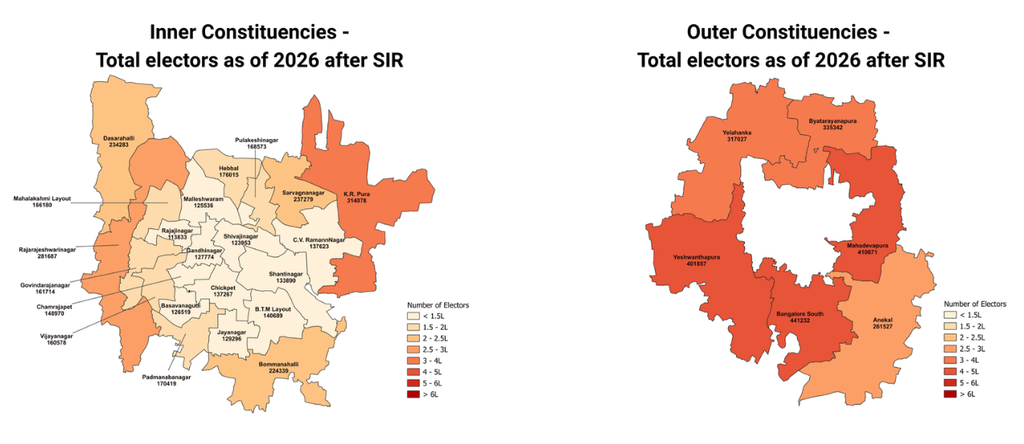
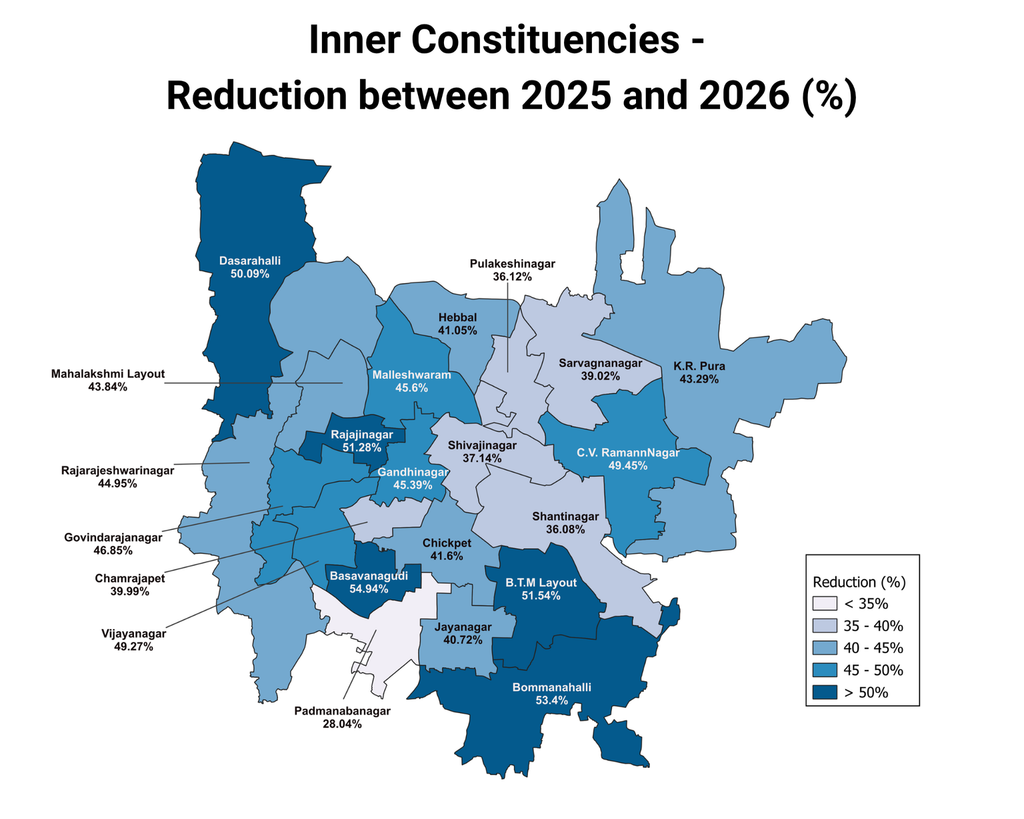
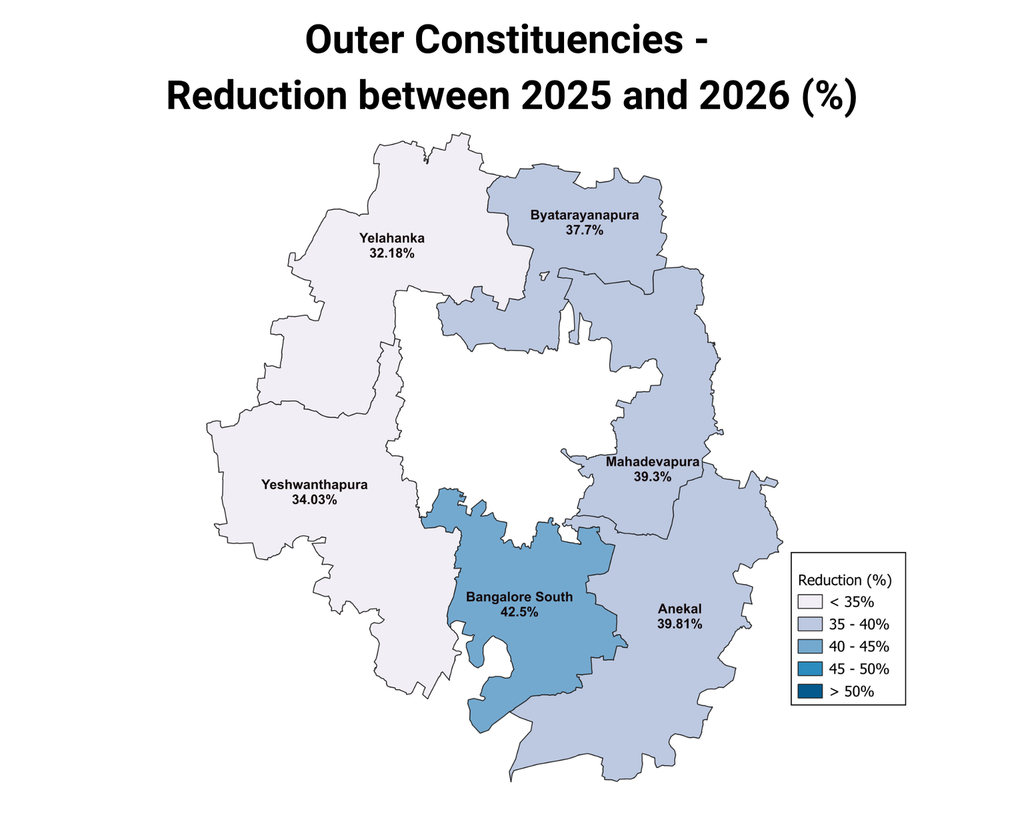
However, the numbers in the 28 constituencies in Bengaluru Urban paint a more drastic picture. The 1.026 crore electors as per the 2025 review have been trimmed to just 0.59 Cr, a reduction of 42.44%.
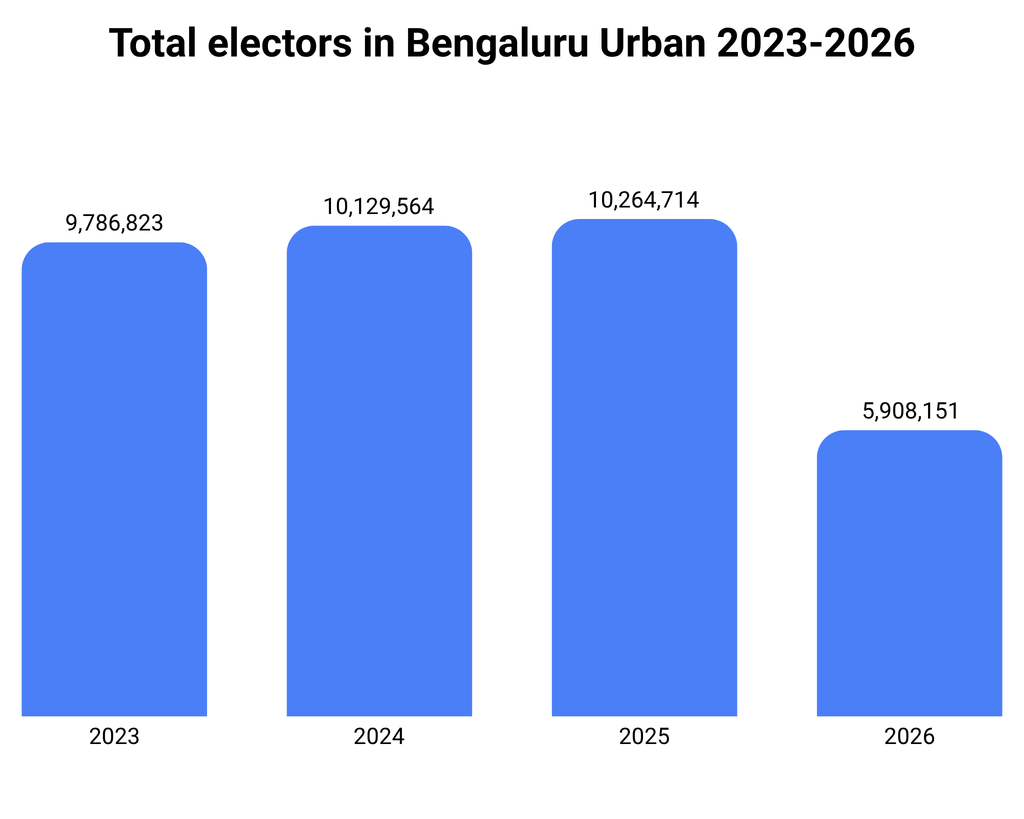
2025 to 2026
After every election, State or Lok Sabha, the poor voter turnouts in the city have prompted cries of voter apathy, which are followed by experts talking of people moving within the city, voter rolls needing updating, etc. But how much of an update is an update and at what point does it become disenfranchisement?
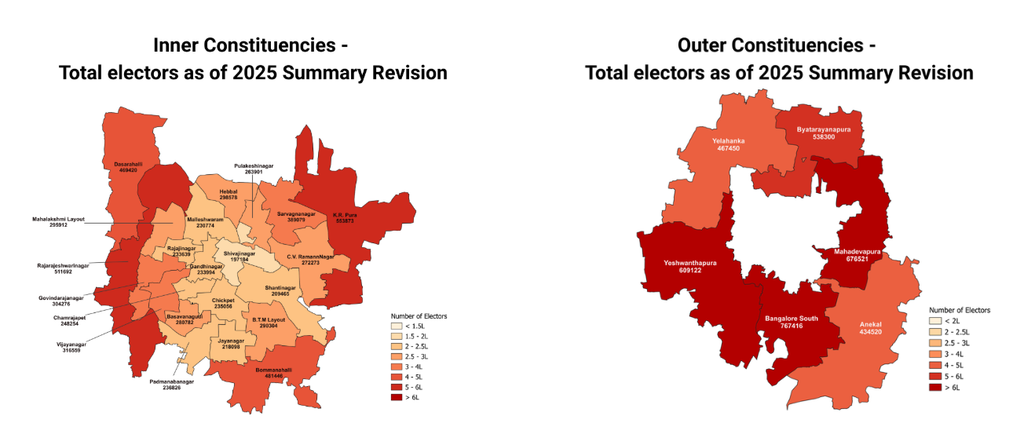
In 2025, with more than a crore voters, some of the city’s outskirts had constituencies multiple times the size of the internal constituencies. The five constituencies — Bangalore South (assembly constituency), Mahadevapura, Yeshwantapura, RR Nagar and KR Pura together accounted for 30% of the electors in Bengaluru Urban. At the other end, the 13 smallest constituencies from Shivajinagar to BTM Layout accounted for the other 30%.
Voters 2024 vs electors 2026
One key parameter to compare these numbers against is the number of votes cast in the 2024 Lok Sabha elections. While there were complaints of low turnout in the constituencies, do these SIR numbers still leave any margin for turnout percentages?
For this comparison we would like to note the difference between the terms voter and elector. A voter is someone who went and cast a vote, while an elector is an entry in the voter rolls. If, out of one lakh people in the voter rolls, 60,000 voted in an election, the electors here is the one lakh people, and voters are the 60,000. For any election, voters are always a subset of the electors.
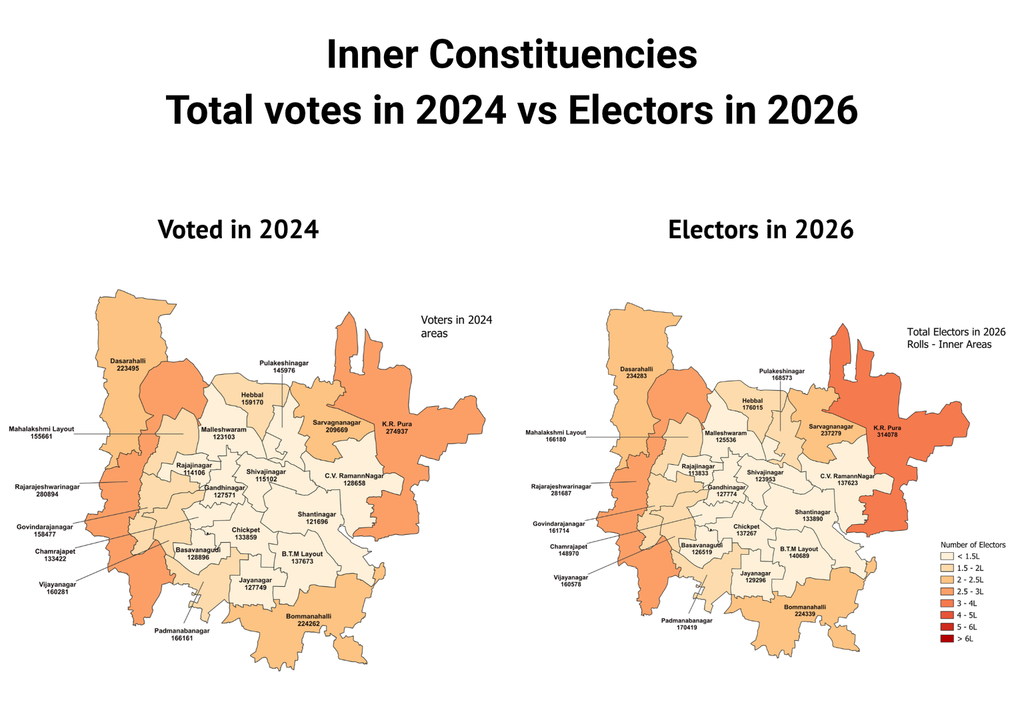
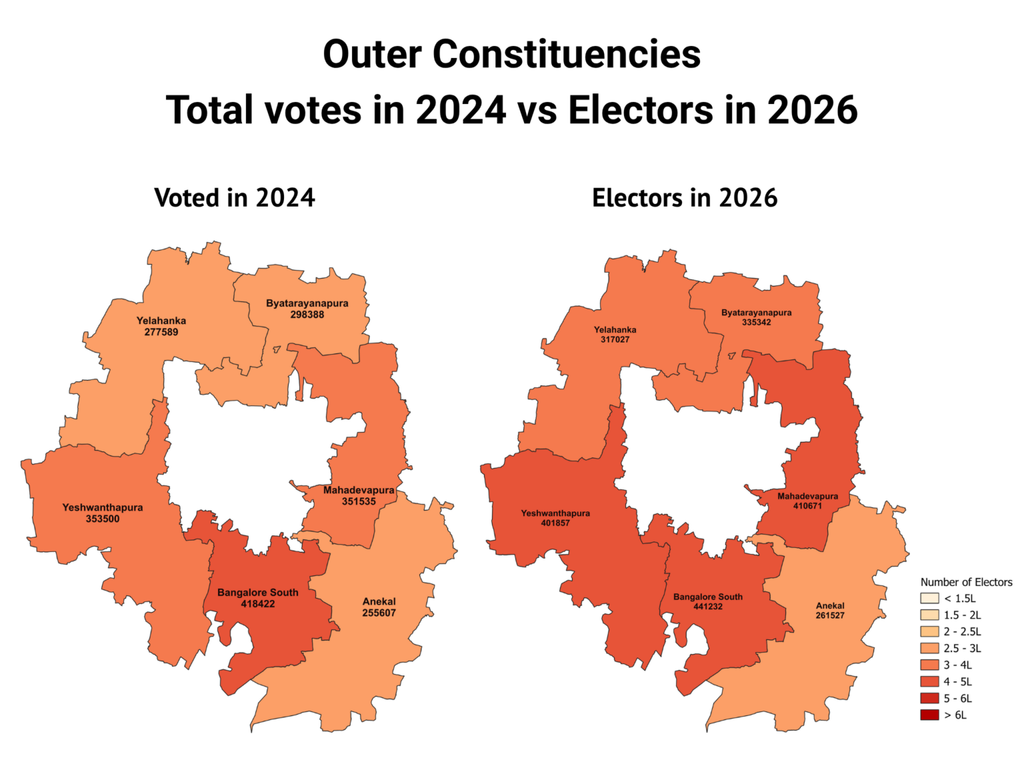
Interestingly, as the maps above show, the numbers look too close to be comfortable. Surely, it can’t be that we had a 100% turnout and every vote that was not cast was an issue in the voter roll?
We can extend this logic to ask an important question: for every 100 voters who cast their vote in 2024, how many electors are there in 2026. The biggest issue would be when there are fewer or almost the same number of electors in 2026 as voters in 2024. But that is precisely the case in some constituencies.
Read more: Karnataka SIR 2026: Top FAQs and community concerns addressed
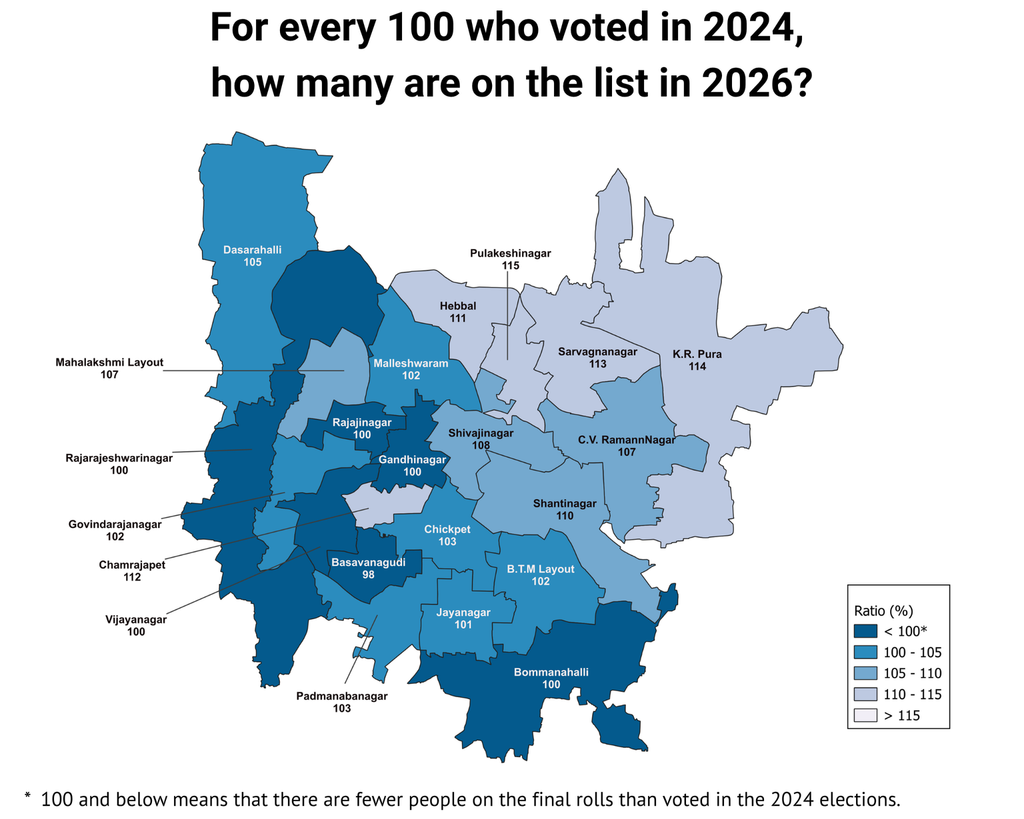
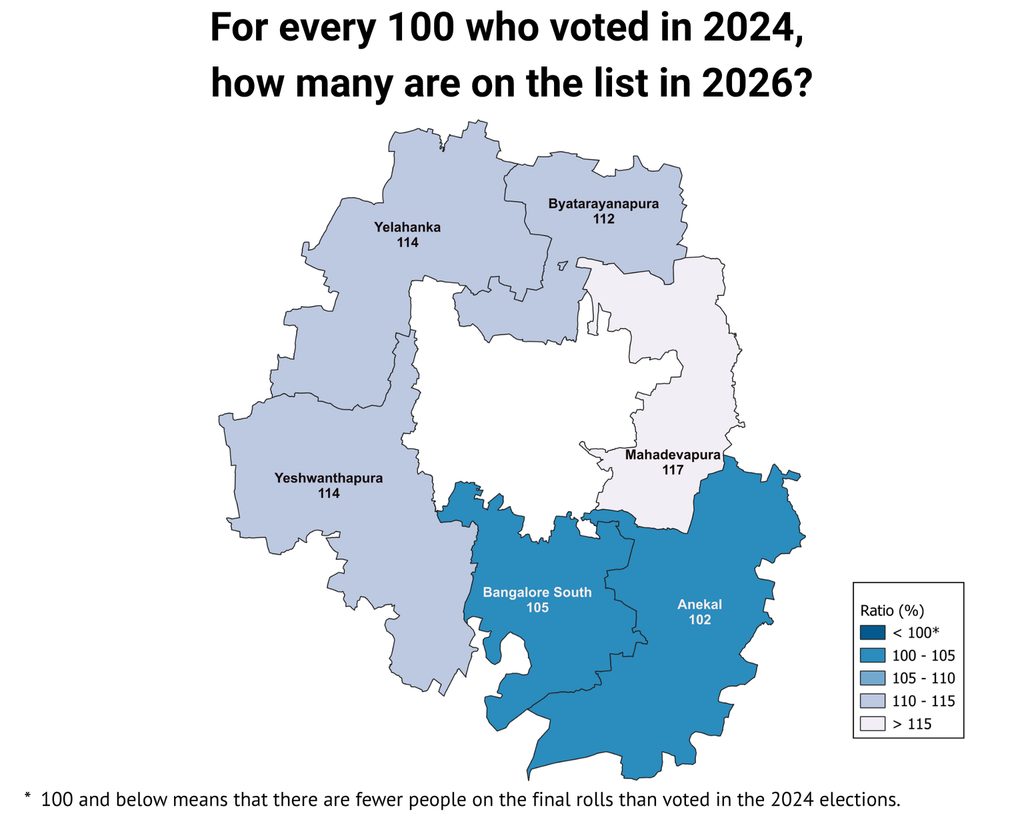
Once again, corresponding to the deep cuts in the West and South, the numbers are too close in these constituencies. In fact in at least six constituencies the numbers are almost the same, with Rajajinagar and Basavanagudi having more voters in 2024 than electors in 2026, an absurd situation!
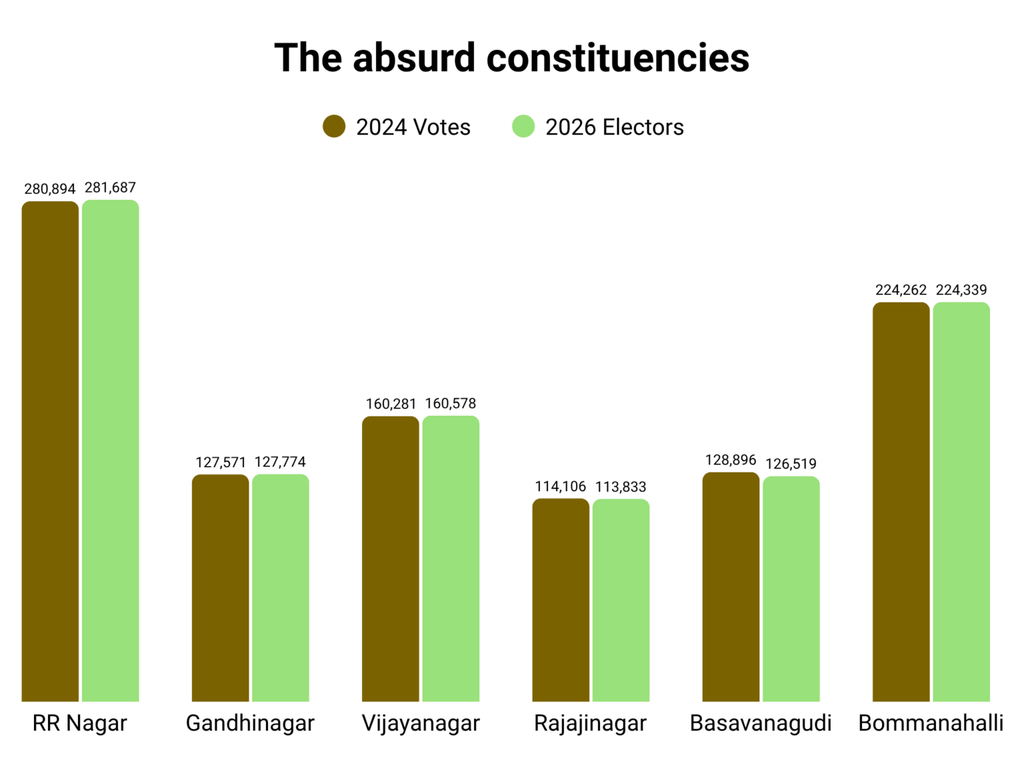
While summary revisions are necessary to make sure the voter rolls are up to date taking into account deaths, migrations and additions, a pruning of this level is unprecedented and likely unconstitutional. With the GBA elections likely to happen at some point, and the state also going to the polls in 18 months, it is important that the voter rolls are restored to a proper respectable number, that the sheer absurdity of the current SIR is corrected soon.
The goal of every voter roll revision should be inclusion, to make sure that every citizen resident in an area has a vote in their constituency, and only in their constituency. With more than 40% of the voter roll pruned, the current SIR, in Bengaluru Urban constituencies at least, is an exercise in exclusion and disenfranchisement. A deeper analysis at the polling booth level can tell us clearly who benefits from the exercise, but it might not take us long to know.