Traffic congestion in ORR is getting worse – the long term solution is moving more and more commuters to mass public transport like the Metro or BRTS. While the jury is out on which is better and faster to implement, we are losing precious time everyday in our commute.
With the intention to reduce the commute time and avoid stress in waiting at traffic signals, Rao Ganesh Janardhan, HSR Traffic Police Inspector has put together a series of simple changes which can improve the traffic flow from Marathahalli till Central Silk Board.
The first of such changes have been implemented around Devarabesanhalli Flyover, RMZ ECOSPACE and Bellandur Flyover. The traffic grid locks which used to happen for hours in that area is gone now. Traffic flow has improved significantly and commute time has started coming down significantly. Further to that, some more improvements are in progress between Bellandur flyover till Iblur Flyover.
Now BTP is looking at reducing or eliminating the traffic signals in and around Agara lake to aid smooth movement of traffic. The changes proposed are attached. Please share your feedback and suggestions in the comments below, so we can collate and share with the Bengaluru Traffic Police.
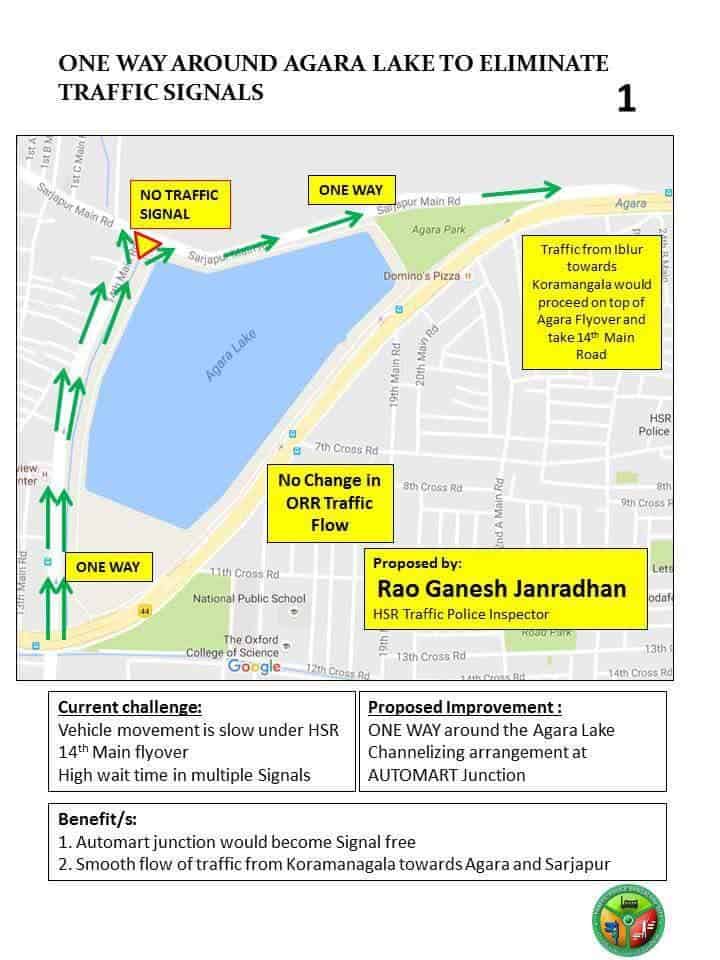
ORR Traffic Improvements – One way around Agara Lake to eliminate signals.
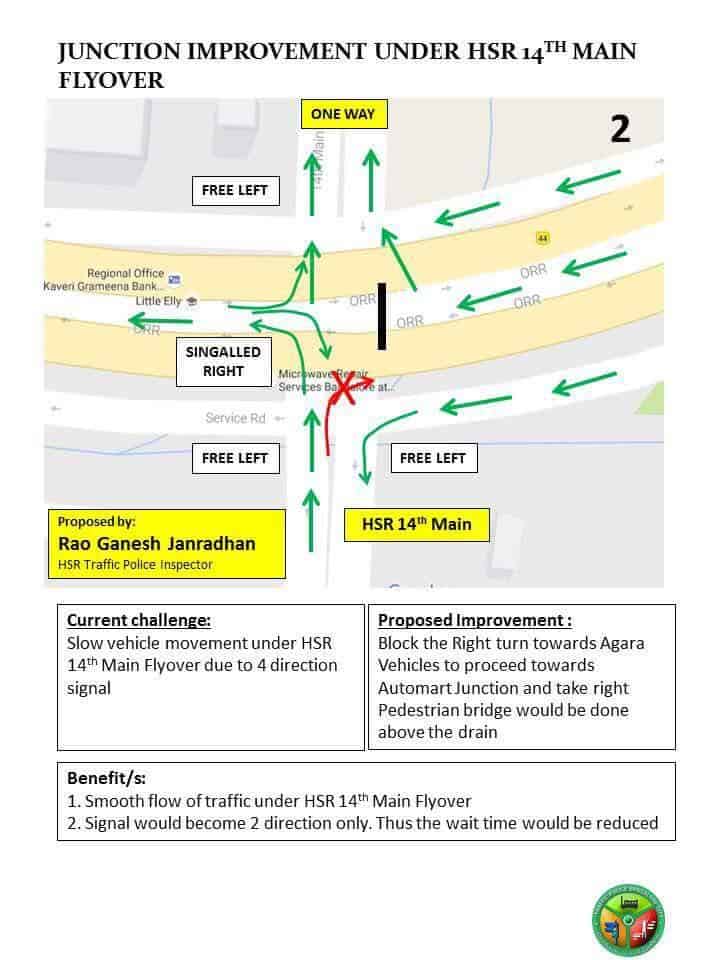
ORR Traffic Improvements: At HSR 14th Main Flyover
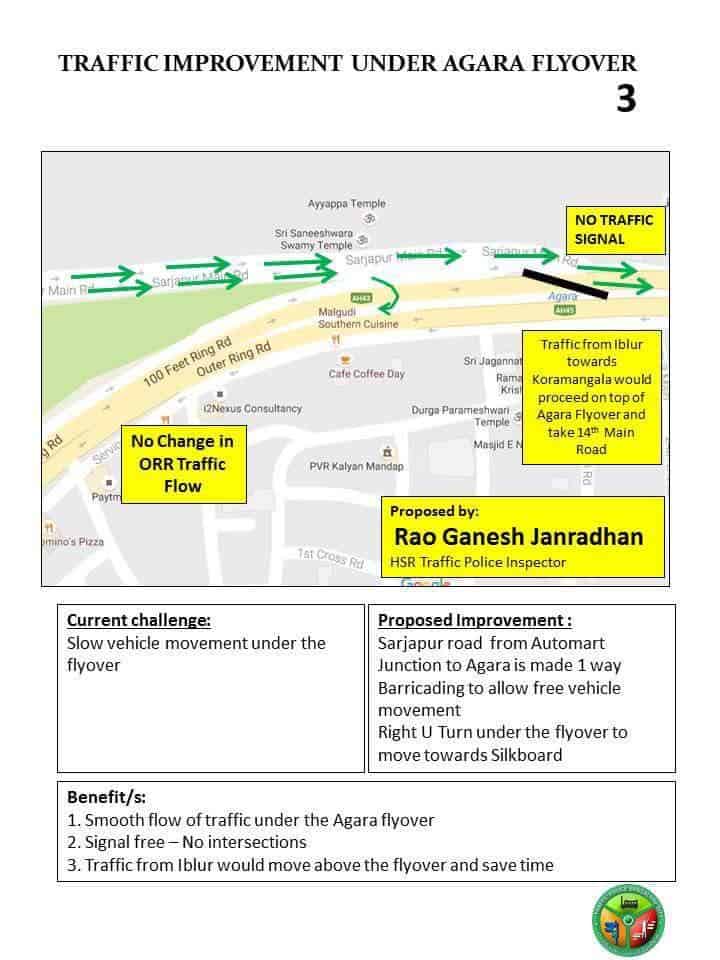
ORR Traffic Improvements: Under Agara Flyover
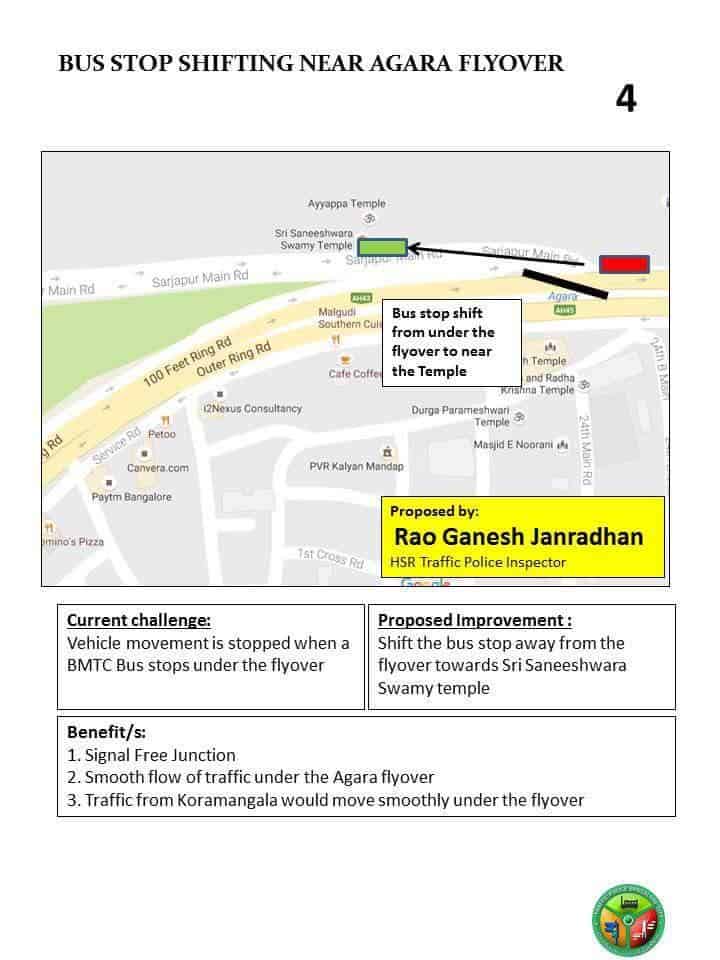
ORR Traffic Improvements: Bus stop shifting at Agara Flyover
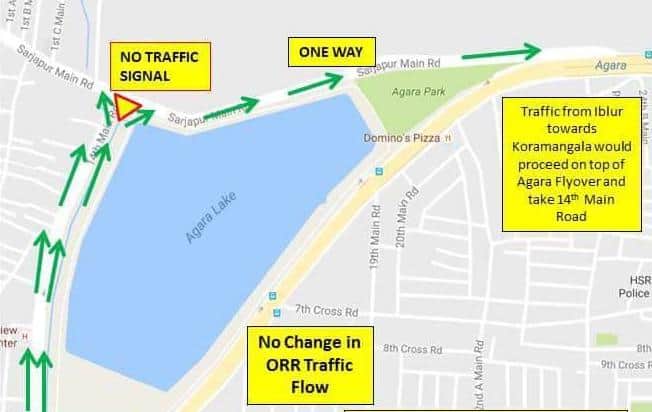
ORR Traffic Improvements
$(document).ready(function(){ $(‘.carousel .carousel-inner .item’).first().attr(‘class’, ‘active item’);});
Similar arrangement can be done to eliminate or reduce traffic signal wait in Silkboard Junction if done carefully using Sarjapur Road, Madiwala combo.
This is a good move. However, this will not help the long traffic congestion at Silk Board junction towards BTM Layout which is the major challenge on this section. It takes a solid 1 hour to cover the 5 km. distance from HSR BDA to BTM Layout. The government should do something to ease the long wait at silk board junction. There are numerous ways to do this, but it takes the will to implement it. This is a good work from Mr.Rao Ganesh.
Let me also suggest that all 500D buses that goes up to silk board must take right turn at HSR BDA flyover and go via Krupanidi College, Madivala police station to reach Silk board bus stop. This would reduce a lot of 500D buses just waiting at the long silk board signal and then negotiating to take right and U turn at silk board signal which slows down the traffic movement.