The much-awaited elections to the richest civic body, Brihanmumbai Municipal Corporation (BMC), are expected to take place soon. Mumbai has not had elected representatives for over three years. The term of the previous corporators ended in March 2022.
As Mumbaikars ready themselves to cast their votes, Praja Foundation, an organisation working to hold governments accountable, has brought out a ‘Citizens’ Manifesto’ for Maharashtra. The manifesto calls for improvement in core urban services, open and free access to municipal data, protection of the urban environment, and better citizen participation and accountability.
The manifesto calls for urgent reforms and gives a practical roadmap to achieve transparency and equity in municipal governance. Here are some of the highlights of the manifesto:
Improved service delivery
Water and sanitation:
- Continuous, equitable water distribution
- Clean, functional, gender-balanced toilets
- Universal access to toilets in slums and informal
settlement.
Solid waste management:
- Daily segregated waste collection in every ward
- Decentralised waste processing units
- Transparent monitoring of contractors and routes
- Pothole-free roads with transparent quality standards.
Roads, footpaths and drainage
- Pothole-free roads with transparent quality standards.
- Walkable, obstruction-free footpaths for pedestrians.
- Monsoon preparedness plans published before the rains with vulnerability mapping.
Read more: Mapping Mumbai’s hospitals
Quarterly ward reports and service benchmarks
- Disclose service level benchmarks to improve the quality of civic services.
- Publish reports on infrastructure and civic amenities, health, finance and air quality.
Public health infrastructure
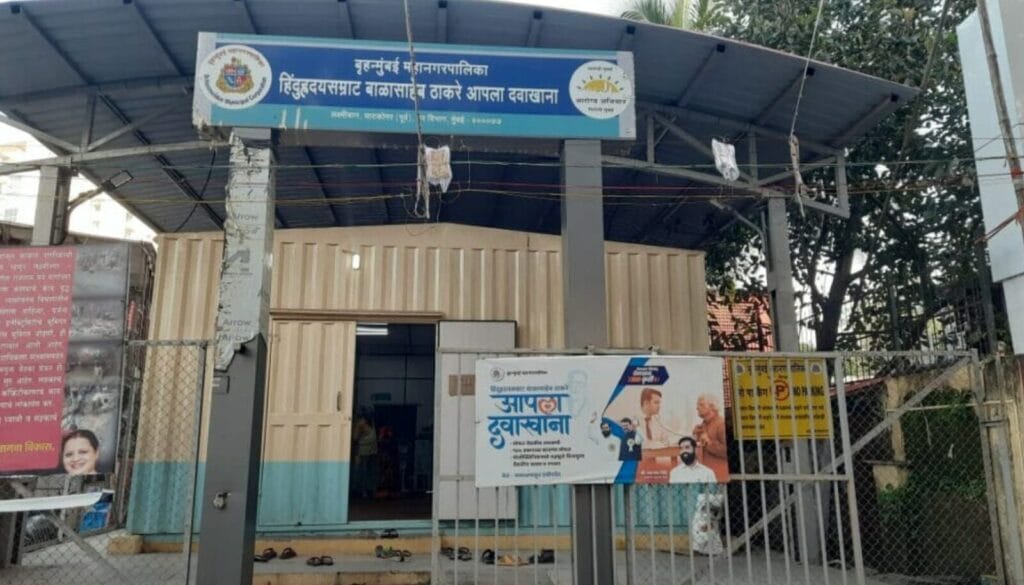
Access to health care is a human right. In view of this, it is the responsibility of the municipal corporation to provide access to primary health care for everyone. There should be enough dispensaries and well-equipped municipal hospitals. Municipal health services need to be fortified by recruiting trained medical staff because as of December 2023, 31% of medical staff vacancies had not been filled.
Municipal education
Retention of students in municipal schools is poor, with only 40% of the students enrolled in first grade in 2012-13 continuing up to tenth grade in 2021-22. The manifesto says that education data, which is only available up to 2018, must be made available on the BMC portal. Moreover, councillors must be diligent about attending the School Management Committee meetings. Students must also undergo health checks under the School Health Scheme.
Read more: Mumbai air pollution: Airshed level governance critical for clean air
Protection of urban environment
The manifesto points out the need for more green spaces, such as gardens and parks, in the city. The corporation must ensure that air quality monitoring stations are working properly. Further, the civic body must come up with comprehensive strategies to tackle the deteriorating air quality. To control pollution, they should establish real-time dashboards for water and air quality.
Open data portal for transparency
Political parties must commit to an open data portal which will give real-time information on:
- Projects, tenders, budgets and expenditures.
- Ward-wise quarterly performance reports.
- Water supply, waste and road works
There should be a unified digital platform to encourage higher citizen participation. This platform must allow citizens to express their needs and wants, enable submission of feedback, and give access to the public to a grievance redressal mechanism.
The full copy of the Citizens’ Manifesto is available here.
Also read:
- Understanding Mumbai’s municipal corporation
- Conspicuous by absence in Mumbai election campaign: BMC elections