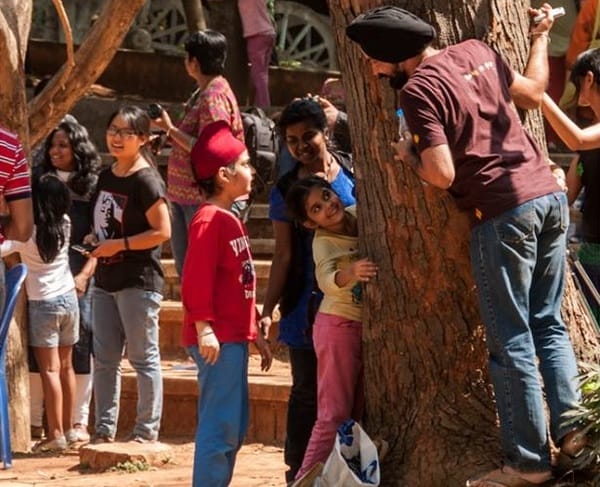
NERALU, a citizen-led tree festival, is being organised on 18th and 19th February 2017, at Natonal Gallery of Modern Arts (NGMA) and other city-wide venues. Come February, Bengaluru’s trees burst into spectacular blooms. The first of its kind in Bengaluru, Neralu, which means ‘shade’ in Kannada, is being planned to coincide with the blooming season in the city, and will bring together citizens to celebrate the garden city’s glorious natural heritage.
Bound by a common love for trees, naturalists, ecologists, artists, technologists, storytellers, homemakers, photographers and many more citizens from all walks of life are working together to organise Neralu. The Bengaluru Tree Festival will feature a multitude of visual and experiential activities such as tree walks, storytelling, art workshops, performances, talks, and much more, for people of all ages.
Neralu invites schools to participate in our city’s tree festival, and to engage students in exciting projects that help them explore the world of trees and connect with nature. We are delighted to announce tree walks for students, led by passionate field botanists, avid naturalists, and tree experts. The tree walks will introduce students to the historical, cultural and ecological aspects of the avenue trees of Bengaluru.
These activities will help bring students outdoors and appreciate trees, thereby enabling them to observe and record the diversity of life. It is a hands-on activity and makes learning more fun.
To participate, here are a few simple steps →
- From the list below, select the activity that you would like to execute at your school.
- Tree Scrapbook (Download PDF)
- Adopt a Tree (Download PDF)
- Diversity of Life (Download PDF)
- Measure the Tree (Download PDF)
- Value of a Tree (Download PDF)
- Tree census (Download PDF)
- Tree Poster Collage (Download PDF)
- Build a Tree (Download PDF)
- Paint a Tree Mural (Download PDF)
- Plant a Tree (Download PDF)
More details about the school projects can be found here: http://neralu.in/schools You can register here if you are part of a school management and want to participate:
An overview of activities planned during Neralu:
- Tree walks incorporating heritage, ecological and histo-cultural facets, in different parts of the city
- Workshops for children and adults
- Performances and talks focusing on local and global narratives of trees
- Storytelling and art showcasing diverse traditions and forms
- Games and fun activities for children and adults
Donations: If you love trees, you are already with us in spirit. If the festival resonates with you, please donate to make Neralu happen. Citizens can contribute here: www.neralu.in/donate/
Visit www.neralu.in for more details.
Note: This is a pressnote by Neralu team, sent by Poornima Kannan, and published as is.
Related Articles
Learn to identify trees surrounding you, at the Neralu tree festival
Neralu – Bangalore’s very own citizen-led tree festival
Neralu School Project: Getting the next gen enthused about trees
Bengalureans express their love for trees at the Neralu Tree Festival