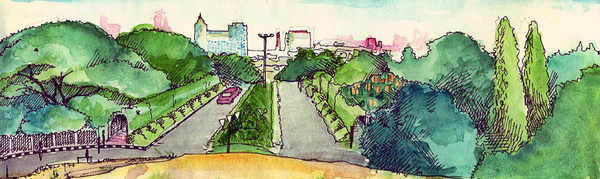
Neralu invites all schools to engage in an exciting project to explore the world of trees and connect with nature. These trees, stand tall as our silent neighbours, and bear within them endless stories to share. From measuring trees to painting a wall with trees, this could be a fun and informal way of learning about our city’s rich natural heritage.
We encourage each and every school in the city to register, pick a suitable activity from the list provided, execute it with the help of students, teachers and parents; document it, and share it back with us. Let’s work together as one large community to be the voice for our tall, silent friends.
The activities help bring students outdoors and appreciate trees, thereby enabling them to observe and record the diversity of life. It’s a hands on activity and makes the learning more fun. To participate, here are a few simple steps.
How to participate
– From the list below, select the activity that you would like to execute at your school. (PDF’s can be found on the website)
- Tree Scrapbook
- Measure a Tree
- Diversity of Life
- Value of a Tree
- Tree Census
- Tree Poster Collage
- Build a Tree
- Paint a Tree Mural
- Plant a Tree
– Register your school at www.neralu.in/schools and fill in the essential details within the registration page or in the form below.
– Execute the project, document the process, and email a writeup with photographs to neralufestival@gmail.com.
– 10 students per group is an ideal size. Some activities could be executed by a larger or smaller group too.
– Last date for submission is February 5th 2015.
– For the activities , Tree Poster Collage and Tree Scrapbook, two entries from each school can be submitted to be displayed at various Neralu venues. The works can be collected back after February 15th at a designated pickup point.
– Selected entries will be featured on the Neralu website.
Tree resources
- Website: Flowering trees of Bangalore by Karthikeyan S
- Website: Flowers of India
- Book: Discover Avenue trees by Karthikeyan S
- Book: Trees of Delhi: A Field Guide by Pradip Krishen
Register for the Neralu School Project
Register before Please register yourself by filling the form below. If you have any queries, please get in touch with Vidisha (Ph: 08884261204) or email us at neralufestival@gmail.com.