Nature should mean freedom…

Deepa Mohan has a poem to celebrate nature and ponder over the contradictions that we live with!

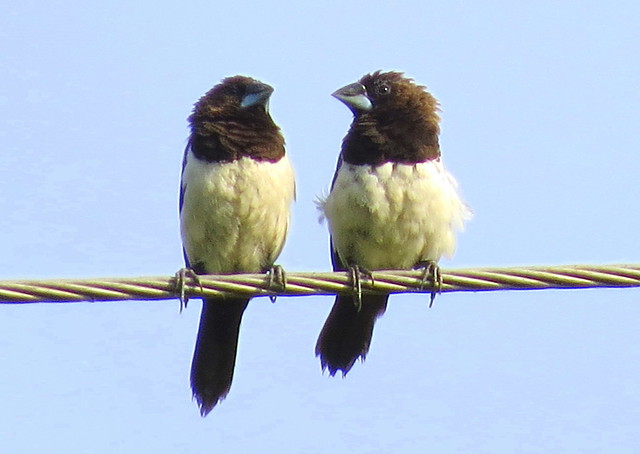
Do they not look delightful

Perched upon the wire,

Chatting together

Against the sky?
IMG_1260

When I see the same birds

Through the twisted wire

Of bird-cages, penned up…

I ask..why?

birdcage 090215 (Picture of Munias in a bird cage from the FB page of Gopakumar Namboothiri, with his permission)

Why can we not just admire?
IMG_1269

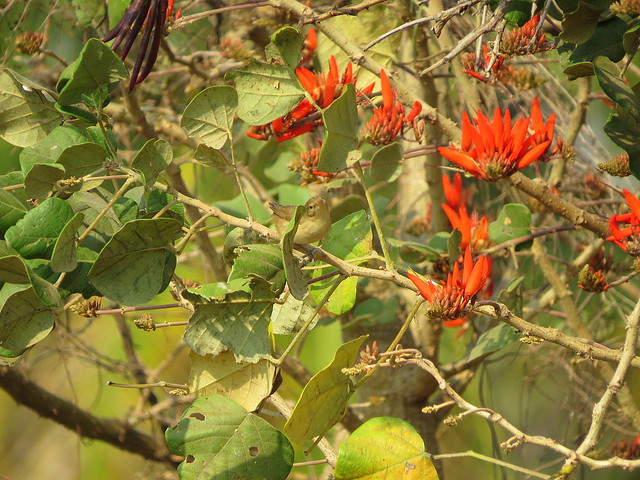
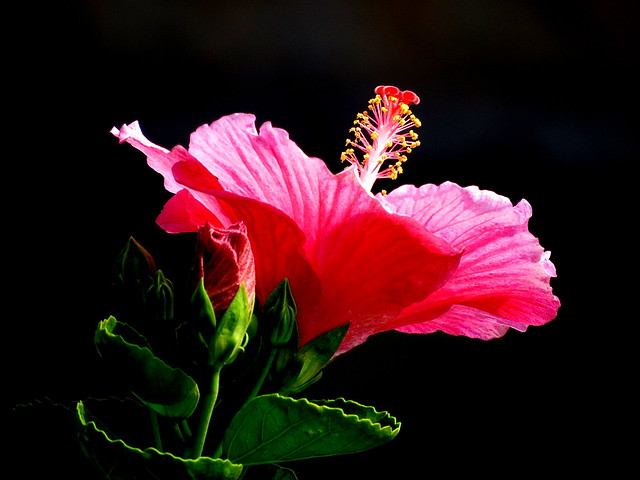
The flower set upon the bush

Or smiling from its tree?
IMG_5935

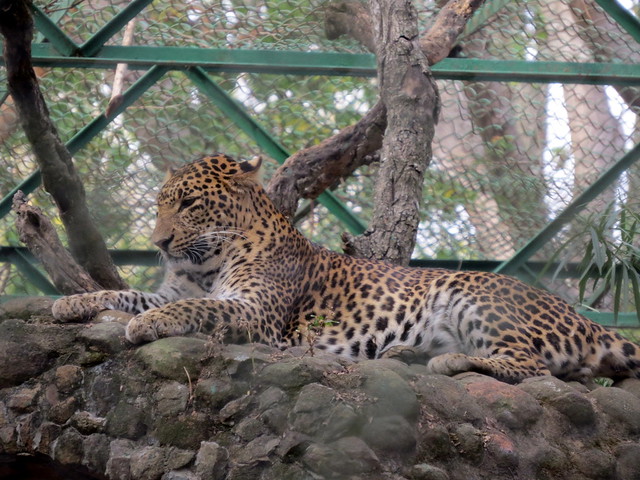
Why do we need to cage and tie down beings

That look so much better, when they are free?
IMG_9683

The first photo was taken on Bannerghatta Road, near the Police Station; the second in a house nearby, where I persuaded the people to set the birds free (these birds can survive in the wild, not all species can, especially Budgerigars, which have been bred in captivity.)

The third photo is of Erythrina indica or the Coral Flower, taken in Banashankari; I wanted to contrast it with the flowers, like the Hibiscus (taken at Kaikondrahalli Lake) that we pluck from the trees for our use. The caged leopard was clicked in Bannerghatta Zoo.

Related Articles

Sometimes Harvestmen are not farmers
Walk in Arekere Reserve Forest: Look around, look down!
Umbrella Fishing by Painted Storks!

Leave a Reply

Your email address will not be published. Required fields are marked *

Similar Story

The wild in the city: What citizen scientists tell us about Bengaluru’s biodiversity

Spatial and temporal biodiversity patterns, as observed by citizen scientists in the city during 2016-2025, were studied at a datajam in December 2025.

Imagine you’re out on a morning walk, phone in hand, when you spot a butterfly you’ve never seen before. You snap a photo, log it into a citizen science app, and voila! You’ve just contributed to crucial biodiversity monitoring. This isn’t just a hobby; it’s part of a global movement where ordinary people collect, record, and sometimes analyse data about plants, animals, and ecosystems. Citizen science stretches the reach of ecological research. Every observation adds to unique longitudinal datasets that reveal phenology — periodic events in the life cycle of a species — along with species distribution shifts and population…

Similar Story

Air quality management is a governance problem, not just an environmental one

Despite massive funding, Indian cities face weak governance, poor data, and limited capacity, as air pollution continues to worsen.

Indian cities are struggling to breathe. Air pollution is a year-round governance challenge. In 2024, 35 of the 50 most polluted cities globally were in India, with PM2.5 concentrations above 66.4 μg/m3. This is at least 13 times the World Health Organization (WHO) guidelines and at least 1.6 times the National Ambient Air Quality Standards (NAAQS) in India. Citizens continue to bear the brunt of worsening air quality, and urban local governments (ULGs) are at the forefront of the problem, being primarily accountable for their citizens' first mile. While they do have a role to play in addressing this threat,…