On 12th July, I boarded the last train from Thane station to Koparkhairane, where I live. The train was scheduled to reach at about 12:30 am. I travel regularly by local train, but I still avoid catching the last train. However, the nature of my freelancing work makes it unavoidable sometimes.
The train stopped between stations, just after Ghansoli station for almost 20 minutes. It was well past midnight. Only one more woman was travelling in the compartment along with her child.
We waited patiently for the first 10 minutes, but when we saw no signs of the train moving, the other woman passenger began to panic. She picked her child up and sat near me. She was scared and worried. I started to panic as well.
We had no idea why the train had stopped for so long. The area was dark and surrounded by bushes. Our safety was at risk, as anyone could have entered the train easily. We were both scared and angry. The other woman broke into tears.
Just two weeks ago, a 24 year old woman was harassed by a male co-traveller in a suburban local train while travelling at night.
Where were the cops?
The Government Railway Police (GRP) has to deploy uniformed personnel in the women’s compartments of suburban trains and on platforms, from 9 pm to 6 am, to ensure the safety of women commuters. But there was no cop in our compartment that night.
Not sure of how to act, I took a video of the empty compartment and the surroundings.
I frantically searched for helpline numbers to get in touch with the railway police. Some of the numbers were fake and inactive. Luckily, I managed to contact the railway officials from Vashi. I explained the situation but they were not aware why the train had halted. I sent the video on a railway police Whatsapp number, which I found online.
Fortunately, the train began moving after about 20 minutes and I reached my destination at 12:40 am.
One railway police official called me to check if I reached safely. I confronted him about the absence of police in that compartment. He mentioned that police only patrol the middle and first class compartment. They don’t patrol the first and last compartments. I was in the middle compartment that day, but there were no cops. I asked him why the first and last compartments were excluded. He apologised.
I posted the video I shot on Twitter and tagged a few Mumbai police handles. Whom could we have held accountable, if something had happened that night?
Read More: Discussion: Ensuring women’s safety in Mumbai
Not an isolated case
A Thomson Reuters Foundation survey of 1,000 women in London, New York, Mexico City, Tokyo and Cairo found 52 percent of respondents cited safety as their main worry. Closer to home, a study conducted by Observer Research Foundation and Youth Ki Awaz Foundation revealed that 88 percent of the women surveyed used public transport. Of them, 52 percent women reported that feelings of insecurity made them turn down education and work opportunities.
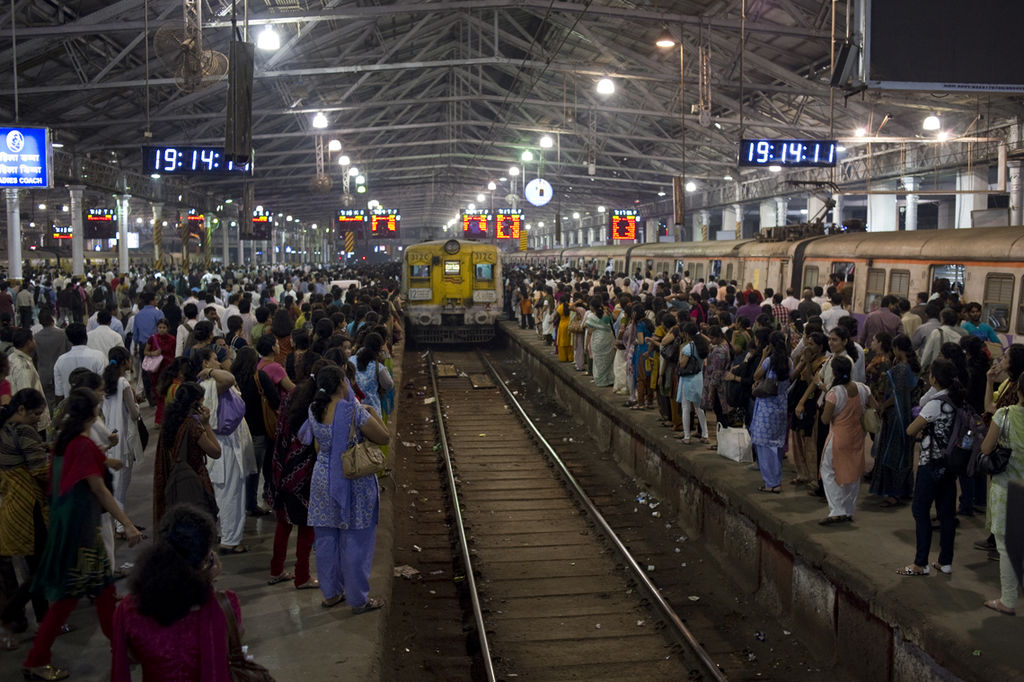
As part of the UN Women’s Safe Cities and Safe Public Spaces Global Initiative, UN Women conducted a safety audit in Jakarta in 2017. It revealed that women are vulnerable to harassment in public spaces, and it tends to increase during evening hours.
While some choose to avoid using public transportation altogether after dusk, many women still have to travel at night to earn a living. Most of these women work in the service industry, as shopkeepers, restaurant servers, call centre operators and cleaning staff, and depend on affordable public transportation to get home.
The reality is not different in India.
Measures for women’s safety on trains
A week later I approached a woman police officer and asked her if the patrolling had been extended to the first and last women’s compartments. She said it was still restricted to the middle compartment. The railway authorities must address this urgently.
Currently, there is a toll free number, which women passengers can dial, if they find that security personnel are not present in the compartments.
There is no reason why women should feel unsafe while travelling at night. Women’s security should be a top priority for administration. Late night trains must have police in all women’s compartments.
I really hope important safety measures are put in place before something untoward and tragic happens.
| WhatsApp Helpline Number – 95948 99991 / 84250 99991 Control Room – 022-23759201 / 022-23759283 Toll Free – 1512 / 1800 22 1512 |