It seemed like a bright sunny day. A working woman in her late thirties, left Powai for Matunga by Uber at 7.30 a.m. The route normally takes 45 minutes. But yesterday it took a little longer than usual, around 75 minutes. The rain gods had by then showcased a trailer of what was going to be an adventurous day.
Even then, never had I thought that I would return to the cosy comfort of my home only after more than 24 hours! As a Mumbaikar, you can feel the vibe when rain, or for that matter anything, rises above the “chalta hai” level. Water started rising up, oozing out of gutter drains, gulping down cars, railway platforms, ground floors of egoistic edifices, crashing the good old trees, electric wires and the monstrous city in general.
But then a city is much more than the things that crash and crumble. A city is what people make it. These few hours during which I walked about 10 kilometres in waist-length water taught me more about life than 10 years could.
Life lesson 1: Storm is a great social leveller.
No caste. No religion. No class. No rich. No poor. Brings everyone down in the waters. Mercedes, autos, cabs. Truly, there is no fury like nature scorned.
Life lesson 2: The inherent nature of collective subconscious surfaces at contingencies.
And Mumbai has a good soul. People offered tetra pack juices, biscuits, packaged water, opened homes to offer washrooms ! THIS did not require ” any government order” !
That one mini pack of Parle G was literally all we had for dinner. Thanks to those kind people who were distributing.
Knocked at a stranger’s door, half expecting they would let us in. But grateful to Tejas Parkar for letting us charge our phones so that we could keep in touch with family, and be comfortable for some time.
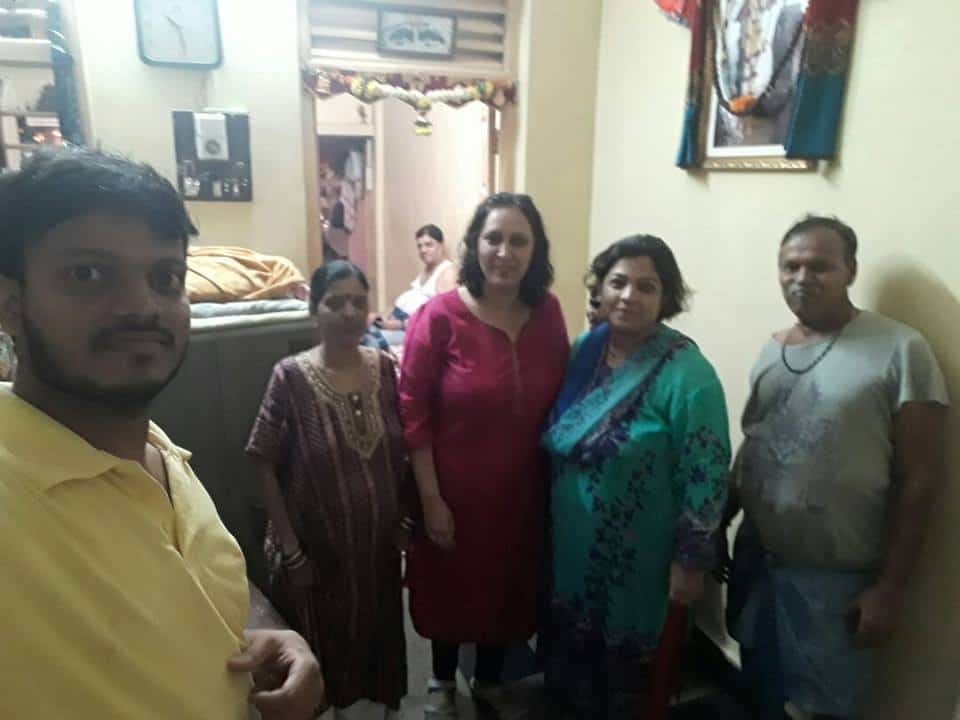
And they let us in without any hesitation! Pic: Tejaswini Patwardhan
Yes, there were instances when cabs refused to ply a passenger but I would not blame the driver. It’s not easy to take on the responsibility of somebody else when you are unsure whether you will have to eventually desert your car.
Life lesson 3: Do not criticise without knowledge!
I met traffic policemen working in waist deep water without any complaints or anger. We need to understand that they too have families they are responsible for, answerable to. They too have children they worry about, and families back home wondering where they are.
And yet here they were, in the midst of all this mayhem, handling traffic, anger and disappointment without losing their balance.
One cop I befriended told me about a colleague of his who had been beaten up by some people because he didn’t let traffic move.
Come now, these cops truly deserve to be appreciated for their efforts. Let us not be judgmental and critical about them.
Life lesson 4: The easiest thing to do is blame OUR government and OUR administration.
WE are a part of the system we criticise. The administrators are not aliens from Mars. Not yet, at least.
Don’t like something? Well remember today’s situation next time you litter around. It’s our mistakes that choke drains. Time to own up and take corrective action.
Life lesson 5: ENJOY!
I did. An unwarranted, surprise adventure. Need a few stories to tell, right?
Mumbai. Tula Mumbaikars var bharosa nahi ka? Aahe. 100% aahe.
Postscript
I waddled from Matunga to BKC, and stayed at M.I.G Club, Bandra at night. Met a few ladies put up there, thanks to the situation. In the course of our conversation, we understood they were going to be in my vicinity, and got dropped home by car on a relatively empty road this morning. Roads, splashed with trash thrown back at us by Mumbadevi.
As I write this, I cannot help but wonder whether she, Mumbadevi, patron goddess of Mumbai, designs floods once in a while to buffer and shine the goodness of human spirit, rusted by gold smoke and civilised apathy towards each other. Here’s wishing that this goodness survives the humdrum and does not drain away.
Well said, Tejaswini. I saw trucks that had been decorated for the 5th day Visarjan, autorickshaws and taxis patiently ferrying people; women walking home alone and fearlessly at 11 PM at night; food and drink available in plentiful; people helping direct traffic; people offering lifts to random strangers; policeman telling us the best way to reach home;…. The stories of Goodness are just endless.
And the best part was that by 9 PM on Tuesday rains had come down and people were back to the business of everyday life. I saw so many Ganapatis out for Visarjan (to the nearest point and without impacting traffic). Yesterday morning, Gauri Ganapati preparations in full force.
There is a heart and soul to Mumbai that can only be experienced!
Thanks Aruna. You are right. And we need positivity around.