Sultana Shaikh Akbar, 42, was the first to be informed when an elderly woman in her neighbourhood of Agarwal Wadi in Wadala, developed a fever. Sultana coordinated with the Brihanmumbai Municipal Corporation (BMC) to get the patient admitted to a hospital. But soon after, another woman started complaining of breathlessness.
Sultana has had no time to waste the past couple of months. She has juggled caring for and hospitalising patients suspected of having the virus. In addition, she manages door-to-door ration distribution in her neighbourhood. “A lot had to be done,” she says, “some of us had ration cards and received foodgrains but many didn’t. We took their names to the ration office, filled a form, and ensured that they got ration as well.”
Residents of Agarwal Wadi feel that Sultana demonstrates an ease in navigating complex processes in government offices, a task insufferable for many. But her activism didn’t gain ground overnight. It began when she attended her ward’s Area Sabha meeting two-and-a-half years ago.
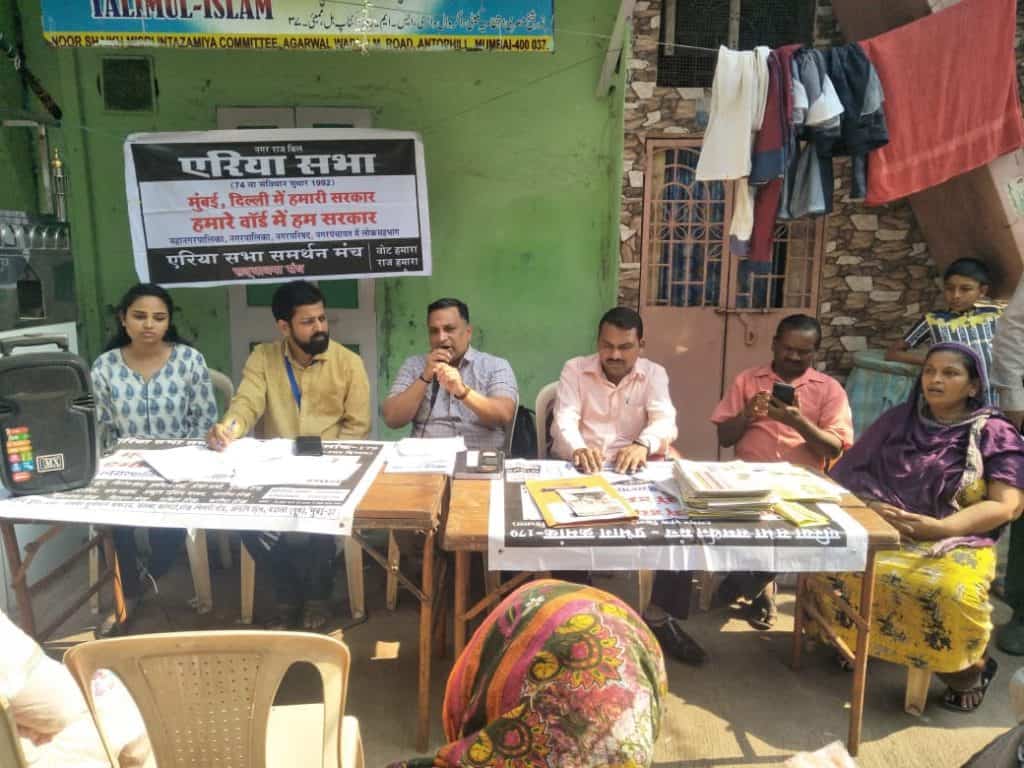
In 2006, the central Government introduced The Nagar Raj Bill, or town governance bill, under the Jawaharlal Nehru National Urban Renewal Mission (JNNURM). It proposed to divide municipal wards into several ‘areas’, down to the polling booth level. One polling booth in Mumbai typically has 1200-1500 voters, and this voting population could become an Area Sabha.
In 2009, the Bill was passed by the Maharashtra State Assembly but only after it was shorn off its major elements. The proposed bill was meant to deepen participatory democracy by electing an Area Sabha representative who could help with neighbourhood planning. The Area Sabha members would also have powers to implement beneficiary-oriented schemes and work towards neighbourhood improvement. But the Bill passed in Maharashtra didn’t include the election of an Area Sabha representative. It also listed Corporators as Area Sabha chairpersons and gave them the power to decide if the ward needed multiple sabhas or just one.
Despite the watered-down Bill, many non-government organisations decided to help form Area Sabhas in Mumbai. In 2010, led by NGO Sadbhavana Sangh, some organisations like Loksatta, Association for Democratic Rights (ADR), Ghar Bachao Ghar Banao Andolan, YUVA, among others came together as the Nagar Raj Bill Samarthan Manch, a platform focussed on advocacy, networking, and training to implement the law and create Area Sabhas.
Varsha Vidya Vilas of the Sadbhavana Sangh has been actively working in the formation of Area Sabhas in Mumbai. “Area Sabhas are the fourth-tier of governance”, she says. “After the central, state, and local governments, we need Area Sabhas to deliver basic rights to people.”
Decentralisation is considered crucial for effective urban governance, especially one that accompanies a devolution of power or local decision-making abilities, something the Nagar Raj Bill intended to tackle. “But, it has received opposition from Corporators who feel that their jurisdiction and power would be challenged,” Vilas says.
Impact of Area Sabhas
When Sadbhavana Sangh started to formalise Area Sabhas in Mumbai, they got phenomenal support from citizens, Vilas says. “People want basic facilities: cleanliness, sanitation, timely water, and Area Sabhas showed them they could learn how to use the law to access these services.”
“I had joined the Area Sabha to learn how I could get my own ration card,” Sultana says. Since then, she has helped many in the neighbourhood get one, navigating a spectrum of ration-card colours according to income and requirement.
The Agarwal Wadi Area Sabha has 16 members, (twelve men and four women), each trained by the Sadbhavana Sangh on how to approach government officials, access schemes, write letters, and then how to impart this training to others. Since their formation in 2016, the Sabha members have forged a relationship with the Ration Officer, the F-north ward (which has areas like Matunga, Sion, Wadala) BMC officer and the local Corporator. “Today there’s water supply, cleanliness, garbage is picked twice, and gutters are clean”, Mohammad Yasin Khan, a member, says. “We’re now aware of our rights and duties and have learnt how to navigate the system.”
As a result of this empowerment, the Area Sabhas members were at the forefront of COVID-19 relief.
The Area Sabha members divide themselves into smaller groups and focus on health, education, sanitation, and ration so that work is equally divided. Each of these groups kicked into action during COVID-19 relief, often assisting each other regardless of their assigned role. If those working for access to ration like Sultana coordinated with the Ration Office and Corporator Sufiyan Vanu for food distribution, the health group acquired information about testing and hospitalisation from BMC, others ensured people maintain ample physical distancing.
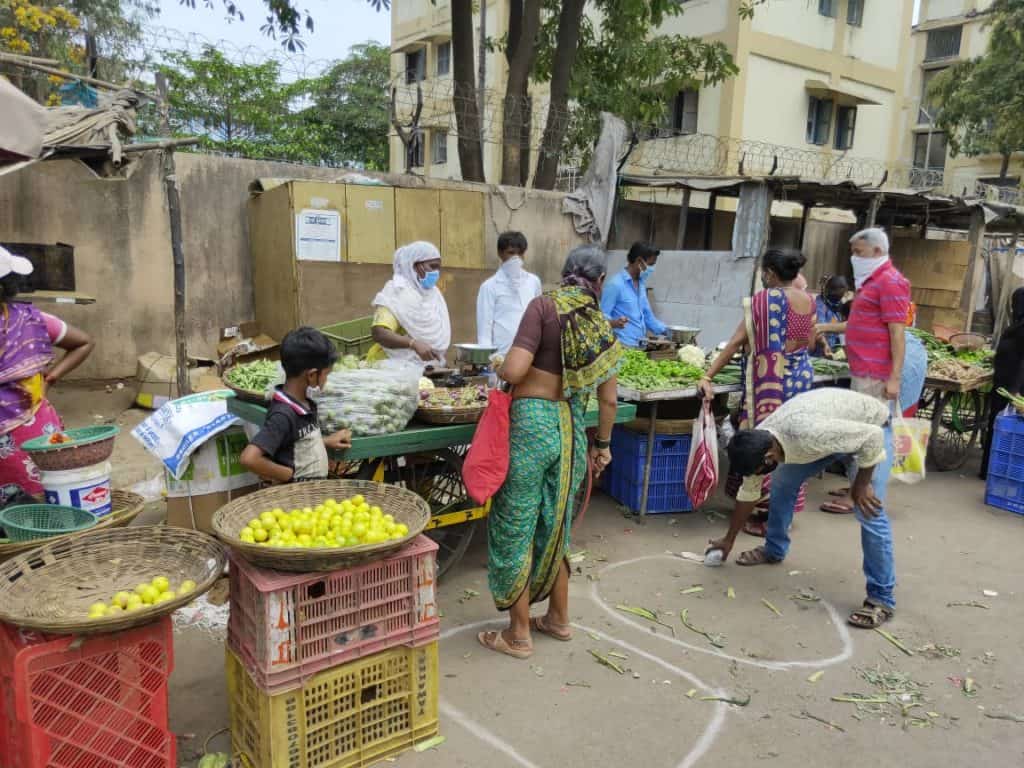
Sadbhavana Sangh has a majority of Area Sabhas in Mumbai’s Wadala area, which at the beginning of the pandemic had one of the highest cases in the city. Vilas says the effective coordination of Area Sabha members and the Corporator is the reason for a dip in cases. “Imagine if there were Area Sabhas across the city”, she says. “The police had to distribute ration today in many places, but if we had Area Sabhas, they would have had a team of volunteers ready.”
Citizens complain that often only those who are socially connected manage to access aid and schemes. In such a scenario, Area Sabhas members who best know their neighbourhood come in handy, Khan says. Unsurprisingly, Corporators also use the same argument, claiming that they’re most aware of the peculiarities of their wards. But wards in Mumbai are big and densely populated. “Area Sabhas bring governance down to the street-level,” Khan says. “If a particular gutter is most prone to overflowing during monsoon, an Area Sabha member can inform the administration to get it cleaned first.”
For a long time, the Agarwal Wadi Area Sabha was focussed on cleanliness, sanitation and water, but now they’re also paying close attention to education and employment. “We’ve begun conducting career camps for students”, Khan says, and women have formed a self-help group. This group previously accessed government funds to set up small businesses like selling vegetables or catering. “And during COVID-19, we got a work order to stitch masks”, Sultana says.
The Area Sabha hasn’t managed to transform their neighbourhood but members say change is a slow, arduous process. “We feel comfortable asking the Corporator any question, even a complete breakdown of how he spent his Corporator fund,” Khan says.
But they cannot seem to access the breakdown of the BMC budget for their ward yet.
Yes, area sabhas can play a vital role in any crisis as a micro planning and governnace unit. Unfortunately, this unit of governance has not been given importancr in formal planing and governance so far.