Cost of riding autos and taxis increases
After six years, the base fare for auto rickshaws has been increased from Rs 18 to Rs 21 and for taxis, it has increased to Rs 25 from Rs 22. In 2015, the base fares were increased by Rs 1 each for both autos and taxis, the Indian Express reported.
The fare hike, applicable for the entire Mumbai Metropolitan Region, will be effective from March 1. For rickshaws, the charge for every additional kilometre over the base fare has been hiked by Rs 2.21 per km to Rs 14.2, while for taxis, the hike per km is Rs 2.09 to Rs 16.93.
Source: The Indian Express
Mumbai Port Trust Signs MoUs worth Rs 7,500 crore
The Mumbai Port Trust (MbPT) has signed 13 different Memorandums of Understanding (MoUs) worth Rs 7,510 crore in a bid to boost water transport and tourism in the city, the Hindustan Times reported.
These include starting water taxis for Rs 75 crore, introducing harbour cruise tourism for Rs 15 crore, developing a marina for Rs 370 crore, and shipbuilding and allied activities for Rs 1,300 crore among other agreements.
Source: Hindustan Times
Read more: Are Mumbaikars prepared for the environmental impact of new coastal projects?
BMC collected Rs 33 crore fine from people for not wearing masks
The Brihanmumbai Municipal Corporation (BMC) has beefed up surveillance to battle the COVID-19 pandemic and has been penalising people for not wearing masks. According to an action taken report (ATR) shared by the civic body on Tuesday, around 14,100 people were penalised by the BMC clean up marshals, another 7,911 were penalised by Mumbai police and a total fine of Rs 15.82 lakh was collected.
Meanwhile, a total Rs 91,800 were collected from 459 violators caught on various railway stations. Till February 22, total Rs 33.06 crore have been collected from 16.35 lakh violators penalised by BMC, police and marshals at various railway stations, the Free Press Journal reported.
Source: Free Press Journal
Fewer mangroves to be removed for Mumbai-Ahmedabad bullet project, NHSRCL tells HC
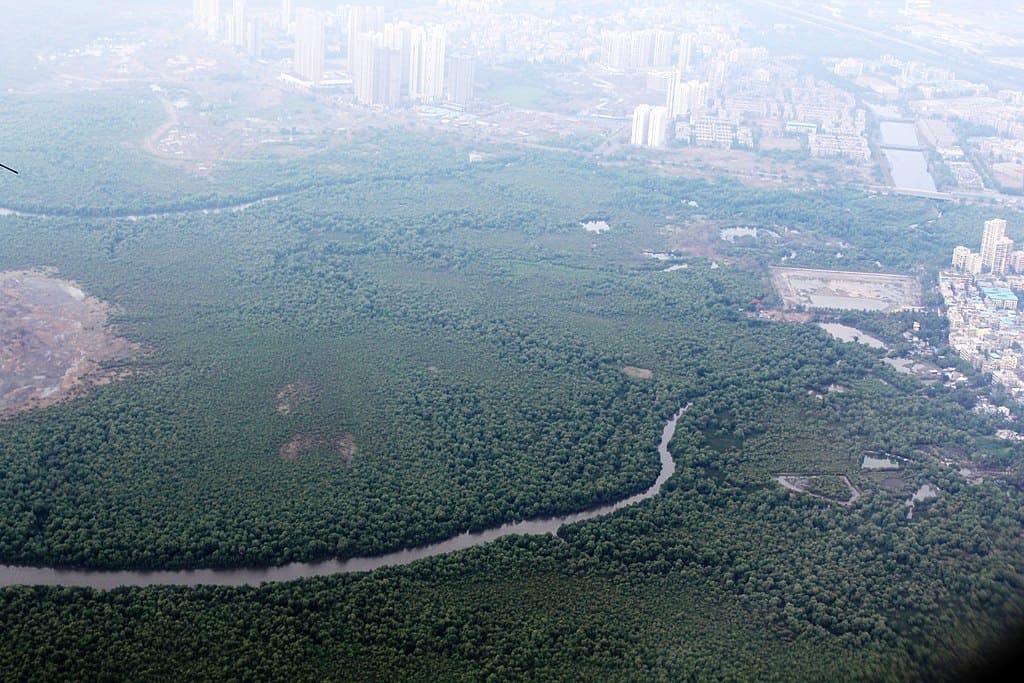
The National High-Speed Rail Corporation Limited (NHSRCL) informed the High Court that they are going to comply with environmentalists’ request to bring down the number of mangroves that needed to be removed for the Mumbai-Ahmedabad bullet train project, the Hindustan Times reported. Instead of 53,467 mangroves, the corporation will cut 21,997.
It has brought down the number by realigning the Virar and Thane bullet train stations. The corporation also claims that though the number of mangroves to be cut in Thane, Mumbai and Palghar districts is more than halved, the undertaking of the compensatory plantation would not be reduced and around 2.6 lakh mangroves would be planted, according to the Hindustan Times.
Source: Hindustan Times
MMRDA approves Rs 12,969 crore budget for 2021-22
Of MMRDA’s Rs 12,969 crore budget this year, 35% has been allocated to various metro projects, the Times of India reported. The MMRDA has earmarked Rs 250 crore for the Colaba- Bandra-Seepz corridors as well as others such as Dahisar to Andheri. MMRDA has also allotted money to the Mono Railway project (Rs 120.20 crore) and Mumbai Trans Harbour Link project (2,900.35 crore), late Balasaheb Thackeray memorial (100 crore), among others, the Times of India reported.
Source: Times of India
Read more: Here’s where your money goes. An explainer on BMC’s budget
Revolutionary poet Varavara Rao’s family says can’t afford Mumbai rent to meet bail condition
Rao was granted bail on the condition that he has to stay within the jurisdiction of the Special National Investigation Agency Court in Mumbai. But Rao’s daughter told the Hindustan Times that they cannot afford to take a house on rent to stay there. “Given the sensitivity of the case, we are not sure he would even get a house on rent in Mumbai. Since he doesn’t require hospitalisation, he cannot be kept in hospital either,” brother-in-law N Venugopal said.
Source: Scroll, Hindustan Times
[Complied by Apekshita Varshney]