Art exhibition on Mumbai’s monsoon
Making a comeback after 16 years, the month-long Monsoon Festival has landed in Mumbai this year. The art exhibition is currently on show at two venues: at Method Bandra till October 16th, and the Tao Art gallery in Worli till October 23rd.
Chock-full of art in diverse mediums, from paintings, drawings, photographs, to poetry, sculpture and vintage prints, the festival depicts the ‘love-hate’ relationship Mumbai has with the season. It attempts to capture the lived but un-documented aspects of the downpour, the relief and distress it brings, and the home-grown culture around it. The exhibition is curated by Himanshu Verma, and features works by Ranjit Hoskote, Sudharak Olwe, Anjana Mehra and more.
Source: Red Earth India
Spike in conjunctivitis cases in last two weeks
Major government and private hospitals have been witnessing a three-fold increase in cases of conjunctivitis, with 15 to 20 patients turning up daily. The cause of most is viral infections, said the BMC’s executive health officer, Dr Mangala Gomare.
Cases typically do see a hike due to weather changes and the turn of the season, but this record spike is unprecedented. The contagious eye disease, also known as pink eye, can be caused by bacteria, allergens such as mold and pollen or chemical irritants. But as the recurring cases have sported tomato-red eyes, slight pain and blood under the eye of the skin, doctors suspect a virulent strain. Dengue and malaria have also seen a surge in the city.
Source: The Indian Express
More seats for women in Mumbai’s local trains
The Western Railway (WR) has increased the seats for women in Mumbai’s suburban trains. In all non-AC trains, the share reserved for women has gone from 23.33 percent to 25.47 percent. This is an effective increase of 25 — from 273 to 298 — in a 12-car rake with 1,170 seats.
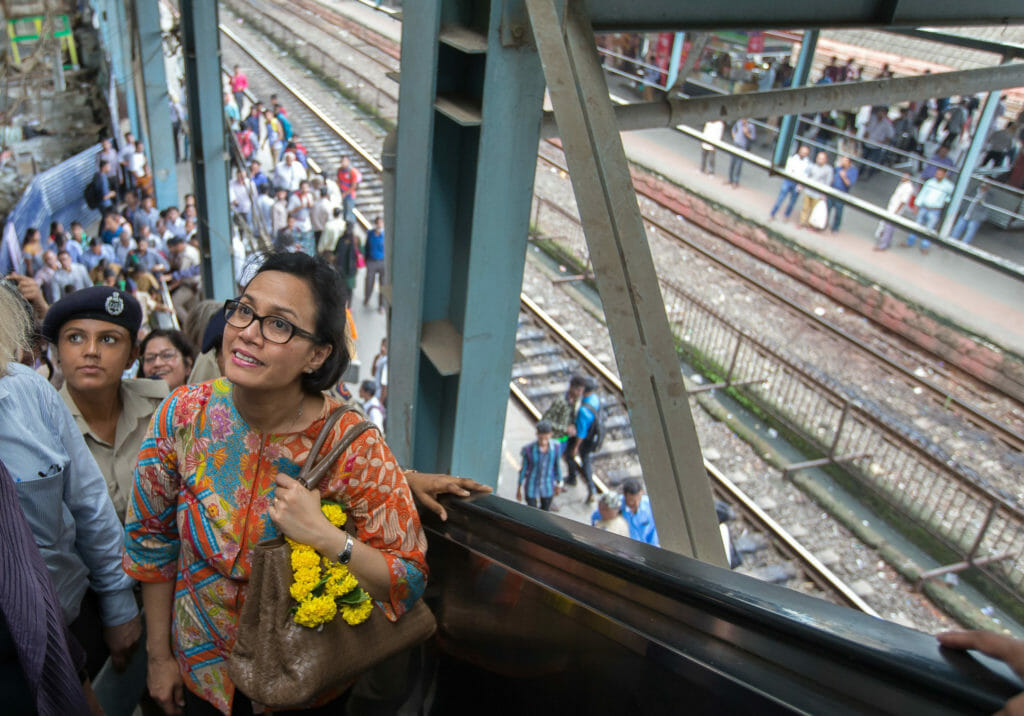
The WR claimed it has done so by partitioning a general compartment beside an existing ladies coach, and hopes it will provide some relief during peak travel hours. This slight increase has come in response to a growing demand among women passengers that has off-late erupted in violent fights. Alongside, the railways revised their timetable to increase the number of services running from 1,375 to 1,383.
Source: CNBC TV-18
70% of Mumbai fire brigade’s calls not related to fire
Not long after the break-out of a fire in a building in Chembur has renewed attention towards fire safety in the city, the fire brigade has revealed that only 30% of the calls it responds to are fire-related incidents. Of these, 70% of the root cause for fires are electrical issues.
40% of other efforts of the fire forces are diverted towards rescue operations, including animal rescue, situations like floods, tree crashes and drowning incidents. House collapses occupy another two to three percent. The rest are a mixture of miscellaneous incidents, from oil and chemical spills, natural disasters and road and rail incidents. In 2022 alone, the brigade has responded to 6,937 emergency calls till now, claiming an average response time of four to five minutes.
Source: The Indian Express
Read more: Coping with monsoons in an informal settlement
Rs 20,000 crore Dharavi redevelopment attracts international interest
After the Maharashtra government put out a tender for the redevelopment of the Dharavi slum cluster, companies the Middle East, South Korea and the country have taken part in a pre-bid meeting. Expected to cost more than Rs 20,000 crore, the bid will now go through a clarification before tenders are submitted by October 31st.
The redevelopment is expected to transform the 240-acre area that hosts many unorganised and small scale industries and houses an estimated 9 million people. The company that takes home the bid will be expected to complete the work in seven years and rehabilitate more than 56,000 families to a 405 square feet house each. To incentivise this, the government is offering a floor space index (FSI) of 4, concessions on FSI premium, ie. extra FSI, inspection charges, GST, and more.
Source: Moneycontrol
[Compiled by Sabah Virani]