Fire at SRA building in Goregaon West
Seven persons died and over 60 were injured in a fire at the Jay Bhavani SRA building in Goregaon west. The fire gutted the ground floor with shops and the seven residential floors. Parked vehicles, items in the shops, meter cabins, household items were also damaged. The fire was extinguished at 0654 am on 6th October using six hose lines and 8 motor pumps. Out of the 62 injured five are critical. The injured have been admitted to Cooper Hospital and HBT hospital. Various agencies including persons from six NGOs were mobilised to take care of the situation.
Maharashtra chief minister Eknath Shinde has ordered a fire safety audit of all SRA buildings. Prime Minister Narendra Modi declared a compensation of Rs 2 lakh for the deceased and Rs 50,000 for injured.
Source: Mid-day
Baby crocodile captured in swimming pool at Dadar
A baby crocodile was found in the Mahatma Gandhi swimming pool in Dadar on 3rd October at 0605 am. The procedure of capturing the crocodile was handed to Sri Sathe Vanapal of the Forest Department. No injuries were reported. It is believed that the crocodile escaped from a illegal private zoo near the pool and made it’s way through the pool via the drains. It was spotted during the routine morning inspection by the concerned staff.
Source: The Times of India
Read More: Why so many SRA buildings in Mumbai are in such poor shape
39 buildings in Malad razed for road expansion
The BMC has undertaken a major demolition drive on Swami Vivekanand (SV) road where 39 structures were removed at Chincholi Phatak and Dargah junction as well as Underai junction at Malad on 5th October. The motive behind the demolition is to allow the widening of the road to 90 feet. This is expected to ease the flow of traffic on this stretch. A total of 253 structures have been razed on SV Road.
Source: Free Press Journal
BMC in action mode for mosquito control
At least 106898 breeding places of mosquitoes were destroyed in the municipal corporation area. The Public Health Department has conducted a special search drive to prevent malaria and dengue caused by stagnant water during the monsoon season. This search was conducted for a period of 9 months from January to September this year.
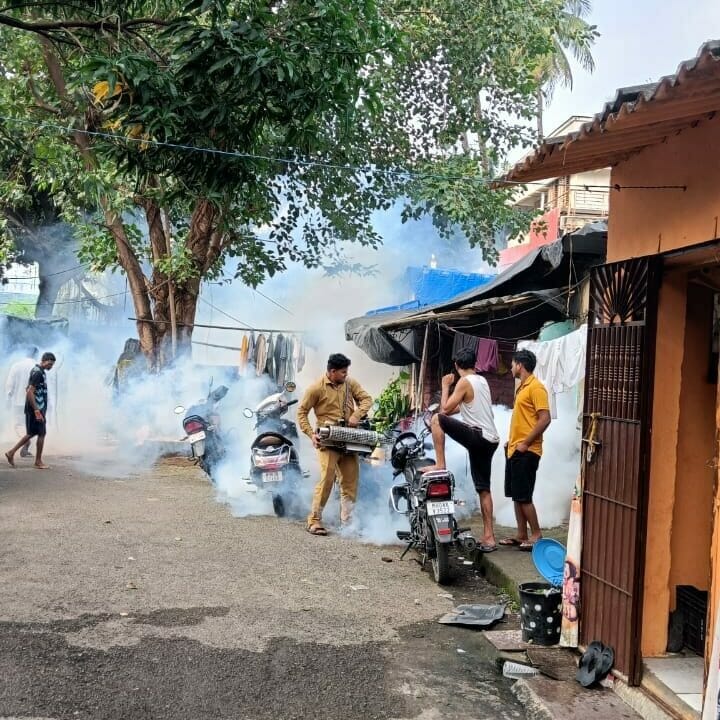
Cases of Malaria and Dengue have been on the rise recently, both mosquito borne diseases. Measures to prevent breeding of mosquitoes is crucial in this case. Public action is urged to prevent the spread of these diseases.
An awareness campaign was carried by the BMC which included house to house survey. Additional municipal commissioner Dr Sudhakar Shinde has urged citizens to download the app ‘Mumbai Against Dengue’. Through the app, citizens will get more information about mosquito breeding spots and care to be taken.
Source: The Free Press Journal and BMC press statement
Rs 4.60 lakh fine collected at Dadar
In just 8 hours, Ticket Collectors at Dadar fined at least 1600 ticketless passengers at Dadar Station and collected a fine of Rs 4.60 lakh on 30th September. The Western Railways deployed 195 TCs at Dadar West station as part of its crackdown on ticketless passengers. The drive lasted from 8am to 4pm.
On 1st October, similar crackdowns were held at Borivali, Bandra and Dadar stations. The TCs formed a human chain to ensure no one could escape and everyone would have their tickets checked. The WR authorities intend to continue at other stations like Borivali, Andheri, Virar, Bhayandar, Vasai, Bandra and even inside first class and AC local trains in the coming week.
Source: The Hindustan Times
(Compiled by Lisann Dias)