Garbage dump at BKC school gets cleared after two years
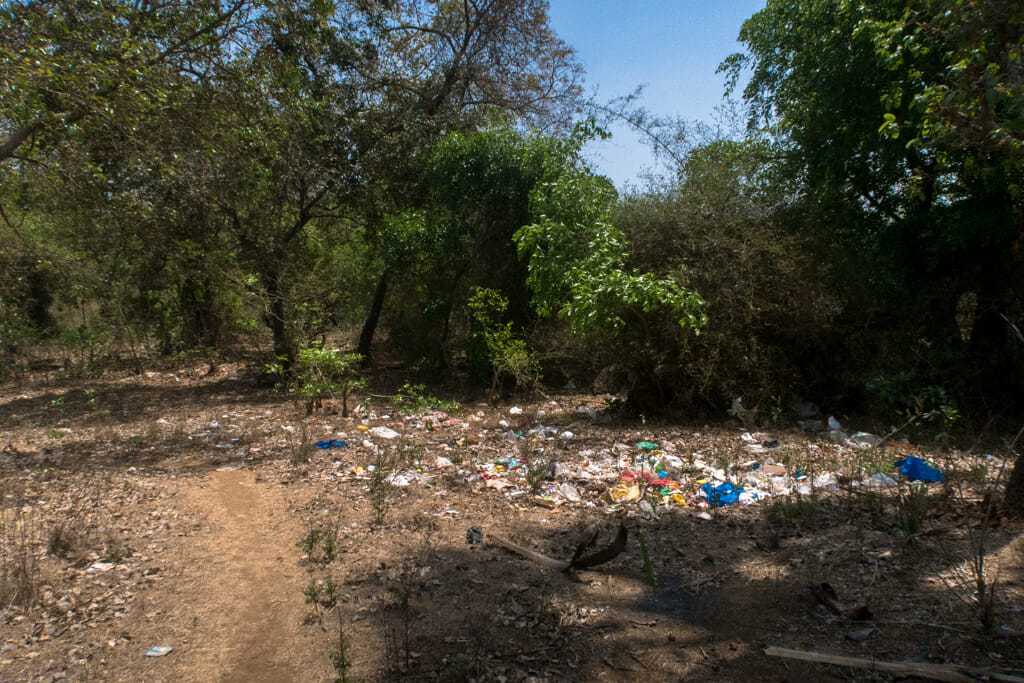
A mountain of garbage had begun to pile up over the past two years in a plot right next to Ascend International School, in Bandra-Kurla Complex (BKC), which began to get cleared up on August 24th.
The garbage pile posed serious health concerns for children and raised a stench during monsoons. “We have already fined the land owner ₹10,000 under the corporation’s Swachhta Abhiyan. The owner has been asked to find the source of this garbage, and ensure that the land remains clean henceforth,” said a BMC official from the H-East ward.
For some months now, parents and students of the school had been fighting with civic authorities. They currently await the total clearing of the ground.
Source: Hindustan Times
Lake at Ghansoli, Navi Mumbai, now a sewage dump
Residents of Ghansoli in Navi Mumbai are upset as a clear lake, spread across five acres and surrounded by over 25 high-rise buildings, is polluted by sewage water from the adjoining village. Citizens of Sector 8 have now alerted authorities. The entire area is spread over 18 acres and the lake is situated in the middle of this huge open space.
Residents are concerned over the threat to the existence of this beautiful, natural waterbody posed by the illegal release of sewage water into it by Ghansoli villagers. One resident pertinently raises an ask for the Navi Mumbai Municipal Corporation (NMMC) to divert the sewage line towards the drainage channel immediately so that the lake may be preserved.
Source: Hindustan Times
Read more: Explainer: Where does sewage in Mumbai go?
Dengue and swine flu claim four lives this year, malaria cases also rise
A total of six deaths were reported this year, of which, two deaths each were related to dengue and swine flu in July. There is now a significant rise in cases of swine flu or H1N1 and monsoon-related diseases in Maharashtra.
Mumbai city recorded a total of 97 new malaria cases between August 14th and 21st. As on August 21st, the city had 509 cases.
Dr Manjusha Agarwal, senior consultant, Internal Medicine at Global Hospital, Parel, Mumbai says that they have been seeing many dengue patients with complications, who need to be monitored closely to avoid fatality. These patients appear to be very weak due to fever and dehydration and should be hospitalised to avoid complications. She has also spoken about the increased incidence of other mosquito-borne illnesses other than malaria and dengue,
Source: The Indian Express
Redevelopment of koliwadas gets green signal from state
Due to the Coastal Regulation Zone (CRZ) rules, residents of koliwadas were unable to expand their houses, and so, Devendra Fadnavis told the state legislature that a special set of development control regulations (DCR) had been formulated to develop the koliwadas by giving incentives like extra floor space index (FSI).
The koliwadas will not be redeveloped as slum rehabilitation authority (SRA) projects, he assured.
The Deputy Chief Minister said that they are considering the cluster approach. This will give them benefits like SRA development. Apart from this, the state will also approve self-redevelopment in cluster mode in the koliwadas. A total of around 32 koliwadas in Mumbai have been demarcated, and work on the rest is underway.
Source: Hindustan Times
Lung infections back among elderly with COVID
Once again, physicians are finding COVID cases with lower respiratory tract infection symptoms involving the lungs in senior citizens and people with underlying ailments.
Doctors claim that while this trend has not resulted in more deaths, the need for oxygen has risen. Around 20 patients are on oxygen support across COVID hospitals. Chest physician Dr Salil has said that there is a renewed incidence of moderate to severe COVID in elderly people with multiple comorbidities.
Source: The Times of India
(Compiled by Saachi D’Souza)