“The impact of childhood trauma still haunts me. I was a very extroverted child, but as I began to feel different, I became introverted. This took a serious toll on my self-esteem,” says Shivv Pandey, a trans man and Bengaluru-based activist. Like Shivv, many transgender individuals carry unresolved trauma into adulthood, with limited access to even basic mental health support.
As they struggle to survive in a hostile society, their mental health remains neglected, overlooked in policies, support systems, and even within their personal lives.
In an earlier article, we highlighted the lack of psychological support for transgender youth in Bengaluru’s educational institutions. Here, we explore the lack of policy-level mental health support for the trans community. Government schemes offering mental health support are minimal. Even those who can afford private therapy often struggle, as many practitioners lack queer-informed training due to outdated, homophobic curricula. As a result, many transgender individuals rely on informal support systems or endure the pain in silence.
“I was haunted by severe insomnia when I came to Bengaluru for work. I left my village in Kunigal hoping for employment and acceptance, but the city offered no respite from discrimination. Living costs were even higher. How can I focus on mental health when my basic needs aren’t met?” asks Priya, a trans woman working as a personal assistant to a judge at the Karnataka State Legal Services Authority (KSLSA). She has been on a contract for three years, earning below minimum wage without a single pay hike.
Acceptance denied, challenges ignored
Lakshman Kanakuntla (Malavika), a teacher and trans author, developed diabetes at 30 due to severe stress from family pressure to marry a cisgender woman. “My health, peace, and time were stolen; how can I forgive that?” she says. Unresolved trauma and societal exploitation continue to weigh heavily on the trans community.
“For many of my trans clients, the journey toward self-acceptance is filled with anxiety — largely driven by fear of how others will react, not just to their gender identity but also their individuality. When acceptance is denied, this anxiety often shapes how they navigate jobs, relationships, and their place in the world,” says Nishtha Sabharwal, mental health counsellor.
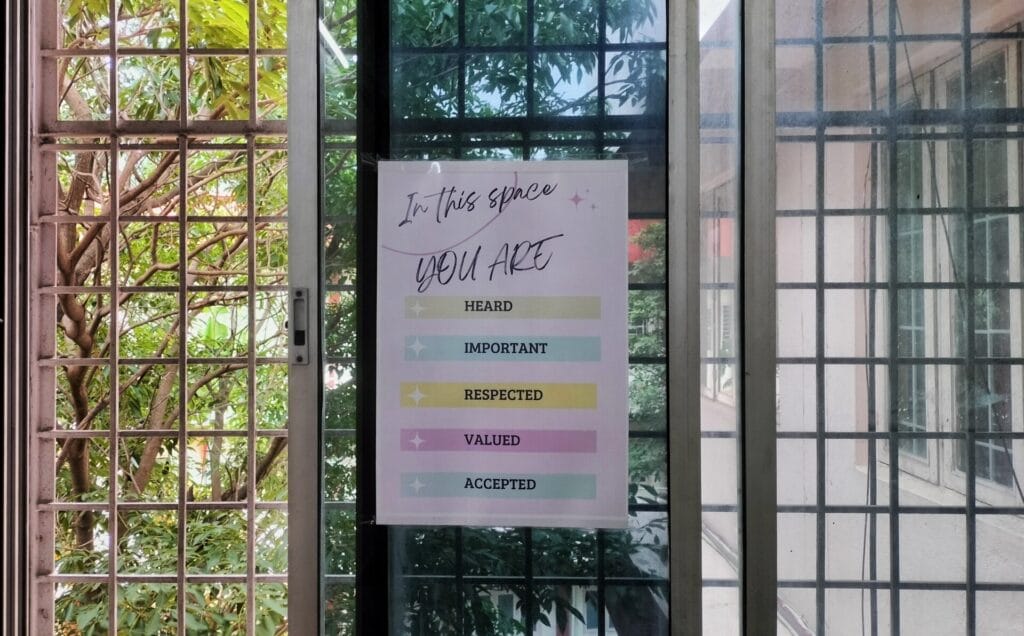
Many of these issues remain unaddressed in mental health support systems. Betilda Jhansi, counselling psychologist at Two More Spoons Therapy, explains that transgender and queer people experience unique life stressors, such as isolation, gender dysphoria (psychological distress that arises when one’s gender identity differs from the sex assigned at birth), misrepresentation, and stigma, in addition to facing many of the same challenges as cisgender individuals.
“These issues are often overlooked in therapy training programmes and government health services,” Betilda says.
Intersectionality and migration: Compounding the trauma
The trauma deepens when tied to intersectionality. “Trans children grow up navigating multiple layers of intersectionality — including socio-economic status, religion, class, caste, neurodivergence, rural or urban environments, and queerness — all of which can be overwhelming and difficult to comprehend at a young age,” says C Sthuwantika, mental health practitioner.
“Growing up, my trans woman friend was the only safe space I had. I moved to Bengaluru in search of better opportunities. However, as a Dalit living in a slum, my friend didn’t feel confident enough to move with me,” says Nisha Gulur, Programme Director at Sangama NGO, a Bengaluru-based queer rights group.
Nisha, a trans woman from Tumkur, came to Bengaluru seeking freedom but faced stigma and rejection, forcing her into begging and sex work to survive initially.
Read more: One step towards inclusivity: Free higher education for transgender students in Maharashtra
A 2022 review paper published in the journal BJ Psych Open highlights that location and access to language play a crucial role in transitioning and self-acceptance. The report mentions that transgender individuals from Tier 2 and Tier 3 cities often migrate to Tier 1 cities for better policy inclusion, non-judgmental environments, and community belongingness.
In 2025, Bengaluru was named India’s most gender-inclusive city in the “Top Cities for Women in India” index, offering hope to transgender migrants. However, psychological support for the community remains limited. A member of the queer rights organisation Raahi, speaking anonymously, notes that the few queer-informed mental health professionals in the city are mostly English-speaking and located in upscale areas, making them inaccessible to much of the trans community.
Policy promises vs ground reality
The Karnataka State Policy on Transgenders 2017 outlines provisions for health, education, employment, housing, and protection from harassment. Yet, little has been done to foster real inclusivity in society.
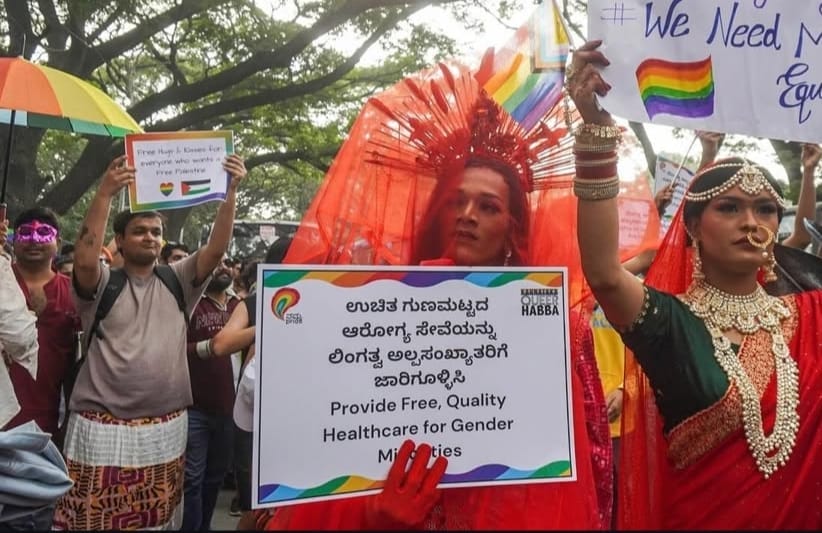
Ondede Trust, a Karnataka-based transgender activists’ organisation, has made representations to the Directorate of Health and Family Welfare Services to frame a health policy for the State’s transgender community — still to no avail. “Government officials lack basic awareness of how to address us correctly. We are just treated as a vote bank with no intent to implement inclusive policies,” says Rakshitha Mallikarjuna, transgender youth activist and director of Ondede Trust.
The policy mandates that all programmes under the Directorate of Women and Child Development, including Sakhi One Stop Centre (OSC) and Santhwana Scheme, should apply to the transgender community. However, officials themselves lack clarity about this inclusion, and no efforts are being made to raise awareness about the policy extension.
“The Centre is specifically for women and children. There is no clear directive on whether or not we can include the transgender population in the scheme,” says Amitha Athresh H R, centre administrator at OSC, Bengaluru Urban. The centre offers in-person counselling, legal aid, police protection, shelter, and medical facilities for clients in need of critical support. Similarly, the Santhwana Scheme, a state initiative offering counselling and support to women survivors of violence, does not even have a centre in Bengaluru Urban district.
Limited understanding of trans mental health needs
Under the District Mental Health Programme, the Bruhat Bengaluru Mahanagara Palike (BBMP) appoints five counsellors to visit public schools and colleges fortnightly to conduct mental health awareness programmes and provide external counselling for students. Periodically, teachers and medical officers in Primary Health Centres (PHCs) are trained under this programme.
“The counsellors and I get several cases involving transgender students. Contrary to common misconceptions, being trans is neither a disorder nor a crime. Our priority is to counsel parents to accept and support their children,” says Dr Vikram Arunachalam, consultant psychiatrist, National Mental Health Programme, BBMP.
However, transgender activists point out that as first responders, teachers and even in-house counsellors are often unaware of this crucial step to educate parents about their children’s mental health needs, and instead engage in informal conversion therapy.
Amid the dearth of support, Tele MANAS, a national 24/7 toll-free mental health service managed by NIMHANS in Bengaluru, seems to be the only government scheme currently accessible for transgender individuals in the city.
Tele MANAS staff in Bengaluru report 369 calls from transgender individuals since 2022, highlighting recurring issues like anxiety, guilt, gender-based violence, and the mental strain of systemic stigma. Many also express suicidal thoughts or self-harm due to emotional isolation and societal rejection.
Psychology curriculum not queer-affirmative
While the government does little to raise awareness about the few queer-friendly schemes that exist, transgender individuals remain sceptical of these schemes, as there is no guarantee the counsellor they connect with will be queer-informed.
“We don’t have any therapy modules on the trans community in the mainstream psychology curriculum. The absence of queer and trans-inclusive approaches means that even counselling and therapy cannot guarantee safe spaces,” says Jyotsana L, student counsellor at Kristu Jayanti University.
The World Professional Association for Transgender Health (WPATH) specifies standards of care and ethical guidelines for the psychiatric, psychological, medical, and surgical management of gender dysphoria. Yet, many professionals remain unaware of these guidelines.
“Our colloquial language has very few respectful ways to address the transgender community and is most often associated with offensive slang. The psychology curriculum taught in colleges has also contributed to this oppression by using insensitive terms like ‘sexual deviancy,’ ‘gender identity disorder,’ etc,” adds Betilda.
“Psychological diagnosis places blame on an individual, ignoring structural issues in society. For trans folk, this can heighten feelings of insecurity, as their struggles frequently stem from their gender identity and the deep-rooted societal discrimination they face. When society views trans identities as unnatural, the diagnosis can reinforce stigma, leading to internalised shame,” says Anagha S, programme designer at Allo Health.
Representation and awareness: Key to making society inclusive
Organisations like Solidarity Foundation, Periferry, Mariwala Health Initiative (MHI), and Sangama run ongoing awareness and training programmes to promote queer-inclusive practices across sectors. Periferry’s REVIVE initiative also provides job training, like business communication, digital literacy, mock interviews etc, to help queer and trans individuals access better employment opportunities. MHI is one of the few organisations providing Queer Affirmative Counselling Practice courses for mental health professionals.

“Where are trans members under the one per cent reservation in Karnataka?” asks Malavika. As a teacher, she believes that representation in educational spaces could alter the way the trans community is perceived, especially by children. The Tele MANAS team also emphasises that ensuring representation of professionals from within the trans community in the counselling workforce is crucial to creating safe and affirming mental health support.
What needs to change
- Create awareness about queer inclusivity in schools, colleges and government departments.
- Introduce modules on gender diversity, trans mental health, and affirmative therapy practices in the Psychology curriculum.
- Ensure jobs for transgender community under the State-mandated 1% reservation scheme.
- Facilitate the training and hiring of mental health professionals from within the transgender community.
Queer-affirmative mental health support helpline numbers:
- Tele MANAS: 14416
- Rainbow Helpline: 9639630202
[The opinions and views expressed are those of the author. Laadli and UNFPA do not necessarily endorse the views.]
Harshitha is a Laadli Media Fellow, and this piece was produced as part of her work under a special Media Fellowship on the theme, Mental Health of Women and Persons with alternate Sexual Orientation and Gender Identity (SOGI).