Madiwala Kere Habba with a photo contest

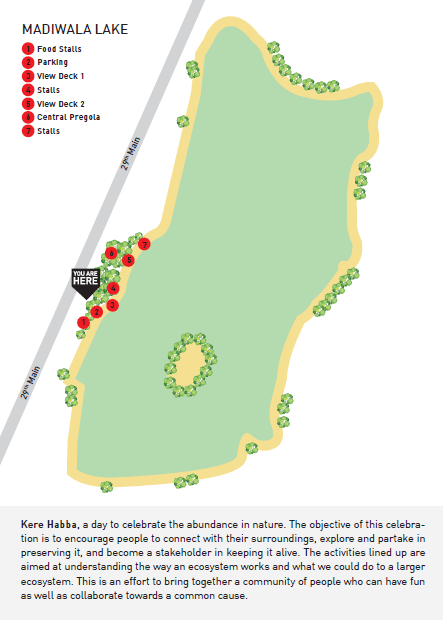
The third Kere Habba (Lake Festival) of 2015 is all set to take place at Madiwala Lake on Saturday, 11th April 2015. The event has been planned in two sessions – morning 6:30 a.m. to 10.00 a.m. and evening 4:00 p.m. to 7:00 p.m.

Kere Habba is an initiative of The Namma Bengaluru Foundation. Reports of the previous two Kere Habbas can be seen on these links – Kere Habba at Kaikondrahalli LakePuttenahalli Kere Habba.  

Visitors to Madiwala Kere Habba can expect lots of fun activities for both children and adults. The schedule includes bird watching, sketching, cycling, craft, dance, music, story telling, gardening and more. The Chief Engineer of the Lake Development Authority will talk about the plans to make Madiwala Lake a model “bio-diversity lake”. There will be an interactive session on the problems faced by lakes and how Madiwala Lake in particular can be made the pride of Bangalore. There will be food stalls to add to the festive atmosphere. 
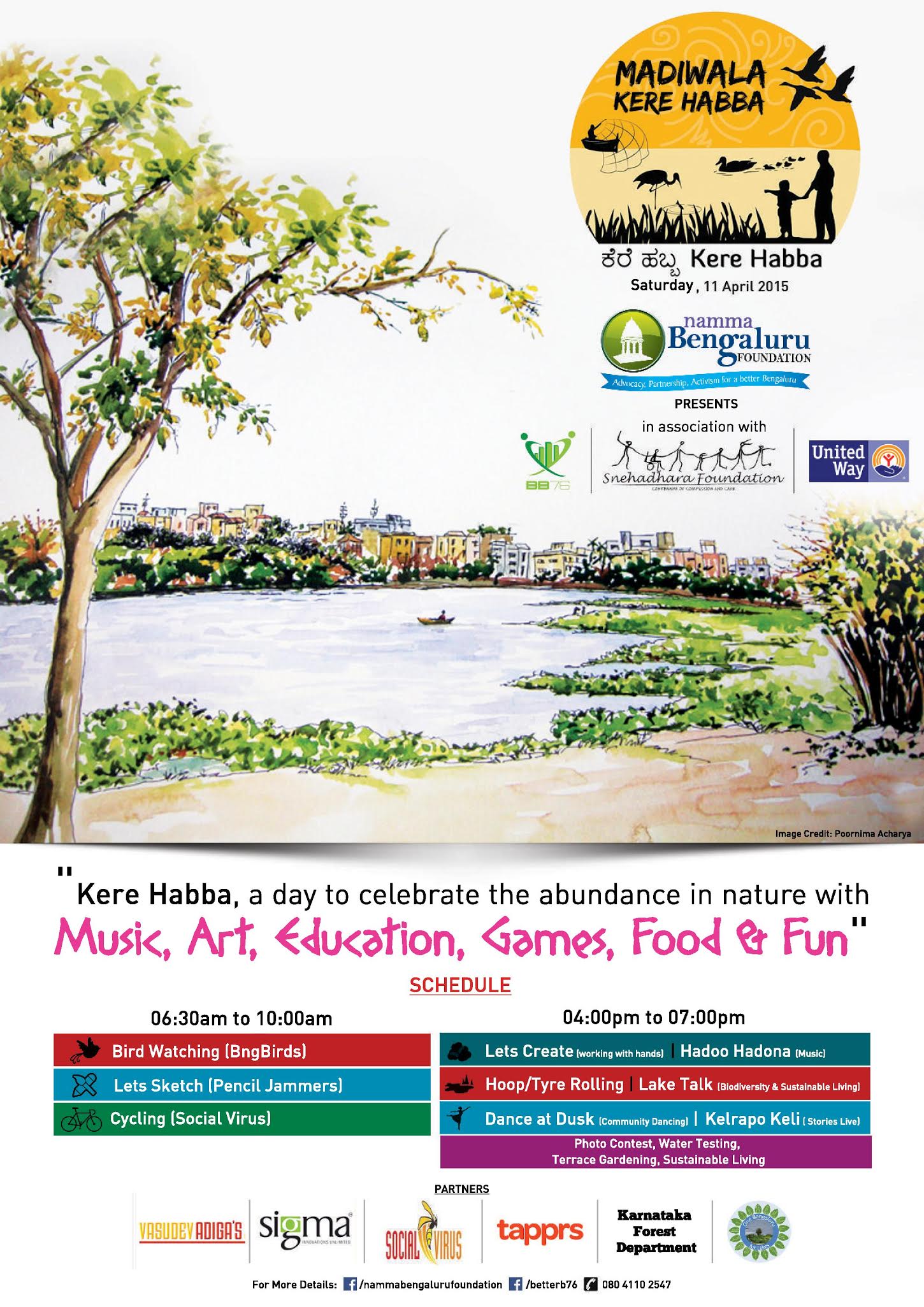
Shutterbugs should not miss out on the photography contest that has been organised. The theme of the photography contest is “Lakes and their role in our city”. Entries should be submitted online by 11th Apr 2015 and results will be announced on 15th Apr. Entries will be judged on the basis of (a) quality of the picture (b) connection with the theme (c) caption submitted with the photograph. Three best entries will be chosen by an expert panel of judges. Prizes are sponsored by Tapprs. For more details, and to submit your entry please go here.
 
Details of the habba are below. For any more information, please contact Arbind-9845193233 or Ramesh-9886051931, from the Madiwala Kere Habba team.

Leave a Reply

Your email address will not be published. Required fields are marked *

Similar Story

The wild in the city: What citizen scientists tell us about Bengaluru’s biodiversity

Spatial and temporal biodiversity patterns, as observed by citizen scientists in the city during 2016-2025, were studied at a datajam in December 2025.

Imagine you’re out on a morning walk, phone in hand, when you spot a butterfly you’ve never seen before. You snap a photo, log it into a citizen science app, and voila! You’ve just contributed to crucial biodiversity monitoring. This isn’t just a hobby; it’s part of a global movement where ordinary people collect, record, and sometimes analyse data about plants, animals, and ecosystems. Citizen science stretches the reach of ecological research. Every observation adds to unique longitudinal datasets that reveal phenology — periodic events in the life cycle of a species — along with species distribution shifts and population…

Similar Story

Air quality management is a governance problem, not just an environmental one

Despite massive funding, Indian cities face weak governance, poor data, and limited capacity, as air pollution continues to worsen.

Indian cities are struggling to breathe. Air pollution is a year-round governance challenge. In 2024, 35 of the 50 most polluted cities globally were in India, with PM2.5 concentrations above 66.4 μg/m3. This is at least 13 times the World Health Organization (WHO) guidelines and at least 1.6 times the National Ambient Air Quality Standards (NAAQS) in India. Citizens continue to bear the brunt of worsening air quality, and urban local governments (ULGs) are at the forefront of the problem, being primarily accountable for their citizens' first mile. While they do have a role to play in addressing this threat,…