Madiwala Kere Habba with a photo contest

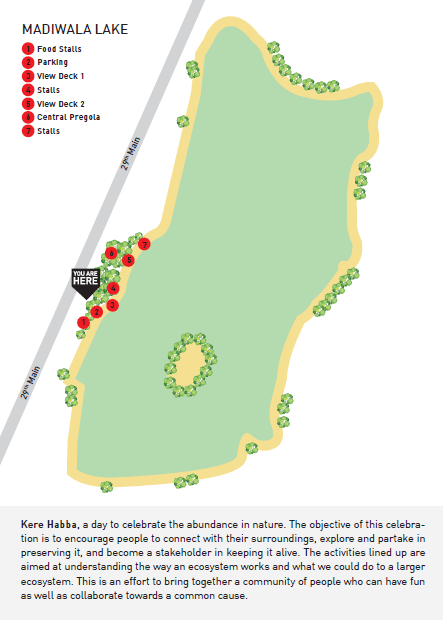
The third Kere Habba (Lake Festival) of 2015 is all set to take place at Madiwala Lake on Saturday, 11th April 2015. The event has been planned in two sessions – morning 6:30 a.m. to 10.00 a.m. and evening 4:00 p.m. to 7:00 p.m.

Kere Habba is an initiative of The Namma Bengaluru Foundation. Reports of the previous two Kere Habbas can be seen on these links – Kere Habba at Kaikondrahalli LakePuttenahalli Kere Habba.  

Visitors to Madiwala Kere Habba can expect lots of fun activities for both children and adults. The schedule includes bird watching, sketching, cycling, craft, dance, music, story telling, gardening and more. The Chief Engineer of the Lake Development Authority will talk about the plans to make Madiwala Lake a model “bio-diversity lake”. There will be an interactive session on the problems faced by lakes and how Madiwala Lake in particular can be made the pride of Bangalore. There will be food stalls to add to the festive atmosphere. 
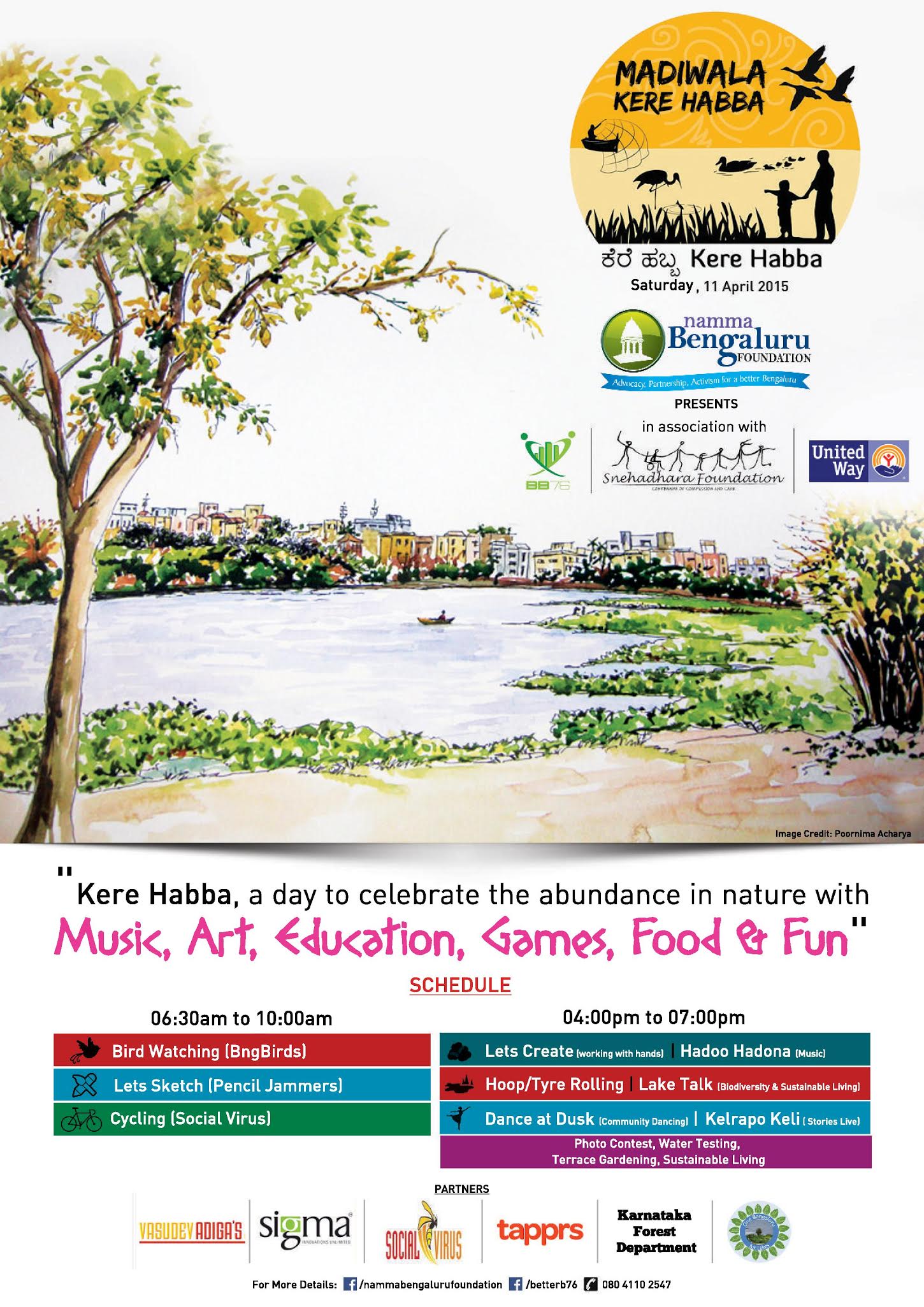
Shutterbugs should not miss out on the photography contest that has been organised. The theme of the photography contest is “Lakes and their role in our city”. Entries should be submitted online by 11th Apr 2015 and results will be announced on 15th Apr. Entries will be judged on the basis of (a) quality of the picture (b) connection with the theme (c) caption submitted with the photograph. Three best entries will be chosen by an expert panel of judges. Prizes are sponsored by Tapprs. For more details, and to submit your entry please go here.
 
Details of the habba are below. For any more information, please contact Arbind-9845193233 or Ramesh-9886051931, from the Madiwala Kere Habba team.

Leave a Reply

Your email address will not be published. Required fields are marked *

Similar Story

Why concrete lakes are pushing away Bengaluru’s waterbirds

As natural shorelines vanish and extensive restoration destroys habitats, city lakes see a sharp decline in special wetland bird species.

Since Bengaluru’s lakes were formed by damming water flowing down valleys, they are typically wedge-shaped, with a gentle slope and a deep basin towards the embankment. This promotes the growth of diverse vegetation and animals, each adapted to a particular water depth. The result is a natural zonation – reedbeds and shoreline vegetation at the edges, floating and submerged vegetation in the middle, and open water at the deepest end. During the Open City biodiversity datajam held in December 2025, our group examined the ecological trends around Bengaluru’s lakes. In an earlier article, we examined how migrant and resident waterbirds…

Similar Story

Can cool roofs beat Chennai’s heatwaves? A look inside the state’s Green Schools push

Amid heatwaves, the cool roof initiative is being implemented across Chennai schools. But experts warn that it cannot be the single solution for urban heat.

Over the past few years, maths teacher Usha found her classroom sweltering during her usual 12.50–1.50 pm period, on the second floor of Perunthalaivar Kamarajar Government Girls Higher Secondary School. “It was so difficult to take class during the peak hours,” she says. But this year, she mentions that it feels slightly bearable, and attributes this to the shade of the trees, the wind blowing through the building, and the latest addition — solar-reflective paint on the roof. Data from a state government and UNEP Cooling pilot project at the Ambattur school shows that reflective coating brought the classroom’s internal…