At the heart of a nation’s character lies how it treats its most vulnerable. Today, India finds its soul stretched on a rack, its conscience torn between compassion and conflict, its legal pillars wobbling under the weight of a single, heartbreaking issue: the fate of its street dogs. What began as a Supreme Court suo moto hearing on August 11th has morphed into a national referendum on empathy, duty, and coexistence, exposing a deep, painful schism.
Two sides
- Caregivers and animal lovers: They follow Animal Birth Control (ABC) and Catch-Neuter-Vaccinate-Return (CNVR). Their goal is to reduce dog populations and rabies through humane, scientific methods. They work with their own time and money, filling the gap left by weak government action.
- Opponents: They see street dogs as dangerous and want them removed to shelters. But mass relocation is unrealistic, costly, and cruel—leading to high death rates and overcrowded facilities

Read more: Pawsitive co-existence: Why street dogs can be your best friends too
The problem
- The government failed to properly implement the ABC programmes. Now, instead of fixing this, the burden is being shifted to citizens, taxpayers, and the dogs themselves.
- Shelters are not safe havens. Many dogs die during transport or suffer in poor conditions.
- Violence against dogs is rising—poisonings and killings—while caregivers face hostility.
Court remarks
Judges have expressed strong concerns about public safety, dog bites, and accountability of feeders. Some remarks suggest dogs are unpredictable and dangerous, and that feeders should take full responsibility.
Timeline highlights
- August 11, 2025: A bench directed immediate capture and relocation of strays in Delhi-NCR to shelters, sparking controversy.
- August 14, 2025: A larger 3-judge bench (Justices Vikram Nath, Sandeep Mehta, N.V. Anjaria) heard the matter, with a verdict reserved, noted the Supreme Court Observer.
- August 22, 2025: The court modified the earlier order, allowing sterilised and vaccinated dogs (unless rabid or aggressive) to be released back to their original areas, following the Animal Birth Control Rules.
- November 7, 2025: Bench directed removal of strays from schools, hospitals, etc., and cattle from highways, with a The Hindu article from November 7, 2025, detailing the order.
- January 7, 2026: Court flagged increased dog bites, criticised authorities for failing to implement ABC Rules, and continued the hearing, as reported by Bar and Bench.
- January 8, 2026: Hearing continued, focusing on the implementation gap and need for a unified approach.
- January 13, 2026: A hearing was scheduled and took place, with animal welfare groups confirming the next date as 20 January.
- January 20, 2026: What is next?
The bigger picture
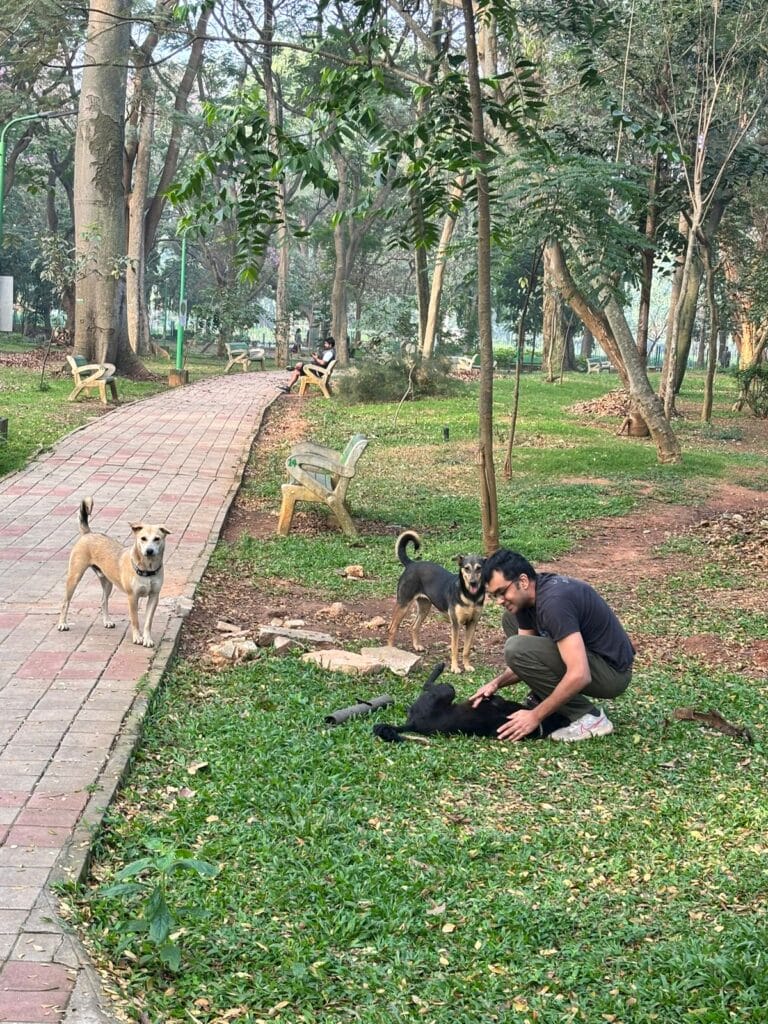
This is not just about dogs. It is a test of India’s values:
- Do we solve problems with science and compassion, or fear and punishment?
- Do we uphold constitutional principles of kindness, or abandon them?
Caregivers ask only to continue their work, not be punished for the state’s failures. The real solution lies in returning to compassion, evidence-based policy, and shared responsibility.
[This was first published on the CJ Memorial Trust blog and has been republished with some edits with the author’s permission.]
Will India choose fake activism or ground reality as law, Compassion only for animals while kids and elderly pay the price. This should have been the description.
Start collecting money to give it to Government to build the shelters as you people want these dogs to be there. Sitting comfortably at home, crying about the dog menace is not a solution, neither killing them.
Not putting even 1 rupee on sterilizing or even calling authorities if people like you see a female dog in you locality who can get pregnant but you want to get rid of them. Why? because you think it is dog lovers duty.
I feel that I do not belong to either of the two sides that you have listed. And perhaps I speak for many.
The meek also include many humans, not just street dogs. Those of us who have to use the road to walk for work, or ride a bicycle, are more prone to facing hungry street dogs than the lucky few who meet friendly well-fed dogs, possibly in a (rare!) park or in a protected setting (as in your photos). Many do not have cars to protect them on the streets.
Even Gandhiji faced this dilemma. There is a well-known case. And what did he do? He allowed culling to protect weak workers who were being attacked regularly.
Here are a few recent articles on that old instance:
https://www.civilsocietyonline.com/cover-add-ons/gandhi-on-stray-dogs-ahimsa-and-society/
https://www.business-standard.com/article/pti-stories/culling-of-stray-dogs-mahatma-gandhi-s-write-up-quoted-in-sc-115111801388_1.html
Yes, we need compassion. But let us also do something about the suffering other humans than to consider only ourselves who are not facing angry street dogs.
Thanks
I have dedicated myself completely from a decade as a caretaker ,snd have been feeding , along with treating minor health issues ,…many aggressive ,unhealthy dogs were saved, they turned non aggressive , calm and griendly. But people are cruel.around. Dogs faced pronlems with humsns , but never any dog harmed a human. Out of fear few pdople complain ., but many indulge in teasing ,chasing ,hitting and poisoning and killing.
SC Judgement is really very inhumane, it is increasing attacks on poor dogs and even caretakers.
Honourable Supreme Court should punish the actial culprits responsible ( Municipal.Authorities and Political parties) but not inmocemt dogs and caretakers. I have been spending huge amounts on the strays since many yearly. I even requested through my writimgs to Governments, Municipaloties and AWBI requesting proper implementation of ABC Rules . But there was no response from any of them.
Basing on few incidents , it is really a mere injustice being done to many innocent dogs and caretakers.
One more major reason which nobody thinks is the trash /waste collection from homes/residences. If you can recalll….earlier ghere was a different system. People /residents used to discard /throw the waste from their houses in the trash bins kept here and there in the streets which also contains left over food , which these stray animals could eat and survive . But from last few years, the system of trash collection from home directly into the vans and dumping far away somewhere else is adopted. So one side due to negligence of political people and Municipal authorities, not following ABC Rules , dog populations increased whereas scarcity of food too increased. Few people eventhough feed sometimes, many people indulge in hitting dogs ,not letting them eat even the food served to them .
Well fed dogs are not aggressive and never attack any humans . Only hungry , unhealthy dogs in pain , and undergoing human abuse revert in many cases .
These Stray dogs are our protectors, whenever they perceive some threat or anykind of burglary trials, these poor creatures sacrifice their lives , it happened many times in our locality , poor dogs were poisoned and killed too. Their instincts make them bark whenever there is some new vehicle entering into the areas they stay. Now a days monkeys from jungles ( their actual habitat) have migrated into almost all the cities,towns and villages , due to lack of food and water ,due to deforestaton in the mame of development. But where these dogs are around us these monkeys keep.distance from us. That way too they help humans. Cc cameras help.us find criminals after the incidents in many cases , but dogs alert us before any burglary occurs . And people blame them , their barking is nuissance and disturbs sleep.
Humane appproach, following ABC Rules strictly was and is the real solution ..not removing and killing. My humble request please punish the actual culprits ( Municipalities , Political and related ) who didn’t implement and follow the ABC Rules .Find out where the funds misused which were for implementing ABC Rules ( Vaccination, Sterilizations) .Into whose pockets they went??