Across Bengaluru, it is common to see abandoned photos and idols of deities left under sacred trees, near parks, or outside temples. Does this sight disturb you? It bothered us deeply to see these divine symbols—once the centre of our homes—left to become soiled, discoloured, and neglected. What is even more distressing is that most of these items eventually end up in landfills.
We felt that this needed to change. Such items deserve a respectful farewell, and the needless waste of valuable resources must come to an end. So, what’s the solution?
The journey
Our journey began with a pilot project at Swachagraha Kalika Kendra at HSR Layout in October 2024. We collected abandoned photos and idols, studied their composition, and explored ways to recover materials from them. The experience was eye-opening: we discovered that more than eleven different types of resources could be reclaimed from these items.
This confirmed the importance of offering communities a respectful, practical way to retire their sacred objects—while also demonstrating that even divine symbols can be part of a circular economy.
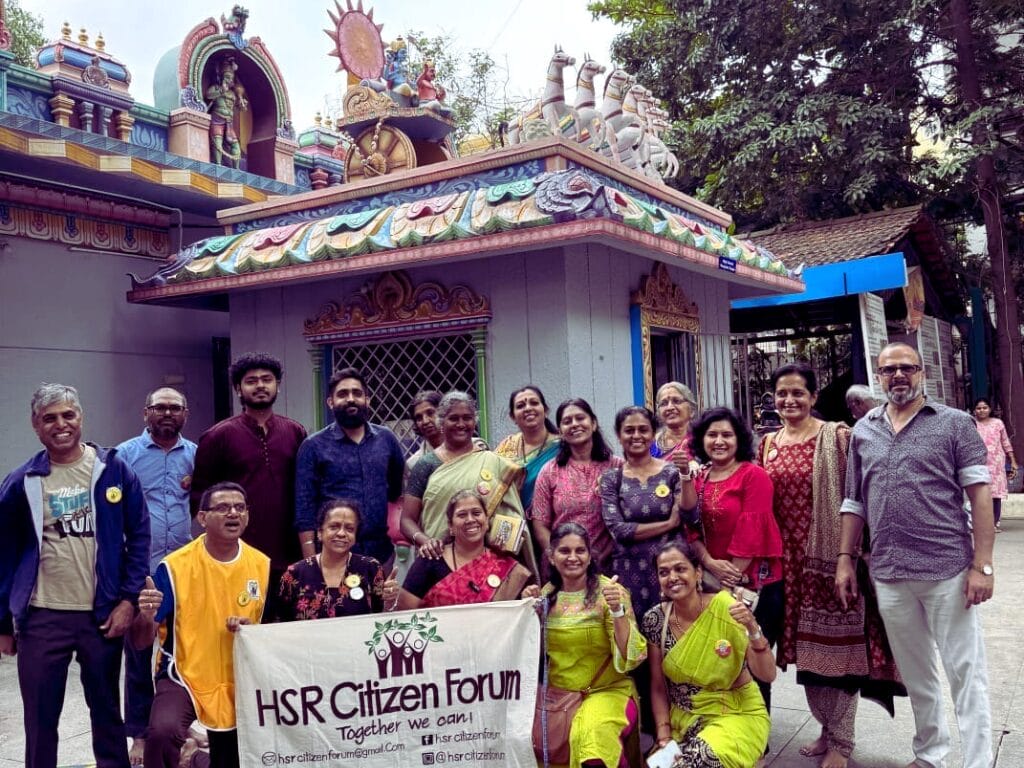
Soon, we started a structured collection drive at a designated location, which was met with an overwhelming response at every edition. Each drive followed a dual approach: the residents were invited to drop off divine items they no longer needed, while our volunteers proactively cleared abandoned items from across HSR Layout.
In our first planned collection drive in March 2025, we received about 1.5 tonnes of divine items. These included photo frames, idols, blouse pieces, books and a few more religious items. It took our team a week, about 20-25 hours, to meticulously segregate these items and ensure they reach the correct destinations.
The process
Our collection events are typically announced a fortnight in advance:
- A local temple, which aligns with the sentiments of the people, is designated as the drop-off point.
- Residents are requested to drop these items in-person only.
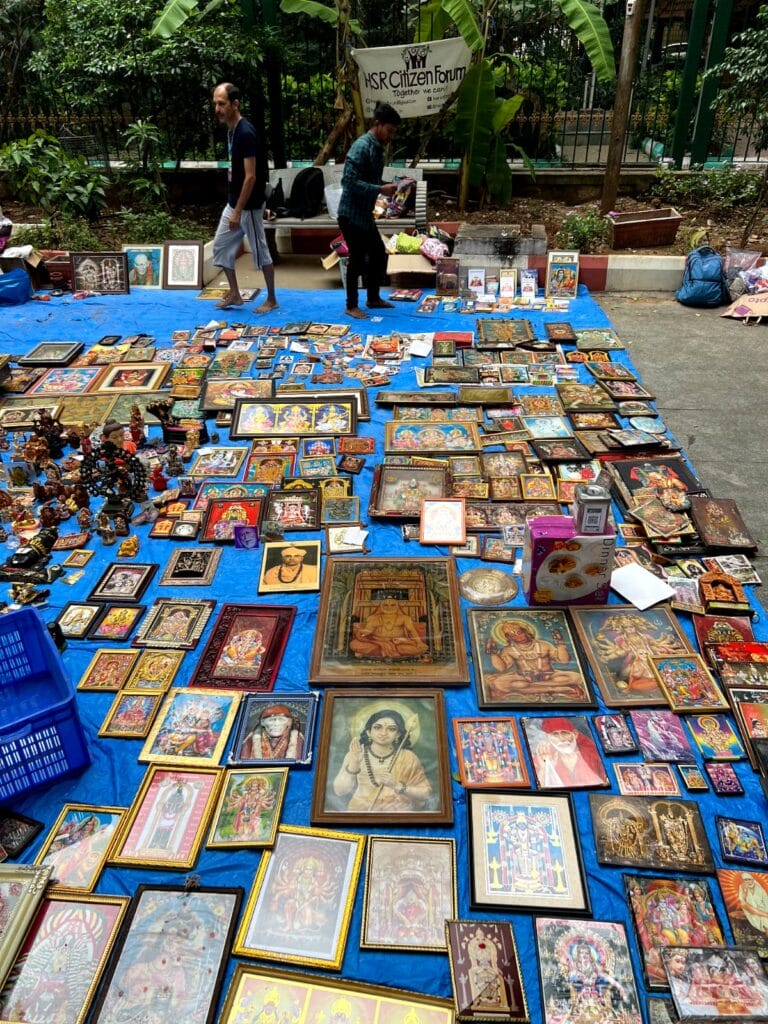
- The items brought are weighed and kept for display to encourage rehoming.
- Following a Visarjana/ Udhvaasana Pooja to offer a reverent farewell, the collection is opened for “second adoption,” where many items find new homes.
This ‘sacred swap’ enables participants to adopt preloved, often rare, divine items. This unexpected exchange has fostered a novel culture within the community, where these items are cherished and repurposed rather than discarded. By giving these items a second life, participants not only embrace sustainability but also forge a deeper emotional connection to their shared heritage, thereby reinforcing reuse as a primary practice and recycling as a last resort.
Read more: Abandoned gods: Discarding religious waste with care
Community involvement
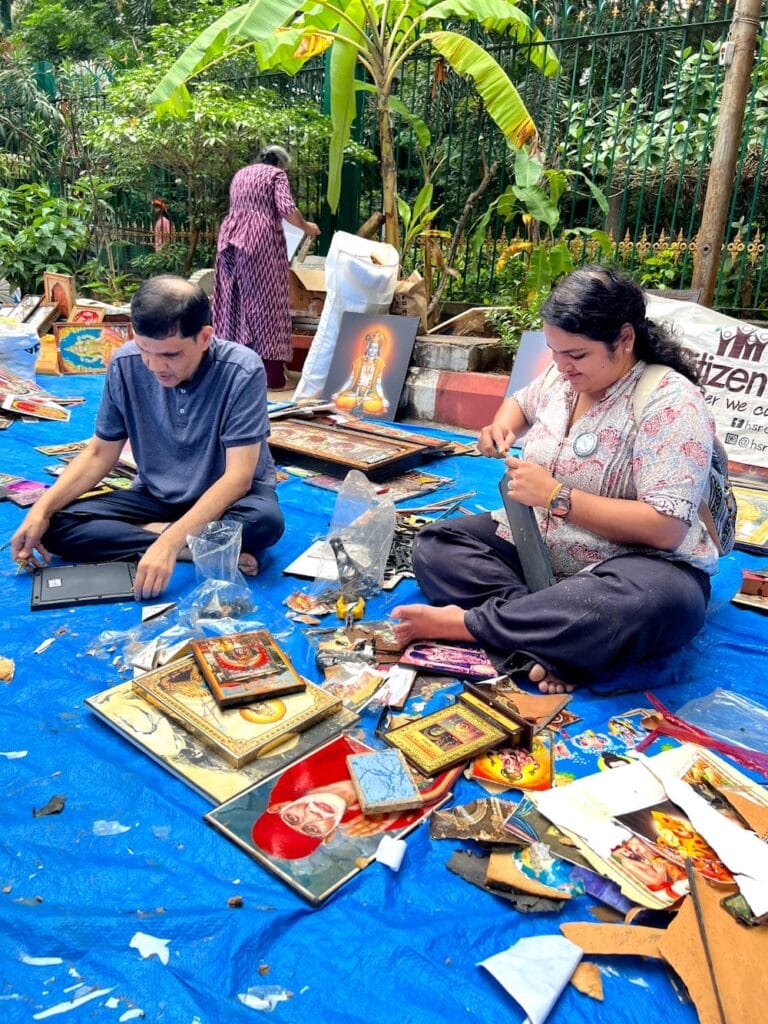
Another key highlight of this event is an on-site dismantling demo. We encourage participants to bring basic tools, such as screwdrivers and cutting pliers, to get involved. After a demonstration on how to safely dismantle the glass glazing, wooden frames, mementoes and laminates, the volunteers work together to ensure that every possible component is diverted from the landfill and sent for recycling. This volunteering activity continues for several days following the main event until every item in the collection has been properly sorted and sent for recycling.
The hidden complexity of solid waste segregation
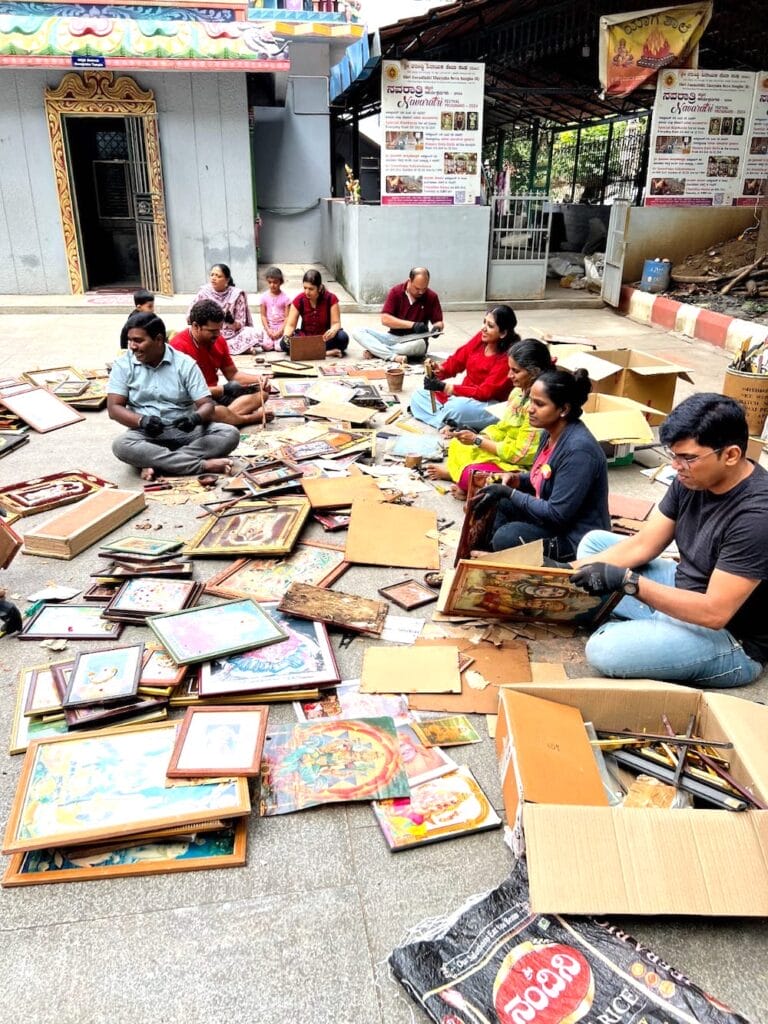
This hands-on experience at the event serves as a practical learning session on responsible consumerism. Participants discover the hidden complexity of everyday items. For instance, a single picture frame can consist of 8–10 distinct materials, often including various types of plastics, wood, metal, electronics and adhesives. This complex material composition significantly complicates the recycling process, as each material requires separate processing.
Moreover, laminated picture frames and POP (Plaster of Paris) idols were identified as non-recyclable due to the inseparable bonding of dissimilar materials, and hence, unfortunately, end up in landfills, contributing to environmental contamination. Even small items like incense holders, miniature statues, and decorative items pose a giant recycling challenge due to their variety and size. These lessons underscored the importance of minimalistic purchasing, selecting sustainable materials, and prioritising reuse over buying new items, all in the interest of our environment.
A successful initiative
Our success stemmed from a combination of various factors:
- A core group of committed volunteers is invaluable in diligently managing the collection, segregation, and dismantling processes from start to finish.
- Partnering with a local dry waste collector to ensure the efficient removal and recycling of the collected items is essential.
- The collection of a nominal donation can be crucial, as it allows the team to compensate the recyclers fairly, fostering a sense of value and appreciation for their work, and securing their ongoing commitment.
- Finally, hosting the event at a temple, with priests conducting the Udhvaasana/Visarajana Pooja, provides the residents with a profound sense of comfort, knowing their sacred items were handled with utmost reverence.
Such initiatives successfully address the issue of improper disposal of divine items by offering a respectful alternative to abandoning or haphazard dumping. To maintain momentum, we need to establish a consistent schedule of community-based events.
Temples can serve as collection points via dedicated drop-off boxes, leveraging the accessibility and sanctity of these spaces to encourage responsible behaviour. Our impact is evident: after four editions in HSR layout, we have seen a significant decrease in dumping and a sharp rise in participation at these events, with residents coming from various parts of Bengaluru and Mysuru
So far, we have received 5–6 tonnes of items, which we have successfully sorted and diverted from reaching landfills.
Beyond the spiritual and communal aspects, this initiative is a great opportunity to involve the youth and infuse in them ideas of minimalism, conscious consumerism, resource conservation and to come together for a cleaner, greener planet.
what is the contact number of the person who can be contacted to know details of venue for depositing religious materials
You may please write to us at hsrcitizenforum@gmail.com and we will reply to your queries.
Next date of collection @ Bangalore
7th February 2026, Saturday
8:00-10:30am
at Sri Varasidhi Vinayaka Temple, Sector 7, HSR Layout.
when is the next date of collection and the venue.
Really a unique & respectful homage to these divine idols, photos and allied items of worship which adorned the places of worship in home and temples.More over recycling of the salvaged remnants ensures upkeeping health & hygiene of fellow men around us and in large our global environment.
7th February 2026, Saturday
8:00-10:30am
at Sri Varasidhi Vinayaka Temple, Sector 7, HSR Layout.
It’s indeed a Devine way to addressthe issue, hat’s off to the volunteers to spare their time & efforts to bring a solution to the complex problem….more areas need to follow
Thank you
it’s indeed a novel way to address the issue of waste generated from our Puja rooms, not knowing how to dispose, ppl abandon them, the community getting together to address this issue, is an eyeopener, hat’s off to all the volunteers, more areas should follow this unique concept….
thank you
ನಿಜವಾಗಿಯೂ ಒಳ್ಳೆಯ ಕೆಲಸಮಾಡ್ತಾ ಇದ್ದೀರಾ
ಅಭಿನಂದನೆಗಳು
ಧಾನ್ಯವಾದಗಳು
where is the collection drive happening. any contact information that can be shared?
7th February 2026, Saturday
8:00-10:30am
at Sri Varasidhi Vinayaka Temple, Sector 7, HSR Layout.
it really hurts when we see pictures of so called God,fallen on roads and chambers… thanks for cleaning the roads and keeping the God given environment, pure and helping provide fresh air to the citizens ,it should be done in entire Bangalore and workers should be paid appropriately and before time…….
Thank you. This program at HSR is done entirely by a group of citizen volunteers called HSR citizen forum. It sure is an arduous task to segregate and dismantle these items as most of them have mixed materials and unfortunately, despite our best efforts may still end up in landfills. The best way is to reduce consumption, use items till the end of life and pass on to others for rehoming. Refuse- reduce- reuse and then recycle!!
Hi , I would like to know when is the next drive. I am staying in kanakkapura road, doddakallasandra.
I would also like to participate and support. kindly let me know the details. you can contact me @9884425930
7th February 2026, Saturday
8:00-10:30am
at Sri Varasidhi Vinayaka Temple, Sector 7, HSR Layout.
I wants to become a volunteer for this noble cause.
I am at HSR sec 2. pls include me also in next drive and related other activities.. ping me @ 9811555680
please join us on 7th February 2026, Saturday
9:00-12:00 noon
at Sri Varasidhi Vinayaka Temple, Sector 7, HSR Layout.
we would love more and more people to volunteer with us.
could we know the next collection date and venue please.
when is your next date of collection of old idols and photos.
when is the next collection date?
Good effort. Keep it up. Wants to join in this grpup , extend the same in our areas.
let this involve in schools and colleges to encourage earn while learn.
let regular temple participate in this and Have devine blessings by doing the same.
Service to society is service to god.
Add my name in you group.
With Regards,
R.Raju
heartfulness.org
volunteer.