Bengaluru is known for its high levels of citizen activism, but low level of citizen participation in elections, the most important instrument of democracy. The trend continued this Lok Sabha election too.
However, some apartment societies did a lot of work to buck this trend and improve the voter turnout. One such society was ours – Prestige Shantiniketan in Whitefield. With 3000 flats, 12,000 residents and more than 2000 registered voters, we are a powerhouse in terms of voter numbers, and we did everything to make sure we had a high voter turnout this election.
To start with, we had a voter registration drive wherein we first identified the residents whose names were missing from the voter rolls. For this, we checked our database of residents against the website of the Chief Electoral Officer, Karnataka.
Next, we created a microsite that gave information on voter registration, such as how to fill forms for new registration, for shifting to new constituency etc. Any resident could check this site and get relevant, authentic information.
We also printed registration forms in which we filled up common information such as constituency name, so that residents would only have to fill in their personal details. This helped residents avoid unintentional mistakes. We have been supporting voter registrations in our society continuously over the past two years, and hence were already familiar with the process.
Our experience was that voter registration would more likely be successful if the form was submitted physically rather than online. So we preferred this route. We established connections with local BBMP officials to make sure our applications were duly processed. We collected forms from residents and submitted it to officials. This resulted in much higher voter registrations from our society compared to other societies nearby, whose applications were rejected in large numbers.
Next, we went on a collective drive to increase voter turnout in our society. Children from the society formed groups, and went to apartments urging residents to be available on the voting day and to cast their votes. They also staged street plays to draw residents’ attention. Appeal from our young residents had great effect.
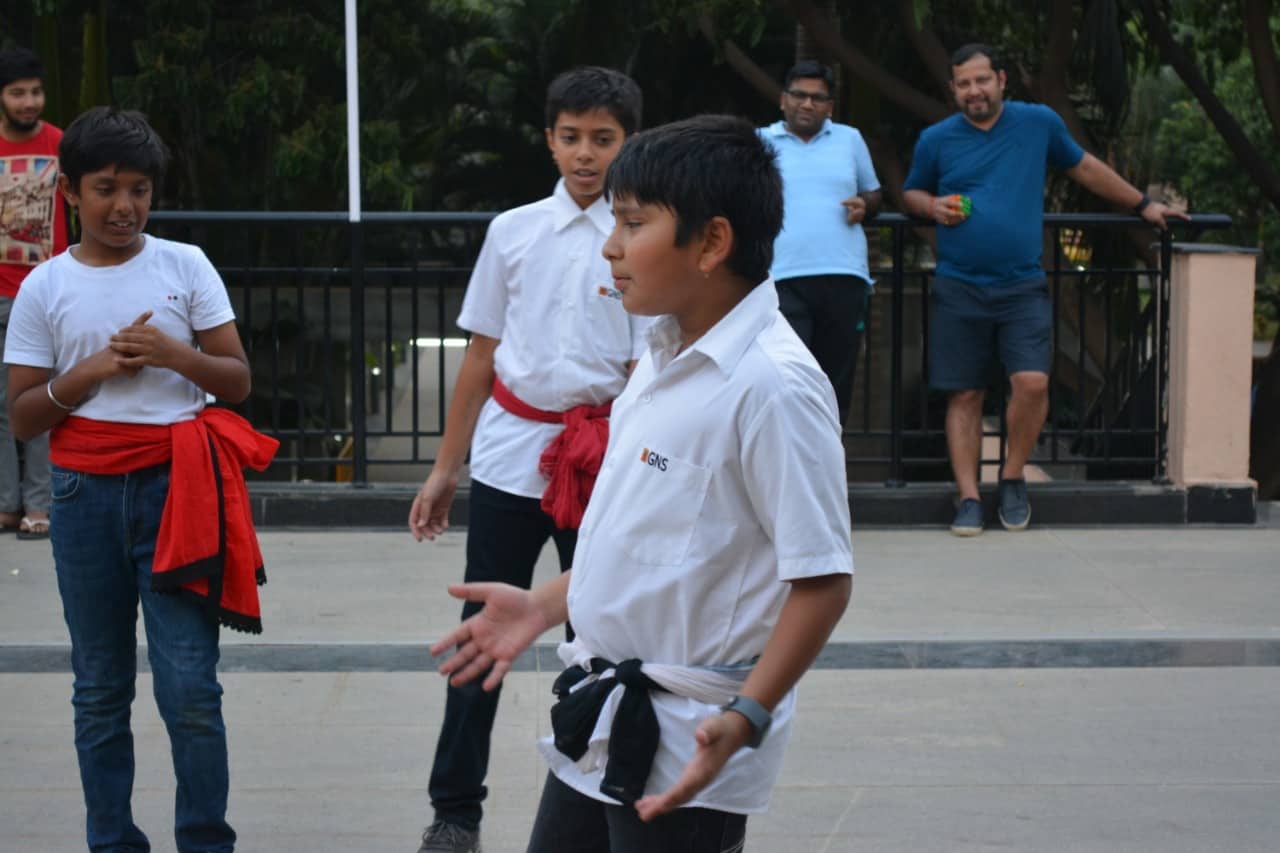
Children during their campaign to get residents to vote. Pic: Subhransu S Mohapatra
Additionally, posters and banners were put up at strategic locations around the society to draw residents’ attention on the need to vote. Special T-shirts and caps that promoted voting, were prepared to create a festive atmosphere on voting day.
We realised that the polling booth was far from our campus and that the road to the booth was roundabout and cumbersome to drive down. So we worked with the BBMP and traffic police to arrange a shorter route to the booth for the day. Realising the booth had little space for parking, and the environmental effects of hundreds of cars moving to the booth, we arranged four buses to ferry residents to and from the booth. This made travel to the booth hassle-free.
Residents were happy with our efforts. All they had to do was come to the pickup point to board the bus.
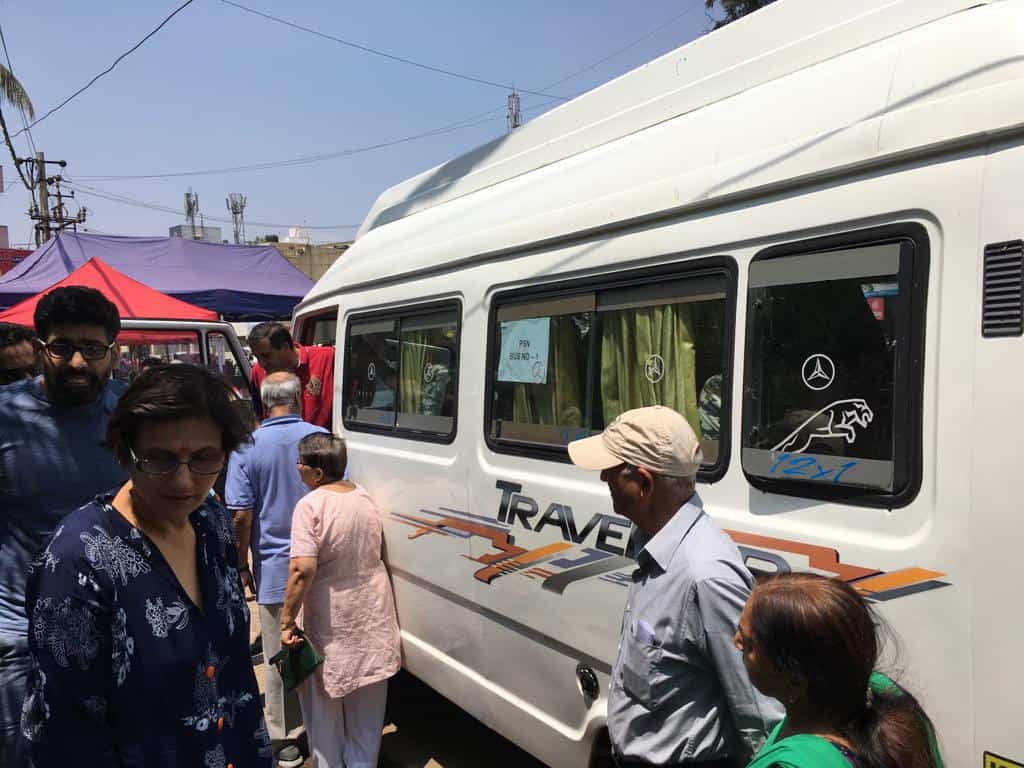
Buses were arranged to ferry residents to the polling booth. Pic: Subhransu S Mohapatra
Our resident-volunteers were present near the booth to help people get the right last-minute information and to collect real-time data on the residents who had voted. This information was monitored at a central location inside the society. Residents who missed voting were personally called up and urged to vote. Children’s groups also visited the residents who were yet to vote.
These efforts resulted in a high voter turnout of 71 percent in our society compared to the average turnout of 55 percent in Bengaluru. Overall, 1560 of the 2200 registered voters in our society cast their votes in this important election.
In last year’s assembly election too, our society had a high voter turnout because of volunteer efforts. Since then, politicians have started engaging with our community on the issues we face. What we learned from these efforts is that people do vote if the process is simplified, and if they are aware of the importance of voting.