The road connecting Kanakpura road and BDA 80 feet ring road has been in a terrible state for years now. It has open manholes and the road is covered with potholes which are potentially fatal in nature.
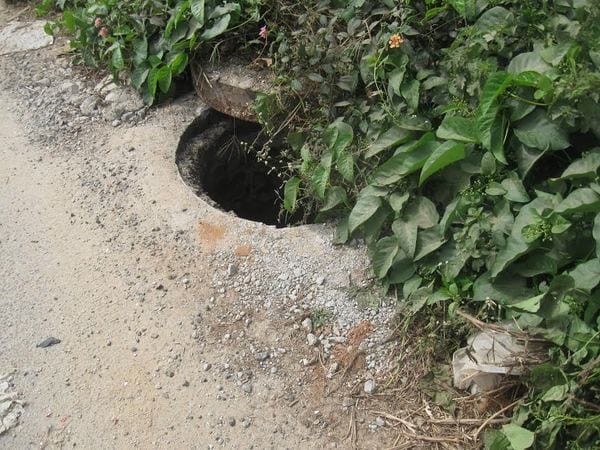
Open manholes dot the road. Pic: VK Srivatsa
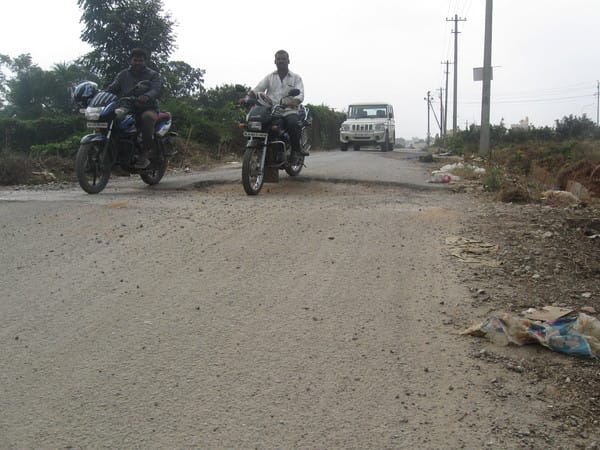
The pothole-ridden road. Pic: VK Srivatsa
There are multiple instances of two-wheeler riders getting injured every day. If they try avoiding a pothole by swerving to the left or right, they could fall into one of the open manholes. And if they try to avoid the manhole, there is a good chance they can break their bones as a result of the many potholes. At night, due to the very poor lighting since the streetlights never work, many riders end up skidding on the road.
This road is used by thousands of motorists as the connecting road to avoid travelling on the crowded Kanakapura road. However, reminder after reminder to BDA to repair the road and close the manholes yielded no results.
Fed up with the inaction and apathy of BDA officials in spite of repeated follow-ups, residents of BDA 6th stage, 4th H block, off Kanakpura road, found a new way of protesting. They put up boards cautioning road users about the dangerous potholes and manholes, requesting them to take care of their lives. The board also carried the concerned BDA official’s name and phone number.
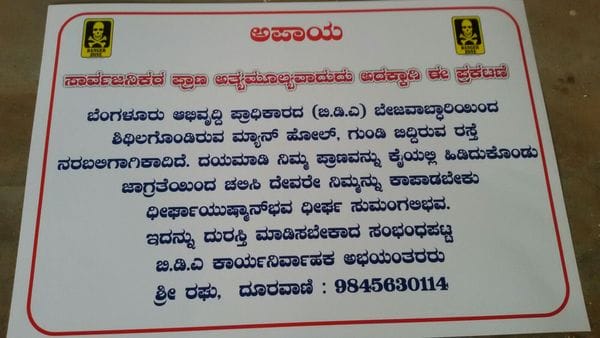
The board cautioning road users about the condition of the road. Pis: VK Srivatsa
I had a word with the Executive Engineer BDA, Raghu and Assistant Executive Engineer, Vanaraj regarding the issues with the road. On January 5th, they inspected the area and started work on the road from January 6th.
Since then, the following has been done:
- The three notice boards that residents had installed have been removed
- All garbage from the drain has been cleared and the drains have been desilted
- A JCB was brought to the area, and the bushes and the jungle on the side of the road has been cleared
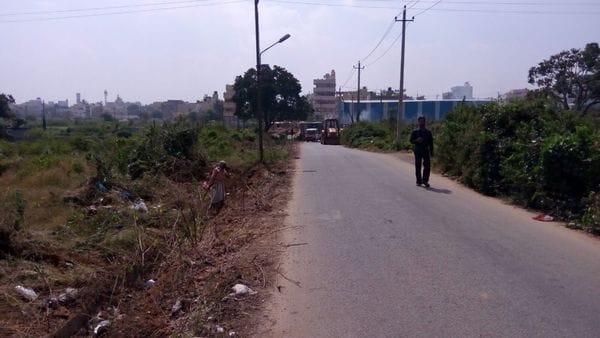
A JCB clears the foliage on the side of the road. Pic: VK Srivatsa
They have also put some mud on the potholes as a temporary fix. Vanraj gave assurances that within a week or 10 days, the road would be asphalted. He also cited the following as the reason for the delay: They would need to minimum one load of tar, and since the area is not very big, it would be difficult for them to bring such a small quantity. He also mentioned that there were plans to asphalt the adjoining roads next week, and that the potholes on this road would be asphalted at that time.
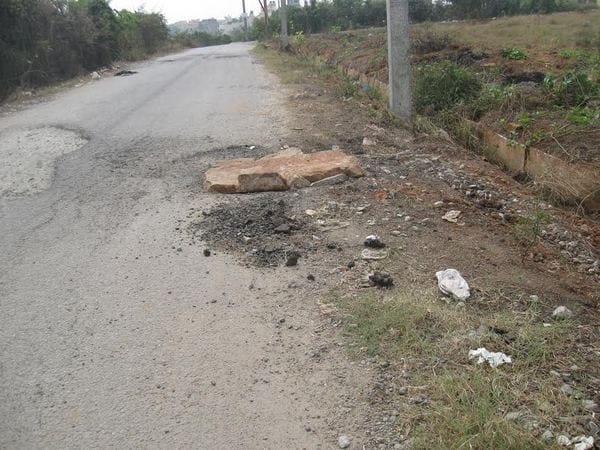
A temporary fix for the open manhole. Pic: VK Srivatsa
Regarding the manholes, the authorites have put a few stones around the open manholes and closed them temporarily. The open manholes are still potentially fatal and need to be closed permanently. Vanaraj stated that he wanted to clear the drains and manholes, post which the manholes would be concreted.