This story is one of a two-part series on the roles and structure of the Mumbai Police.
Santosh Sapkal, a Junior Constable in the Goregaon Police Chowki operates the phone. He writes down complaints for non-cognizable crimes, informs senior officials, and follows up with the complainant to later get a statement on the issue, whether the complaint was resolved or not.
“Most of the complaints we get on a daily basis are noise complaints from society residents and lost documents,” he says. “Often, people lose their documents like birth certificates, school admission letters, and they need police verification to issue new ones. We help them with smaller issues like this, as well as investigating more serious crimes in the locality”.
But when it comes to what are termed cognizable offences, meaning crimes that police have to file a First Information Report (FIR) for when reported, the procedure is quite different. For instance, it is a common belief that a stolen cell phone is a non-cognizable crime and hence police may deny your request to file an FIR. However, theft of personal property is a cognizable crime under Article 379 of the Indian Penal Code. (The legal term for refusing to file an FIR is termed Burking Crime).
In many cases, police officers will confuse the complainant by asking for the model number and bill of purchase. None of these documents are mandatory to file an FIR.
Once an FIR is registered, the rules mandate that the Station House Officer (SHO) should assign the case to a Senior Inspector or Sub-inspector depending on the severity of the case and the workload. A copy of the FIR should be given to the complainant immediately and free of charge.
“Officers may claim that they don’t have the manpower or bandwidth to go after every stolen phone,” said Shirish Inamdar, retired ACP of the Mumbai Police. “In that case, people should report this to the zonal DCP for corrective action”.
But the zonal DCP office is only a supervising office. The case is always registered only with the police station. Each complaint registered has a unique number in that police station for that year.
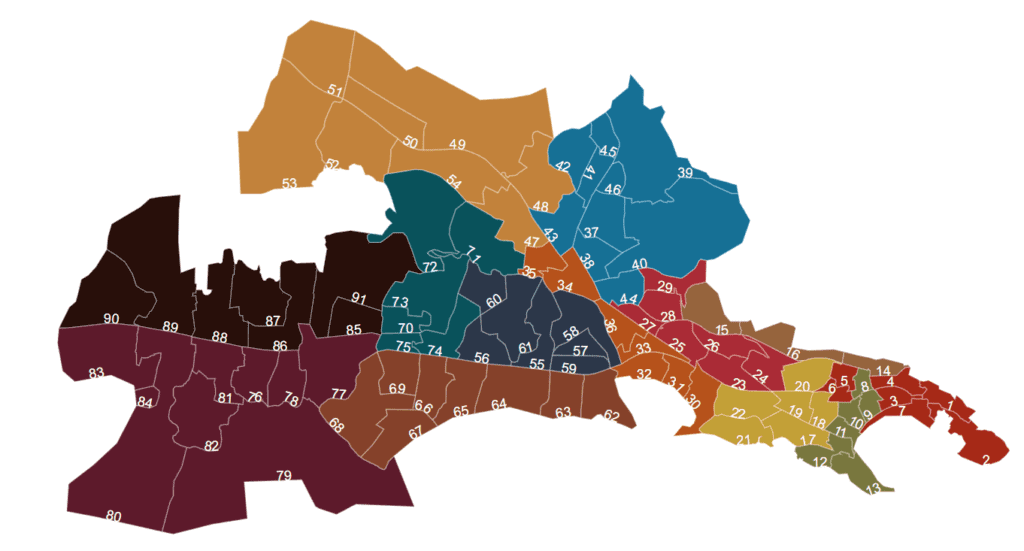
There is a criteria to how police stations are located and their area of jurisdiction. There is the police population ratio, police area ratio, number of police officers, and transport per 100 police personnel that each police station has to adhere to, according to which their area of supervision is calculated. There are a total of 91 police stations in Mumbai.
If a police station, on an average, gets 500-600 cases of cognizable crimes a year, at times the station refuses to file new cases to show their control over crime rate in the area. If the crime rate remains the same despite the increase in population, it is implied that the police station does not need more manpower.
“Citizens not knowing government procedures causes a lot of confusion and corruption,” added Inamdar.
Read more: Mumbai has no space to house its police
How is a police station different from a police chowki?
From stolen phones, lost documents, noise complaints to public nuisance, it is your local police station’s responsibility to hear your complaint and help resolve it.
Every police station has a Station House Officer (SHO), who has one Assistant SHO and an extra stand-by SHO. These three officers along with a team of at least 10 police officers (from inspectors to constables) are required to be in the police station at all times.
The SHO is responsible for responding to people’s complaints. According to section 154 of Criminal Procedure code, the SHO writes down the FIR in the station diary, the most important document of the police station, of which only he has custody.
However the case is different in a police chowki. If a person goes into a chowki to file a complaint, which the Sub-Inspector present there prima facie recognises as a cognizable offence, he may escort the complainant to the nearest police station to file an FIR. The FIR is the most important document after the station diary.
An example of filing an FIR: What you should do if you lose your passport
- In the case of a missing passport, there are three possibilities, either your passport is damaged, lost or stolen.
- If it is stolen, you have to visit your nearest police station and file an FIR, and provide a copy of the FIR to the passport authority, to claim a replacement.
- If it is damaged, you have to inform the police that your passport is damaged, take written acknowledgement of it, and submit it in the passport office for renewal of your passport.
- If it is lost or misplaced, you have to register the case in a police station, in what is called the ‘article missing register’. You have to give details of your passport number, and describe in what circumstances the passport was lost – home shifting, reorganising etc. The police will ask you to sign an affidavit with all the above information to check for any misinformation. After verification, the police station will issue an acknowledgement that you will have to upload on the passport renewal portal.
FIRs are now computerised but most police chowkis are not equipped with the appropriate technology to file a complaint or an FIR. Before the advent of the computer, there was a bounded register with numbered pages. The page on which your complaint is filed used to be your Crime Register (CR) number.
Havaldars, Sub-Inspectors and Inspectors are in charge of handling local cases in a police chowki. Police chowkis exist to bring the police within easy reach of the people under its jurisdiction and act quickly when crimes are reported.
For instance, if a car accident is reported in a chowki area, they should suo moto take cognizance of the case, and provide immediate help like medical treatment. Then they should clear the vehicles, restore the traffic flow, inform the police station of the accident, and the particular hospital the wounded have been taken to.
Any matter which pertains to law and order, public security and public order should immediately be taken up suo moto. It is the responsibility of the police officers to take charge without the need of an FIR being filed. In case of cognizable offences like robberies, theft, chain-snatching, assault, rape, murder or other such crimes, an FIR is automatically filed once the police are contacted, and the complainant need not come to the police station.
This explainer is part of a series on ‘Explainers and Information Resources for Mumbaikars’ supported by a grant from the A.T.E. Chandra Foundation.