Domestic workers are found in all urban and semi-urban households in India, and are yet invisible. Many domestic workers/care workers toil long hours, and are seen hurrying to their places of work as early as 5 am, be it rain, shine or the cold winter! At their workplace – the employer’s home – they face caste discrimination, sexual assault, have no social security, leave, protection or rights like other workers. With the gendered notion of housework, it’s considered natural that domestic workers – majority of them women – should slave, and their work, like all housework, is devalued.
Thousands of girls all over the country fall prey to trafficking through placement agencies as well. They enter elite urban households where they work long hours without salaries, with no rest or free time, face sexual harassment, severe isolation and ill health.
Read more: Post-pandemic labour market: Fewer women getting work
The lack of a legislative framework, or any social security mechanism, leaves domestic workers vulnerable to exploitation. Despite their contribution to the GDP, they have been left out of the legal framework, and very often are treated as criminals.
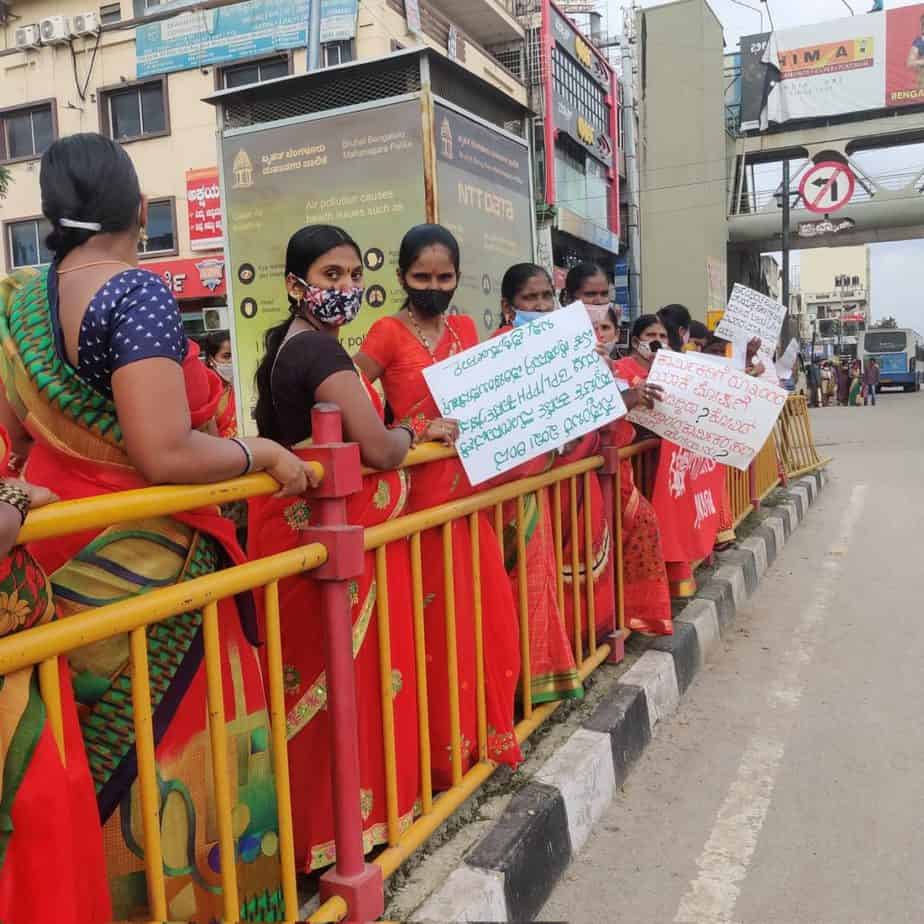
In 2008, the Unorganized Workers Social Security and Welfare Act was passed, and in 2011 the UWSS Board was set up in Karnataka. However, till today, the functioning of the board and the implementation of social security has failed. This has left lakhs of women workers, especially older women, without any pension, social protection or health/medical facilities. Other states like Tamil Nadu, Kerala and Maharashtra have already done exemplary work on this.
However, after persistent struggles by domestic workers’ unions for registration and recognition, in 2016, the Board started a scheme called Ambedkar Karmika Sahaya Hastha for 11 categories of unorganised workers in the state. Domestic workers were called upon to submit applications for registering and receiving a Smart Card, but without any benefits! Yet, even after the populist announcement, a negligible number of domestic workers have got the Smart Card, and the state government has shown apathy towards this scheme.
Read more: Impact of social segregation on employment opportunities
Enough is enough, we demand answers:
- Is the government serious about its intention to recognise domestic workers and treat them with dignity?
- Smart card for domestic workers: Why are there no benefits with this card? How smart can workers get, if there are no benefits?
- From 2016 to 2021, why has the coverage of domestic workers under the scheme been so poor? Is it because domestic workers are invisible workers, and are lowest on the caste hierarchy or belong to Muslim communities?
- Why was the scheme stopped during the two years of the pandemic (2020-2021), especially when these workers faced the worst crisis in their lives (with no jobs, income or welfare from the government, along with low health facilities)?
- Why have migrant domestic workers been left out of the scheme? What is the coverage for live-in domestic workers?
- Why are employers’ details not registered with the Board?
- When the Smart Card system was revived from September 2021, why were BPL/PPH cards newly introduced as a condition for applying? Why should a welfare scheme and a “welfare” government show discrimination, and not serve all workers irrespective of their caste, class and gender?
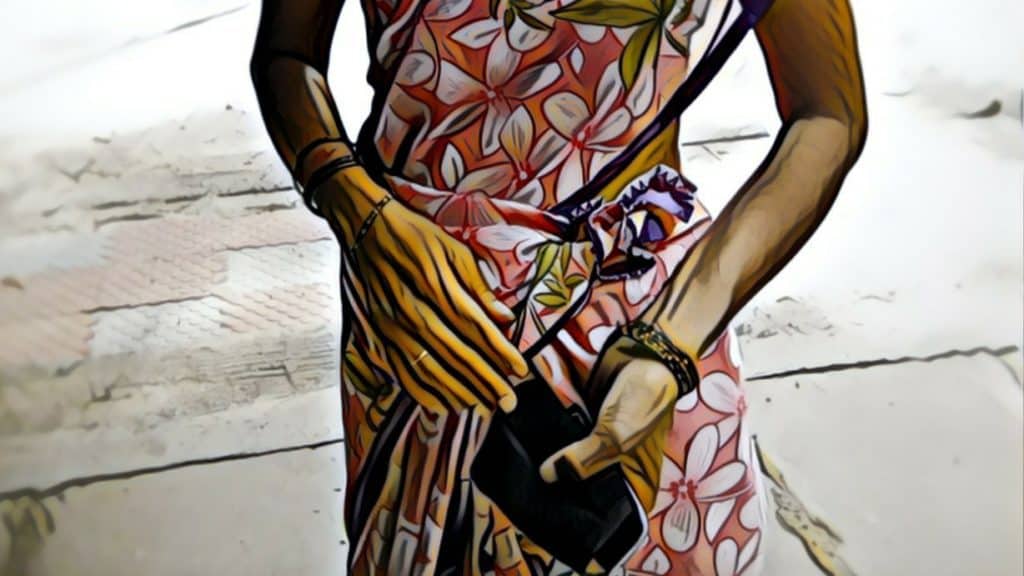
It’s shameful that these issues are happening blatantly with a scheme that bears the name of Dr Ambedkar, who we respect as the champion of equality and a visionary for a society free of discrimination. Besides, how can we believe in a government that passed unfair, unjust Labour Codes during the lockdown-induced crisis?
From November 14 to 18, domestic workers will raise these questions in a campaign at various street corners of south Bengaluru. On Saturday, November 20, we will protest at the Labour Commissioner’s officer, Karmika Bhavan, near Dairy Circle. The protest will be held simultaneously at the Labour Commissioner’s office in Belgaum and Mangaluru as well.
[This article is based on a press release from the Domestic Workers’ Rights Union, and has been published with edits.]