COVID-19: Dip in number of cases, results to be sent via SMS
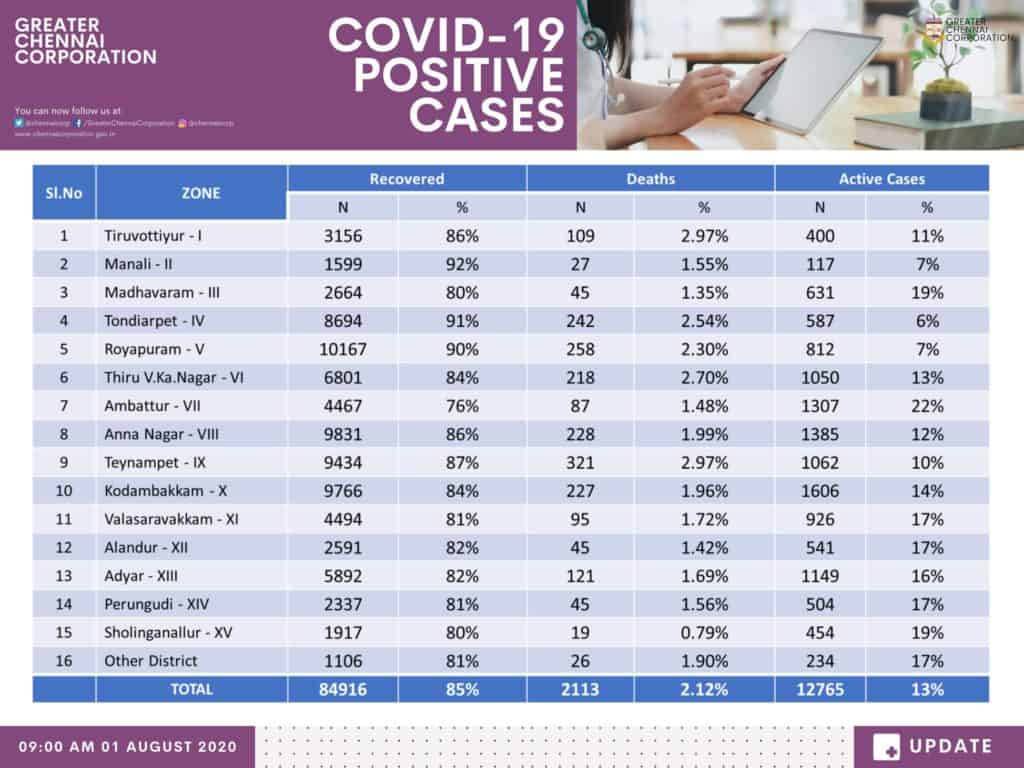
Chennai recorded 1,026 fresh COVID-19 cases on July 31st. There were 1,026 recoveries and 21 deaths. Among the frontline workers, 35 workers in the civic body and Chennai district collector R Seethalakshmi have tested positive.
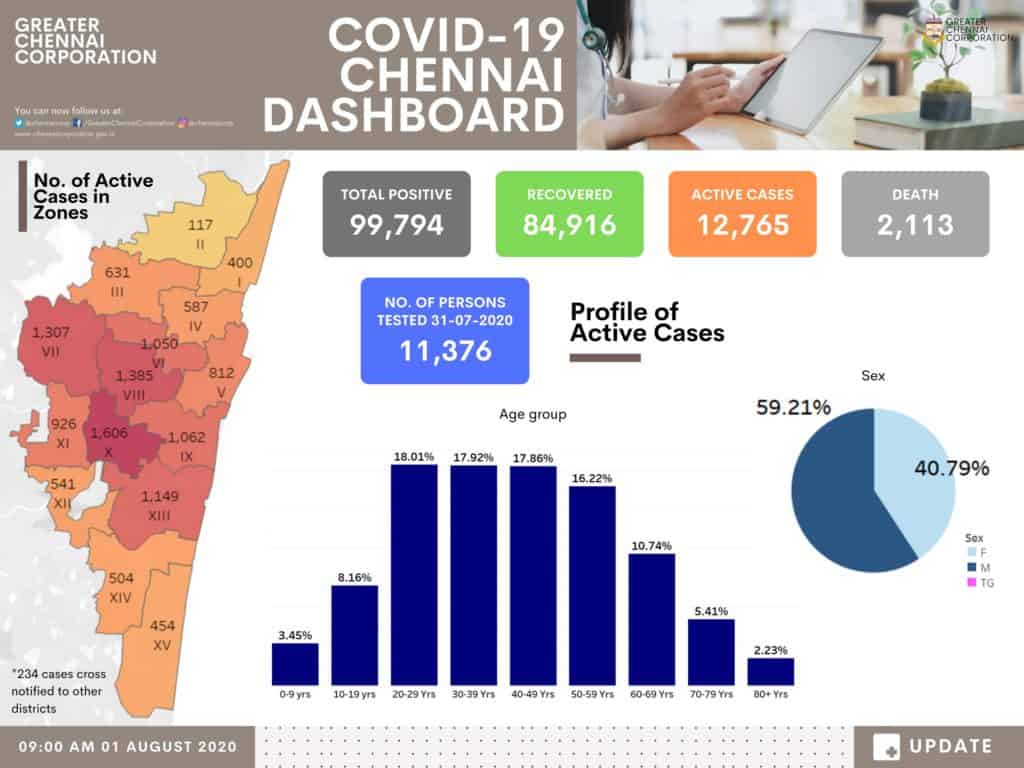
In a bid to speed up the process of declaring COVID test results, the Greater Chennai Corporation (GCC) plans to send the results through SMS. Presently, the field volunteers convey the positive results to the patients and a list is also issued by ward-level officials. This method has been time-consuming and has led to delays in several instances. If implemented, the text-based results system will have a turnaround time of about four hours.
The Tamil Nadu state government has announced that the lockdown in place in the state will be extended till August 31st, with some relaxations. Some of the relaxations are that companies located in the non-containment areas of the Greater Chennai police can nowfunction with 75% workforce, non-essential goods can now be delivered by e-commerce websites and restaurants can function between 6 am and 7 pm with 50% dine-in capacity.
Phase-1 Metro line to be completed by year-end, names of 3 stations changed
Chennai Metro Rail Limited (CMRL) has resumed construction of the last phase of a 9-km stretch between Washermanpet and Wimco Nagar in North Chennai. The phase-1 line of the Chennai Metro connects the North Chennai neighbourhoods with the city. The project was paused due to the nationwide lockdown. It is expected to be completed by December 2020. A CMRL official stated that around 50% of the workforce are deployed, with department taking measures to bring back the rest of the workers.
In yet another development, the Alandur, Central and CMBT metro stations have been renamed as Arignar Anna Alandur Metro, Puratchi Thalaivar Dr M G Ramachandran Central Metro and Puratchi Thalaivi Dr J Jayalalithaa CMBT Metro, respectively.
Source: The Times of India
Exclusive depot for private trains to be set-up soon
With the recent announcement of privatising Indian Railways, an exclusive depot for maintaining private trains will be set up soon in Chennai. The zonal railways has been directed to allocate space for the depots. The process of setting up the facility will be taken up by the private company. A directive from the Railway Board stated that a two-hour time period in the washing lines of depots will be allocated to the private company for utilising the service. Additionally, the coaches will be inspected after every 7,000-km journey.
Source: The New Indian Express
Koyambedu market to be revamped and reopened
The Koyambedu market became one of the coronavirus hotspots in the city, leading to a prolonged closure. Three months later, the wholesale traders who operate out of the market have called for its safe reopening. Chennai Metropolitan Development Area (CMDA), the authority in-charge of the market’s operations, has passed orders worth Rs 2 crore to upgrade facilities the Koyambedu market before it can be opened to the public. The officials say the work would be completed in two months. The traders will continue to operate out of the Thirumazhisai market until then.
Source: The New Indian Express
Heavy rain causes water-logging in suburbs
A heavy spell of rain in the past week saw Chrompet and Pallavaram experience severe waterlogging in its streets. The water canals flowing into the Pallavaram lake are encroached due to which the locality gets inundated often. The culverts running along the railway line near GST Road which were originally intended to carry rain water to the other side of the railway station have also been encroached. This has stopping the free flow of water, submerging the surrounding streets.
Source: The Times of India
(Compiled by Bhavani Prabhakar)
Koyambedu market is polluting, unhygienically kept and has come off as unwitting dissseminator of epidemics. Govt took the right decision to shut it down. Koyambedu is now too much within city and it cannot serve an entire city and neighboring areas without getting hugely polluted. The fruit, vegetable and grain markets need to be spaced out and located beyond city areas.