A walk around Madipakkam Lake today offers a lush, green escape: a scenic pathway encircling brimming waters, shaded by native trees and plants that purify the air. Small islands in the lake attract a variety of birds, making it a haven for urban biodiversity. Along the paved paths, vendors selling healthy snacks and fresh vegetables have set up shop, a reflection of how environmental restoration can also support local livelihoods, particularly for low-income groups.
From as early as 4 am until late in the evening, hundreds of people, both young and old, visit the lake daily. Whether it is for exercise, a breath of fresh air, or simple leisure, Madipakkam Lake has become a much-needed public space. Religious structures, including three temples, and a church surround the lake, making it a spiritual hub for the community.
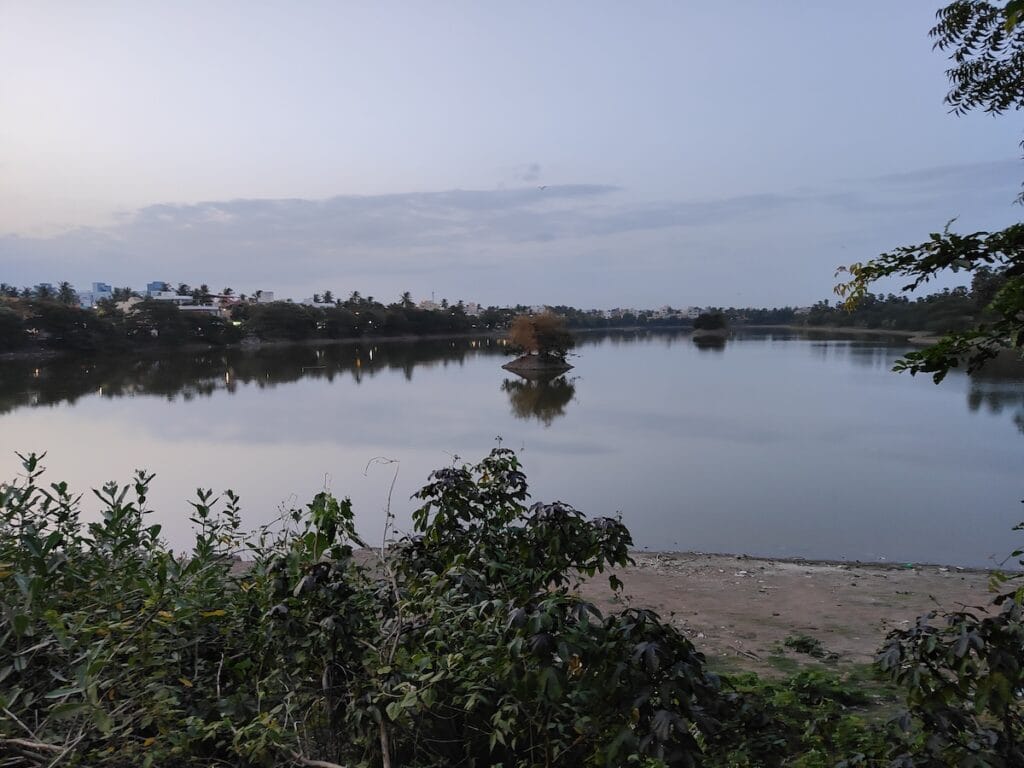
But this transformation did not happen overnight. It is the result of more than two decades of persistent, grassroots effort by the local community, supported by organisations such as Exnora.
This report, part of a larger series on the lakes in the Pallikaranai watershed, highlights the two decades of community efforts behind the revival of the Madipakkam Lake. Earlier articles covered the degradation of the Sembakkam, Madambakkam, Nanmangalam, Keezhkattalai and Narayanapuram lakes and Pallavaram Periya Eri.
Early days of advocacy and action for Madipakkam Lake
“A human’s first and last relationship with the Earth is through water. As caretakers of the planet, we have a duty to protect this resource,” says V Subramani, trustee of Exnora and a long-term resident of Madipakkam, who has been instrumental in the restoration of Madipakkam Lake. This has been the guiding principle for the community to stay consistent in their efforts.
In the late 1990s, the value of urban lakes was largely unrecognised by both the public and the authorities. Construction activity had begun in the Madipakkam Lake area, and pattas (land titles) were being issued even in the lake’s catchment zone. In response, the local residents, along with Exnora, took the matter to the National Green Tribunal (NGT) in Delhi. In a landmark judgement, the NGT ruled that lake areas, including the catchment, must not be converted into housing plots and given pattas. This was a major turning point for the community.
Despite the ruling, more than 3,000 people had already received plot tokens in the catchment area of the lake by then. The community escalated the issue to the Public Works Department (PWD), under whose jurisdiction the lake falls. With support from the police, further encroachments were stopped. According to Subramani, although the lake is not entirely free of encroachments, large-scale violations have been avoided over the years.
Read more: How to go about lake restoration: Learnings from efforts in Chennai
Infrastructure project brings unintended benefits
In the late 2000s, while the Velachery-Triplicane Mass Rapid Transit System (MRTS) project was underway, the government required sand for construction. Sand worth around Rs 6 crore was excavated from Madipakkam Lake over six months. As a result, the lake bed was deepened by nearly 30 feet, which significantly improved its water retention capacity. Since then, the lake has managed to hold water for most of the year.
The community soon realised that further restoration required financial support. Instead of waiting for government funding, residents pooled Rs 3 lakh and began bund strengthening work. This proactive step led to increased attention from elected representatives. Then Member of the Legislative Assembly, S Aravind Ramesh, allocated Rs 42 lakh, while then Member of Parliament, J Jayavardhan, contributed Rs 1.25 crore from Smart City funds. These resources enabled the construction of a walking path, fencing, a children’s park, and other improvements.
Present-day challenges
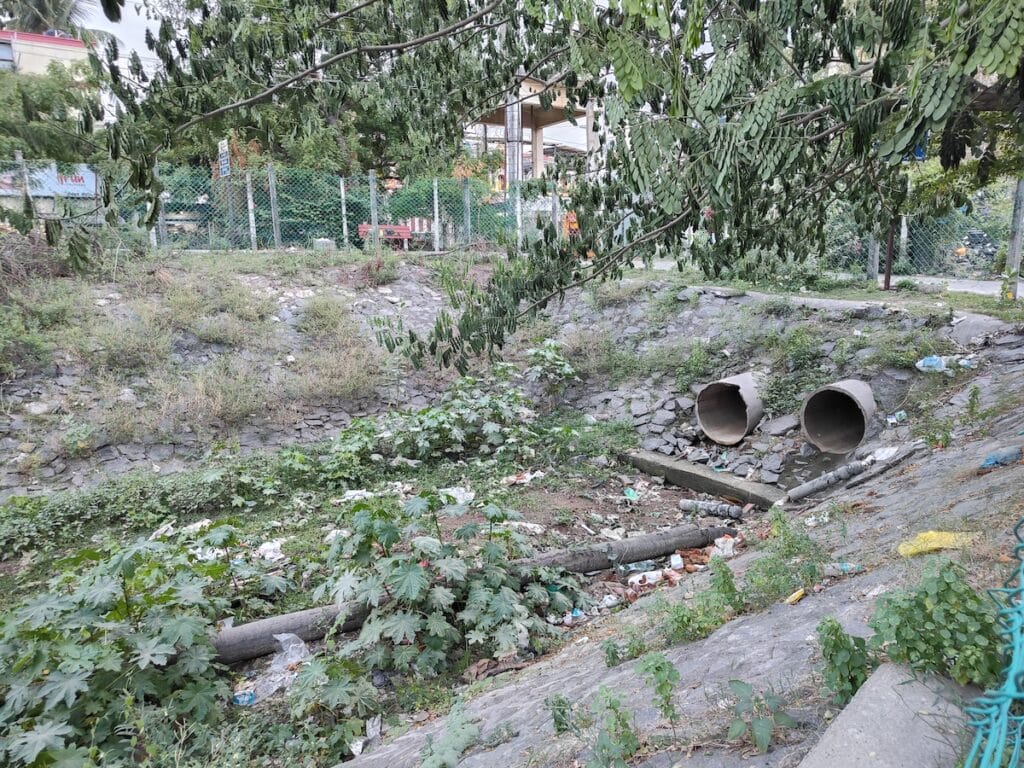
Despite the progress made, Madipakkam Lake continues to face several urban challenges. Sewage from upstream lakes and nearby buildings enters the lake through inlet channels. “Lack of an underground drainage system remains the root cause of sewage from the buildings. While it will take a while to get the UGD connections for all areas, we have sought the government to set up sewage-treatment-plants to treat the contaminated water before it enters the lake,” says Subramani.
Littering, particularly along the pathways, is another growing concern. Karthikeyan, a local resident and regular walker, notes that the increase in street vending has led to more littering in the area. However, Shanthi, a vendor near the lake, insists that most vendors dispose of their waste properly and use designated bins.
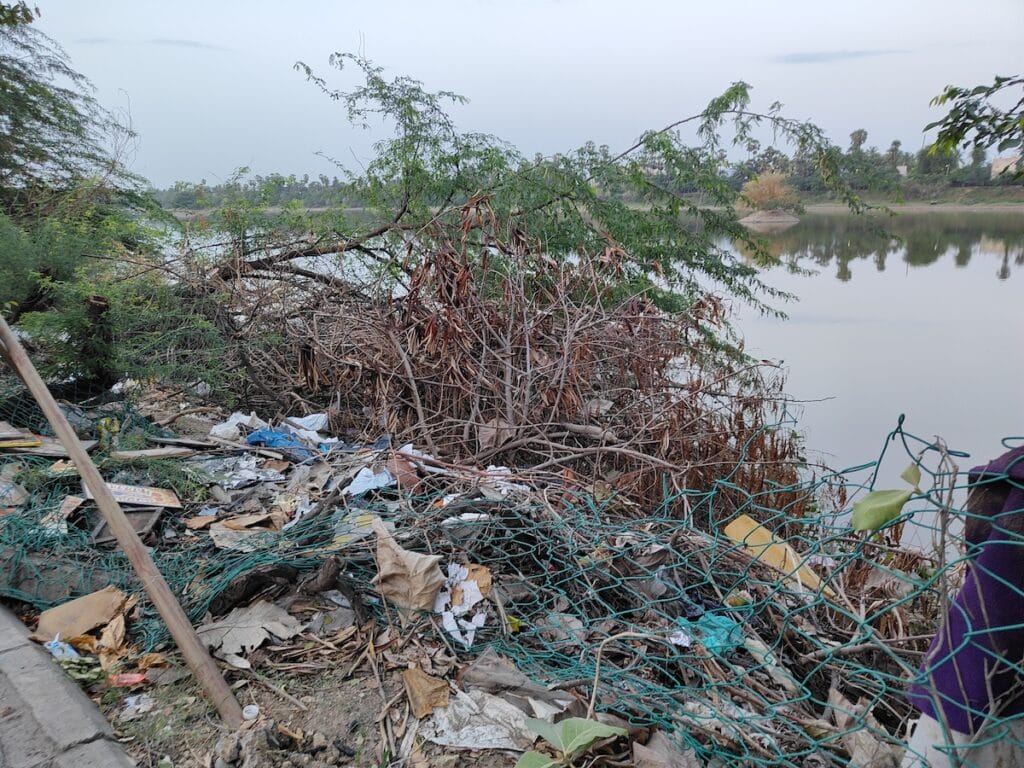
While the lake remains under the PWD/Water Resources Department (WRD) jurisdiction, its day-to-day maintenance has been handed over to the Greater Chennai Corporation (GCC). A corporation official stated that additional bins have been installed along the path to address the littering issue. The WRD is also working on plans to tackle sewage inflows on a larger scale.
Read more: Saving lakes in Chennai: Why maps and physical markers are critical
Enhancing Madipakkam Lake’s potential for future
Recently, GCC officials visited the lake and held discussions with local residents about ways to improve and promote the space. People from the community suggested including building a birdwatching tower, installing fountains to increase oxygen levels for fish and adding high-mast lighting for safety. “We have also suggested introducing pedal boating to encourage water-based tourism and involving women’s self-help groups in managing services around the lake to provide them a source of livelihood,” says Subramani.
“While interventions like birdwatching towers, fountains, and pedal boating would help in promoting the lake, fundamental issues like UGD connections and resolving littering around the pathways has to be sorted out as a priority,” says Karthikeyan.
Key learnings from two decades of water activism
Subramani reflects on the journey and shares several lessons drawn from over twenty years of lake conservation work. He emphasises that the depth of a lake is more critical than its surface area. “If a lake that can hold 1 TMC of water loses 30% of its area to encroachments, its capacity reduces to 0.75 TMC. But if the lake is deepened by one metre, the capacity can increase to 1.25 TMC,” he explains.
He also cautions against focusing too much on cosmetic interventions in lake restoration projects. “For every rupee spent on a lake, we must ensure that some volume of water is stored. Too often, the focus is on beautification rather than increasing storage capacity.”
Subramani further stresses the need for patience and social understanding in water activism. “We cannot label everyone living near or on lake land as encroachers without understanding their socio-economic circumstances. Many are there out of necessity. Any solution must take this into account.”
The revival of Madipakkam Lake is not just the story of a single waterbody, but a reflection of what sustained community effort, supported by legal action and responsive governance, can achieve. Over the course of two decades, local residents transformed a neglected, encroached-upon lake into a thriving public space that supports biodiversity, provides livelihoods, and strengthens community ties.
As cities across India grapple with disappearing waterbodies, shrinking green spaces, and rising urban pressure, Madipakkam offers a powerful reminder: meaningful change is possible when communities take ownership of their commons, and when institutions choose to listen.
This inspiring story shows the incredible power of community action in restoring urban lakes. The residents determination, legal battles, and collaborative efforts with the government highlight a successful model for urban environmental revival. Its a hopeful example of how collective responsibility can transform neglected spaces into vital community assets, demonstrating that proactive engagement leads to tangible positive change in urban environments.