Controversial farm laws repealed after a year of protests
On the morning of November 19th, Prime Minister Narendra Modi addressed the nation and announced that all three farm laws that the Centre had introduced a year ago will be now be repealed in view of the stiff opposition of farmers. The Farmers’ Produce Trade and Commerce (Promotion and Facilitation) Act, 2020, Farmers’ (Empowerment and Protection) Agreement on Price Assurance and Farm Services Act, 2020 and the Essential Commodities (Amendment) Act had sparked the largest protest in India’s history.
The protest, led by the Samyukt Kisan Morcha (SKM) at Delhi’s border, argued that dismantling of the APMC mandis as mandated by the laws would lead to corporate control over prices and could lead to the removal of the Minimum Support Price (MSP), that had been their safety net since it was introduced during the Green Revolution of 1960s. There were also concerns over the grievance redress mechanisms provided for.
PM Modi, in his address on Guru Nanak Jayanti, apologised to the farmers, ensuring a total removal of all laws and asked all protesting parties to return to their homes.
Source: Hindustan Times | BBC
Delhi air pollution: City begins second phase of ‘Red Light On, Gadi Off’ campaign
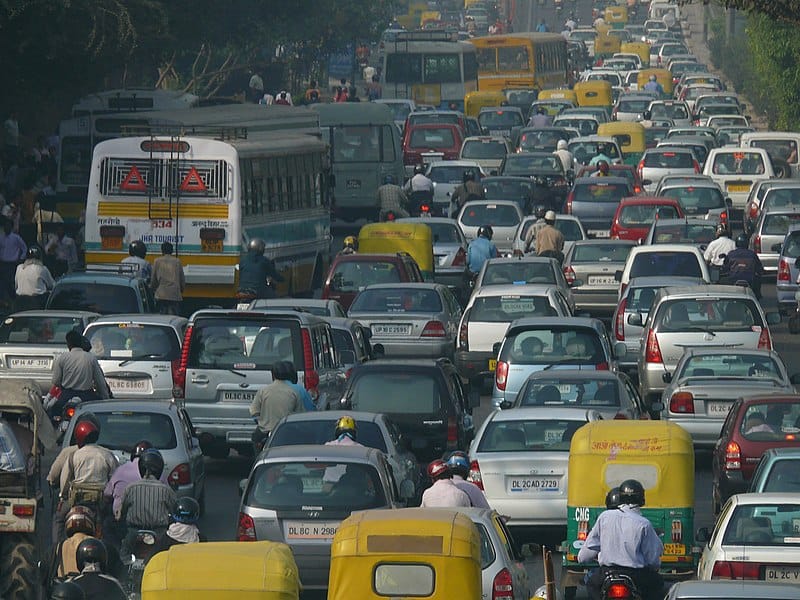
While air pollution in Delhi continues to remain ‘poor’, the government is campaigning to reduce vehicular emissions, which could help reducing the Air Quality Index (AQI). The ‘Red Light On, Gaadi Off’ campaign was started on October 18th, and has been extended by 15 days starting from November 18th.
The campaign, which was introduced in 2020 by Arvind Kejriwal, urges drivers to switch off their vehicle engines when the traffic lights turn red.
Source: The Economic Times
Read more: Delhi’s toxic air: From emergency measures to sustained action
RBI proposes a new law to regulate digital lending
In the wake of complaints of harassment by digital lending apps, the Reserve Bank of India has asked the government to draft new legislation that could stop illegal digital lending in the country. A panel set up for the same found 1,100 loan apps, of which 600 are illegal offshore entities.The recommendations were submitted by a group chaired by Jayant Kumar Dash, executive director, RBI.
“The recommendations seek to protect the integrity of the system against entities that are not regulated and are not authorised to carry out lending business.” the report said. Some of the borrowers have also died by suicide due to the harassment.
Source: The Times of India
Indore ranked India’s cleanest city for 5th year in a row
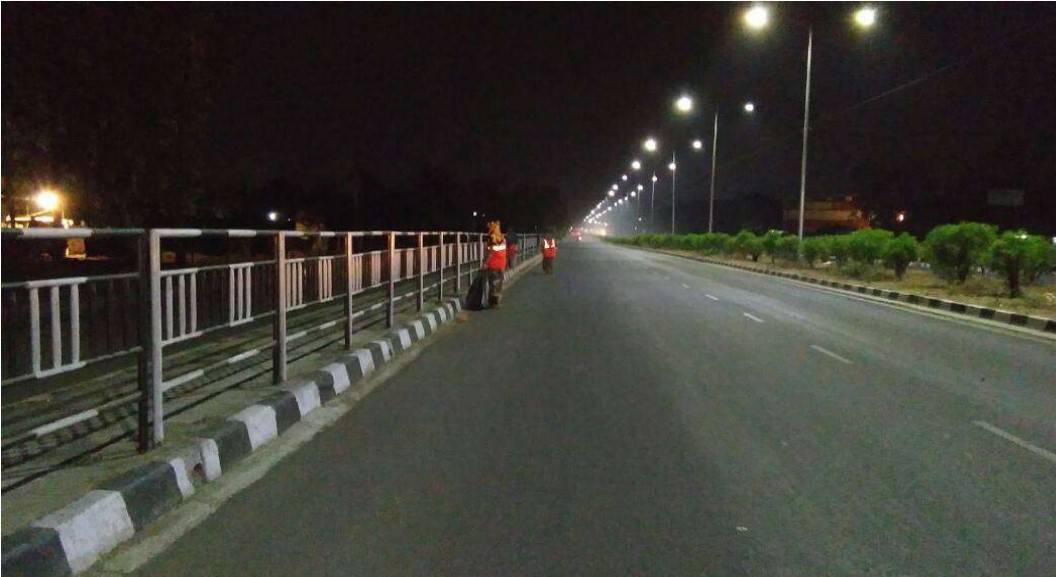
The central government has declared Indore as the country’s cleanest city for the 5th consecutive year. On the list, in second place, is Surat, followed by Vijaywada. These were the results of Swachh Survekshan 2021, the annual cleanliness survey undertaken by the Urban Affairs Ministry. President Ram Nath Kovind awarded the winners in a ceremony on November 20th, in New Delhi. The rankings were based on assessments by field officers and citizens’ feedback on garbage disposal, open defecation-free status, functionality and maintenance of community toilets and safe management of faecal sludge from the toilets. Earlier in the year, Indore was also declared as India’s first ‘water plus’ city, under the Swachh Survekshan 2021 survey.
Source: The Indian Express | India Today
Indian economy to grow 7-7.5 per cent in FY23
The Economic Advisory Council to the Prime Minister (EAC-PM) on November 17th said that the Indian economy was prepared to grow 7-7.5 per cent in the next fiscal year. EAC-PM however added that this should not mean that the Union Budget for 2022-23 should project unrealistically high tax revenue or tax buoyancy numbers. “Once capacity utilization improves, private investments should also recover. Therefore, Members felt a real rate of growth of 7 to 7.5% in 2022-23 was likely,” the EAC-PM statement said.
Source: Financial Express
(Compiled by Saachi D’Souza)