Omicron cases start to plateau
Since the beginning of the Omicron surge in India in late December 2020, the trajectory of this third wave seems to have now begun to recede. Since January 20th, daily cases have shown a declining trend, with the country registering 233,779 new cases on January 28th.
One consoling aspect of this third wave has been the reduced need for hospitalisation and the resultant reduced burden on the public health infrastructure.
Experts, however, continue to emphasise the need for caution and strict enforcement of COVID appropriate behaviour, especially wearing of masks. Even as many states start to relax the weekend curfew and other restrictions imposed earlier.
Source: Hindustan Times
Read more: Is India nearing the end of the Omicron wave?
Air India returns to Tatas
The Tata Group, through it subsidiary Talace, once again owns Air India, the airline it had founded about 70 years ago. On January 27th, control of the airline was officially handed over to the Tata group by the Department of Investment and Public Asset Management (DIPAM), after the company’s successful bid of Rs 18,000 crore in October 2020.
Customers could soon see an improvement in ticketing and operations, including the choice of food and beverages as the Tatas get down to setting up a new board of directors and new management personnel and structure. Tata Sons Chairman N Chandrashekhar is likely to be the new chairman.
Apart from maintaining previous benefits, employees will be eligible for VRS from the second year onwards with all benefits and can stay in company colonies for six months after the takeover. The Tata Group has also promised it will try and resolve all pending employee demands.
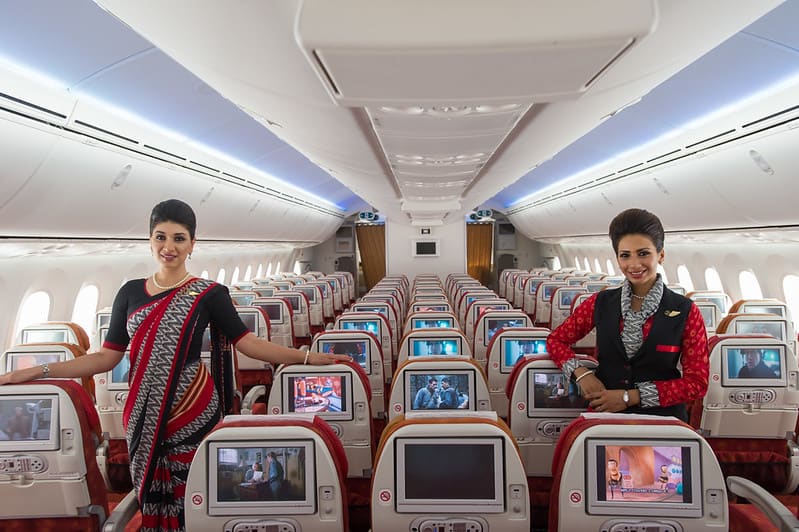
Since 2007, Air India has been a loss-making entity, accumulating losses of Rs. 78.953 crore to date. Heavy taxpayer bailouts have kept operations running.
Source: India Today
IMF cuts India’s GDP forecast to 9% from 9.5%
The International Monetary Fund (IMF) cut India’s economic growth forecast to 9% from the earlier 9.5%, for the current fiscal year ending March 31st. A number of other agencies too have lowered their projections amid concerns over the spread of the third wave in the country and its impact on productivity and output.
For the next year, the IMF is expecting a 7.1% growth. The impending budget, to be presented on February 1st, will determine the pace and direction of India’s economic growth for 2022-2023.
Source: Economic Times
Booster dose administration will be slower now, says government
According to epidemiologist Dr J P Mulayil, member of the National Technical Advisory Group on Immunisation in India (NTAGI), the booster dose rollout in India could be untimely moving forward. “Boosters in the current time will not achieve any specific outcome,” said Dr Mulayil. “Unvaccinated should get vaccinated, rather than shifting focus to booster shots which can be reserved for future emergency”.
While precaution doses are being administered to healthcare workers, those above the age of 60 and those with comorbidities, Dr Mulayil claims that its need in India hasn’t been ascertained yet. The current belief is that since a larger portion of the population is infected with Omicron, the infection itself acts as additional protection. So, a rush in booster dose administration is not the need of the hour.
Source: The Times of India
Delhi metro goes back to routine weekend schedule
Since the easing in COVID-19 restrictions, the Delhi metro went back to its routine weekend schedule from January 29th. Since the weekend curfew imposed on January 8th, Metro services were regulated to a 15-minute frequency on the Yellow and Blue lines, and 20 minutes on all other lines.
Metro trains will also now run at a 100% seating capacity, with no provision for standing. Entry at all stations will be monitored.
The Delhi Disaster Management Authority (DDMA) has also allowed restaurants, bars, cinema halls and theatres to reopen with 50% capacity.
Source: Hindustan Times
(Compiled by Saachi D’Souza)