To enhance awareness on road safety and emerge as an accident-free nation, Thozan, a city-based NGO, along with 108 ambulance services, conducted an awareness campaign across 73 parks in Chennai on Sunday, August 4th. The aim of this drive was to spread awareness among the public about road safety, the Good Samaritan law and first aid. This awareness drive was conducted to commemorate the 73rd year of India’s independence.
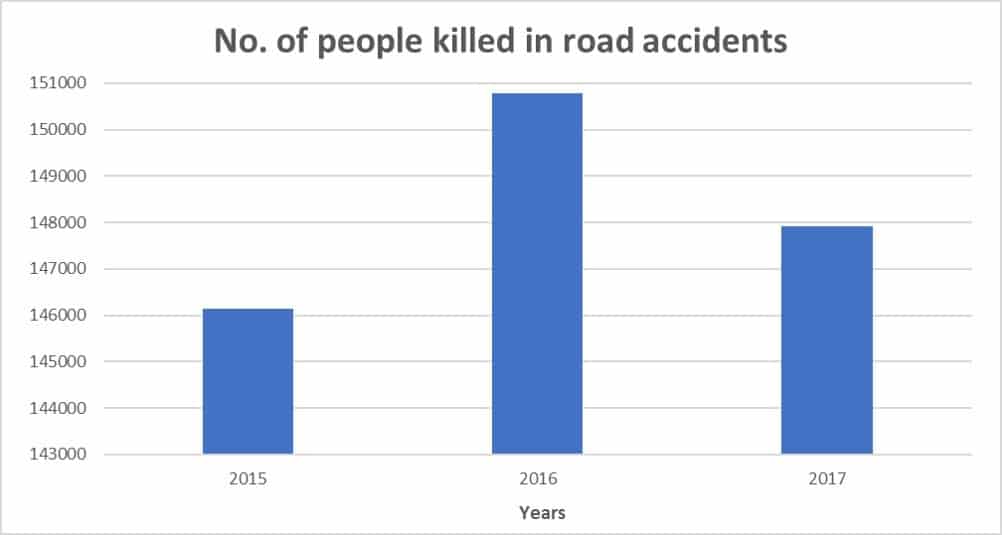
No. of people killed in road accidents in India
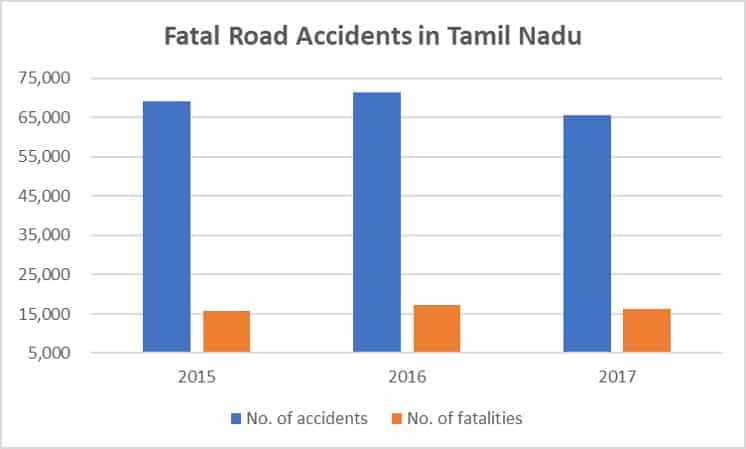
No. of Road Accidents in Tamil Nadu and Fatalities
Answering questions in Lok Sabha on July 11 2019, the Ministry of Road Transport and Highways placed on record India’s dubious record on road safety. The Global Status Report on Road Safety 2018, published by the World Health Organization (WHO) on the basis of road accident data for 2016, points to the fact that India is one of the leading countries in terms of road accident fatalities. Although the total number of road accidents are on a decline, the number of fatalities has seen an increase.
As per a report released by Government of Tamil Nadu Home (Transport) Department which conducted a road accident analysis for the month of January 2019, Chennai continued to lead in the number of road accidents and deaths. Out of the reported 5173 road accidents, 689 were from Chennai and out of the 993 deaths, 114 were in Chennai.
Road accidents occur due to multiple causes such as the use of mobile phones on the go, drunken driving/consumption of alcohol/drugs, overloaded vehicles, poor light conditions, jumping red light, over speeding, overtaking, negligence of civic bodies characterised by unfinished civil work such as flyovers, adhoc digging etc. weather condition, driving on the wrong side of the road, defect in road conditions, defect in the vehicle, etc. The Ministry of Road Transport and Highways report also gives state-wise statistics on the number of road accidents and the resulting deaths due to it.
What is the Golden Hour?
The event conducted by Thozan was much needed and important for all citizens. One of the chosen parks was in Kumaraswamy Layout, Sholinganallur where representatives of Thozan and Gleneagles Global Hospital conducted the awareness drive and Golden Hour Training.
Golden Hour in the context of a road accident is the duration which lasts for one hour and 30 minutes from the time that the victim meets with an accident. This hour and a half are the most precious and critical for a victim, during which the necessary aid and assistance rendered may lead to his life being saved.
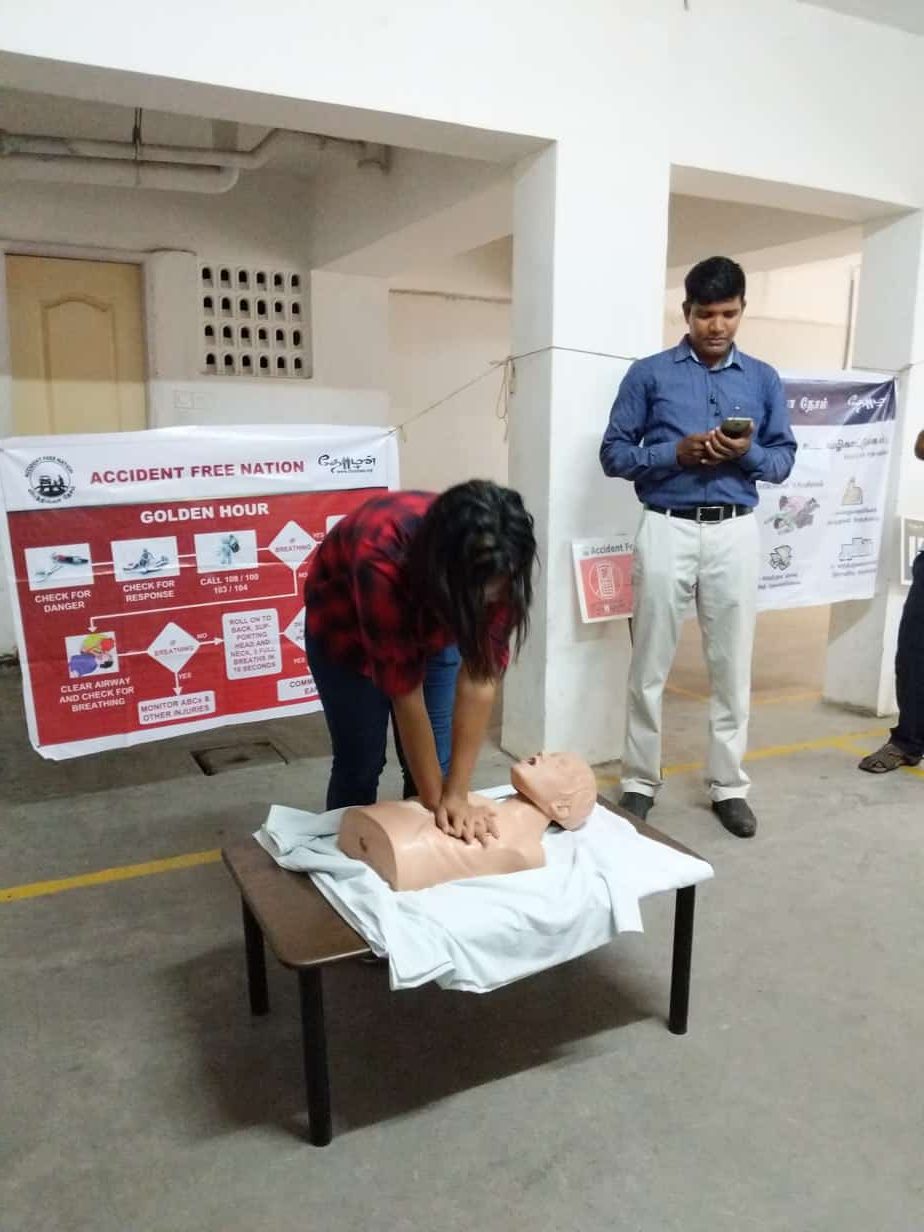
Doctor demonstrating chest compressions
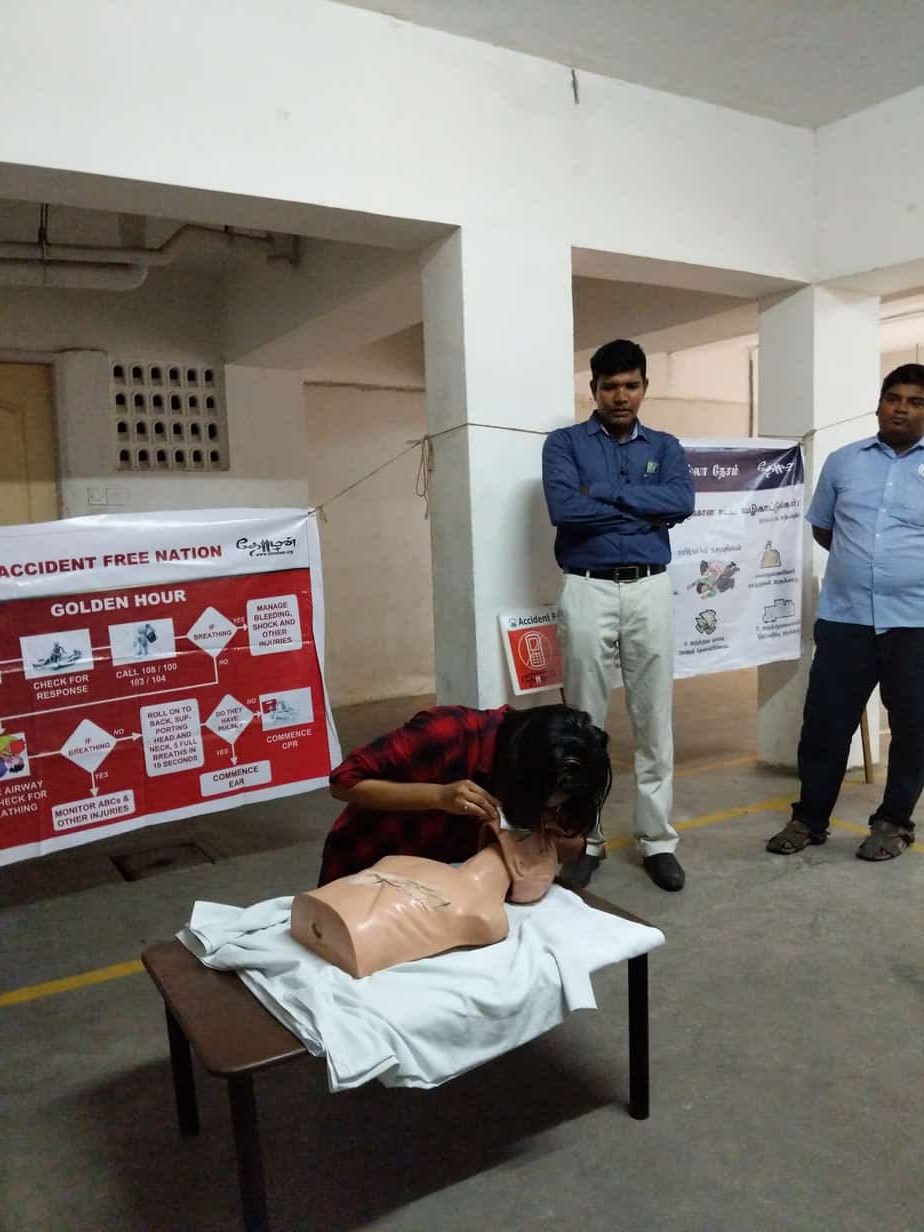
Doctor demonstrating mouth-to-mouth resuscitation
The team from Gleneagles Global Hospital also demonstrated key actions that one can immediately perform at the accident site to save the victim(s). One of the important demonstrations was on how to perform Cardio-Pulmonary Resuscitation (CPR) on a victim who has lost his pulse and shows no visible signs of breathing.
The awareness drive ended with the hospital staff explaining the necessary ‘FAST’ check that needs to be done to identify a stroke victim where FAST stands for Facial expressions, Arm movement, Slurred speech and Timely help. The Golden Hour for a stroke victim lasts for four and a half hours from the time that he was last seen normal.
Good Samaritan Law
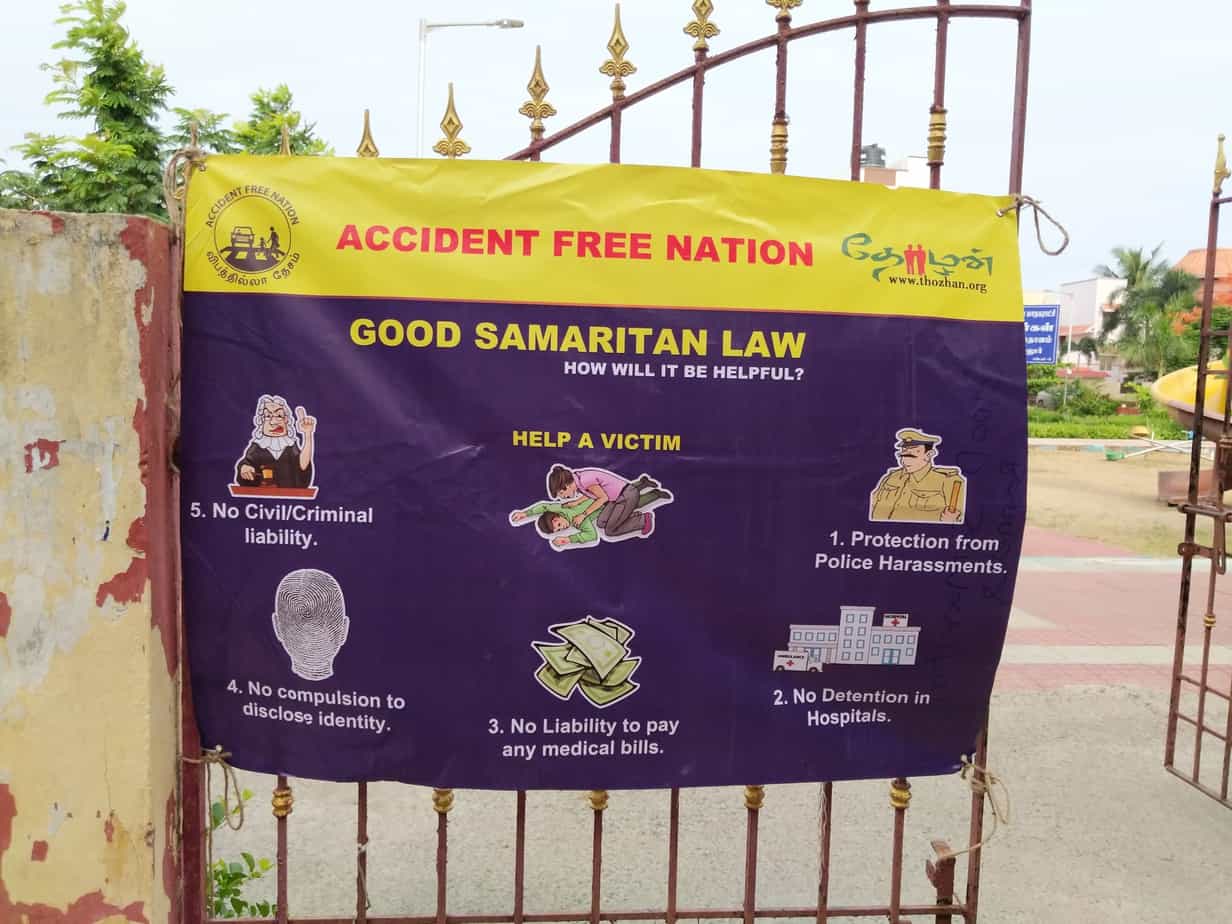
Good Samaritan Law
The NGO shared details on Good Samaritan Law which offers legal protection to people who give reasonable assistance to those who are, or whom they believe to be, injured, ill, in peril, or otherwise incapacitated:
- A Good Samaritan will not be liable for any civil or criminal action for any injury or death of the victim
- A Good Samaritan who informs police or emergency service on coming upon an injured person is not to be compelled to reveal his personal details
- Disciplinary action will be initiated against public officials who coerce Good Samaritan to reveal his personal details
- A Good Samaritan is not to be forced to reveal his/her personal details; disclosure of personal information including for the Medico-Legal Case (MLC) Form will be optional and voluntary
- Good Samaritans are not to be forced to bear the initial cost of treatment. No public or private hospital can demand payment for registration and admissions costs from any bystander who brings an injured to the hospital
- Hospitals cannot refuse treatment to a victim; Lack of response by a doctor in an emergency situation shall be considered as “Professional Misconduct” and disciplinary action shall be taken against such a doctor (as per Indian Medical Council Regulations, 2002)
The final message from this awareness drive was that we, as citizens, must spread as much awareness as possible using our social networks about the Good Samaritan Law and whenever possible, be the Good Samaritan ourselves, and offer any help we can to the accident victims.
[All pics by author]