Mosquito breeding sites identified by GCC
The Greater Chennai Corporation has located sites where there is extensive mosquito breeding in the city. The civic body has tagged 1500 such sites across the city. The sites include commercial buildings and spots that are under construction. The exercise has been underway since August. Thiruvottiyur zone has the highest number of mosquito breeding sites, followed by Manali.
Mosquito breeding and the onset of monsoon have caused a spike in Dengue cases in the city with the current tally for the year at 493. The civic body has undertaken several mosquito control measures in the past weeks such as fogging, and inspections to ensure that residential and commercial buildings do not allow for stagnation of water and spraying of larvicide over canals and water bodies using drones.
Source: The Times of India
Read more: Chennai’s mosquito problem needs permanent solutions over temporary fixes
Civic body removes garbage and debris from water bodies
In a bid to clean up the water bodies and waterways of Chennai, the civic body has undertaken several measures. A part of this is the removal of garbage that has been dumped or made its way to the waterbodies and canals across the city. This exercise has resulted in the GCC removing around 600 tonnes of garbage and 250 tonnes of debris over a period of four months.
Other measures to prevent the clogging of water bodies and waterways have been the removal of water hyacinth, the removal of floating debris and the desilting of waterways. Fines and penalties have been imposed on those who have been found dumping garbage in the city’s waterbodies and monitoring mechanisms have been intensified. Single-use plastic has been found to be one of the main contributors to the clogging of waterways and water bodies.
Source: The Hindu
Appeal to segregate firecracker waste
In the run-up to Diwali, firecrackers have been ubiquitous in Chennai streets. Mayor R Priya has appealed to the residents to hand over firecracker waste separately to the conservancy workers who collect household waste. A meeting has also been held with the concessionaires who manage the city’s waste, Urbaser Sumeet and Ramky Enviro, on the management of firecracker waste.
The contractors have been directed to use special vehicles to collect firecracker waste and ensure that it is not mixed with regular household waste. The waste collected will be taken to a separate facility in Gummidipoondi for processing and will not be carried to the landfills in Perungudi and Kodungaiyur.
Source: The Times of India
Water supply and sewage facilities for Shollinganallur Zone
Residents of Kottivakkam, Palavakkam and Neelangarai will be able to get municipal water supply and treatment of sewage on the completion of a newly launched project by Chennai Metro Water Supply and Sewerage Board (CMWSSB). The project will involve providing water and sewage connections to households in these areas at a cost of Rs 495 crore. This has been a long-pending demand of the residents who have had to use private tankers for water supply and removal of sewage.
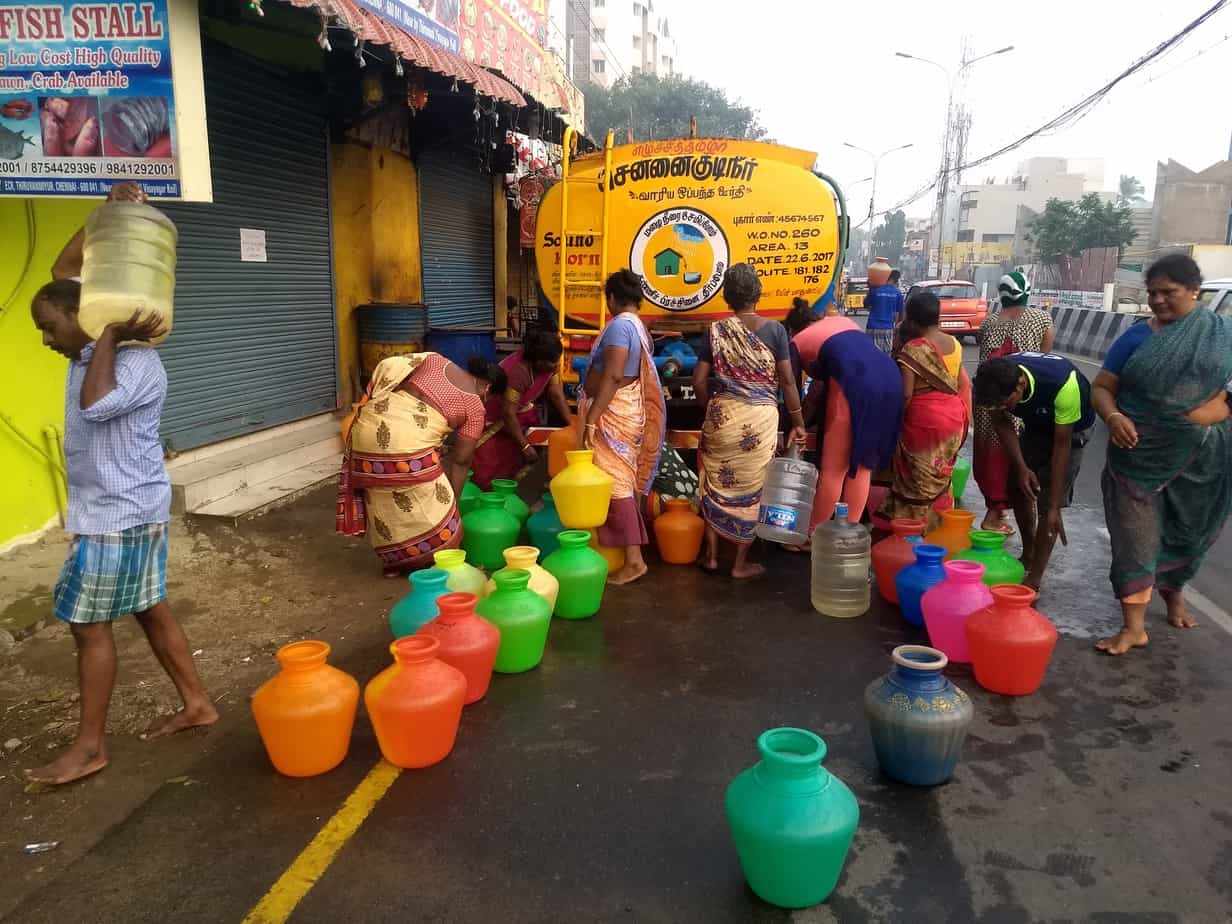
As part of the project, a pipeline network spanning 139 km is expected to be laid. Connections will be provided to 12,776 households in the Shollinganallur zone. Pumping stations and mechanical bores will also be constructed.
Source: DTNext
Read more: Many reasons for Chennai residents to rely on private water tankers
Survey by Gender Lab on women’s safety
Findings from a survey on women’s safety were made public as part of the annual report launched by the Gender and Policy Lab. The survey showed that 16% of women respondents were sexually harassed in public in Chennai over the past three months. These included instances of verbal, physical and visual harassment. Women reported more instances of harassment in transit points over homes or public spaces.
Women reported a high number of instances of harassment while using buses and at bus stops. In 62% of such instances, no one was reported to have come to the aid of the women who were subject to harassment.
The respondents of the survey were women aged between 18-35. The survey covered a sample size of 3000 women and was carried out between February to May this year.
Source: The Hindu
[Compiled by Aruna Natarajan]