COVID-19: Covaxin administered to two volunteers in city; vendors to be tested on a regular basis
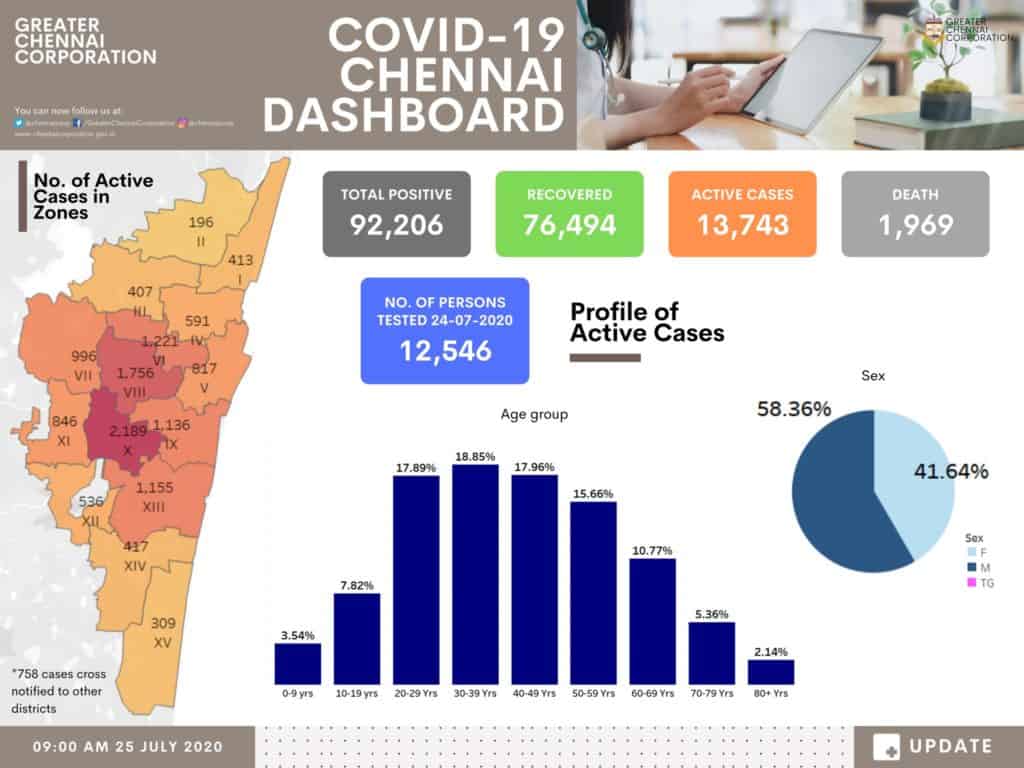
Chennai recorded 1,299 fresh COVID-19 cases on July 24th. There were 1,110 recoveries and 22 deaths.
Phase-I human trial of the indigenously developed vaccine for COVID-19 – Covaxin – began at SRM Medical College and Hospital in Chennai last week. The hospital is one of the 12 institutions authorised to carry out the trial. The vaccine was administered to two volunteers. Phase -1 trial would analyse the safety of the vaccine and the effective dosage needed to mute the virus .
While the COVID caseload in the city has reduced in recent days, Greater Chennai Corporation (GCC) officials feel that more time is required to assess if the situation has stabilised. Joint Commissioner (Health) P Madhusudhan Reddy stated that the current dip could be brief and that it cannot be concluded that the curve has been flattened.
GCC Commissioner G Prakash said that intensive detection and prevention will be continued, by taking a leaf from the successful efforts in North Chennai, to bring down the total positivity rate (TPR) to 5% by August. TRP is the percentage of samples that test positive for the virus against the total number of samples tested. He added that the TPR has come down to 5%-6% in Tondiarpet and 8%-9% in Royapuram in North Chennai. Action plans similar to those followed there will be executed in Anna Nagar, Kodambakkam and Teynampet zones which have reported a high number of new cases.
The civic body is also taking measures to test vendors on a regular basis to ensure they do not become super spreaders. About 700-750 samples from vendors are set to be collected on a daily basis.
From 132 containment zones in Chennai in July, the city has brought it down to just 62 at present. Thiruvottriyur, Manali, Madhavaram, Tondiarpet, Royapuram, Alandur, Adyar, Perungudi and Sholinganallur are the nine zones that no longer have containment zones. The civic body has said the containment zones in Teynampet and Valasaravakkam could also be removed in the coming days.
Following complaints of delayed results of COVID tests, the GCC Commissioner has directed all labs to provide results within 24 hours. The labs have also been asked to collect information such as name, address, phone number, details of preexisting health issues and contact history for the past 15 days from those seeking a test.
Source: The New Indian Express | The Times of India | The Hindu
Committee formed to study oil leak in Port
A committee has been formed by the Chennai Port Authority to inspect the leak of cooking oil from a pipeline. An instance of leakage near the New Pump House Road came to light last week when the oil began flowing on the road. Port authorities stated that general operations were not impacted by the incident. The private company which owns the pipeline said that the leak occurred due to the continuous movement of vehicles over the trench.
Source: The Hindu
10 water bodies in Ambattur identified for restoration; encroachers trying to usurp Pallavaram lake
Ten water bodies in Ambattur have been identified for restoration as part of the ₹27-crore Chennai Mega City Development Mission project. Among them is the Kallikuppam pond that has suffered years of negligence by the government. The construction of a cut and cover drain has been planned to facilitate the carrying of excess water from the Kallikuppam pond to Korattur lake.
The Pallavaram Municipality has been found to have violated orders of the National Green Tribunal (NGT) and provided leeway for encroachers on the Pallavaram Lake. A portion of the encroachments was cleared after activists raised the issue. Commercial establishments which were reportedly set up on the lake were cleared last week. However, some of the stone poles constructed by the encroacher remain intact.
Source: The Times of India | The Hindu
E-challans pasted on bikes for haphazard parking on Anna Salai
To better regulate parking in Anna Salai, the police department has begun pasting e-challans with the fine amount on the vehicles. As the number of motorists visiting areas such as Ritchie street has increased in recent days, policemen have been stationed to ensure that the vehicles are parked in an orderly manner. The GCC and the police department are also working together to identify vacant lands near the arterial roads in the city to implement a paid parking system.
Source: The Hindu
[Compiled by Bhavani Prabhakar]