Sponge parks are quickly becoming a prominent element of Chennai’s flood mitigation efforts. Spearheaded by the Greater Chennai Corporation (GCC), the project now boasts 78 sponge parks in the city, under the Sponge City initiative. While these structures are designed to manage surface runoff and prevent urban flooding, a closer examination reveals significant deviations from the holistic, nature-based designs that typically define a sponge park.
Unlike the sponge park in Porur (Dr MS Swaminathan Wetland Eco Park), that integrates nature-based design and ecosystem restoration, most GCC-implemented sponge parks function more like glorified rainwater harvesting systems. The critical question remains: Are these designs effective enough to address the challenges of urban flooding?
Read more: From degraded wetland to community space: Porur sponge park redefines flood control in Chennai
How do GCC sponge parks aim to mitigate flooding?
In 2023–24, the GCC constructed 57 sponge parks, with 30 more commissioned in 2024–25. Of the 30, 21 have been completed, while nine are under construction. The State’s 2025–26 budget allocated ₹88 crore for seven additional sponge parks under the National Disaster Management Authority.
Speaking to Citizen Matters, a GCC official explained that construction typically begins with excavating a retention pond within an existing GCC park. Workers then install percolation wells, similar to rainwater harvesting pits, at the centre of the pond. While the pond’s base remains permeable, its sides are lined with cement. The surface runoff from adjacent streets is channelled into the pond through pipelines. Each sponge park takes approximately three to six months to complete, with zonal officers overseeing maintenance after construction.
Locations are chosen based on factors such as aquifer recharge potential, flood-proneness, and available park space. “During the rains, the surface runoff from the street will drain into the pond and percolate into the ground. This will help increase groundwater levels and prevent seawater intrusion,” says a GCC official.
Although no formal impact assessments have been conducted, corporation officials claim to have observed localised rises in groundwater levels.
Meanwhile, the GCC also plans to link stormwater drains directly to these ponds in some locations. However, Dr S Janakarajan, former professor at the Madras Institute of Development Studies, cautions against using polluted water for aquifer recharge.
Read more: Understanding sponge parks: Why are Indian cities opting for it?
Design gaps and implementation challenges
Despite GCC’s efforts, several critical design flaws suggest a lack of understanding of the actual function of sponge parks. By definition, sponge parks are nature-based solutions intended to function like wetlands. However, GCC’s use of cemented ponds contradicts this principle. While the base remains permeable, the reliance on grey infrastructure raises concerns.
When questioned, a GCC official defended the use of cement, saying, “Only the bunds of the retention pond are cemented to prevent collapse during heavy rains. The bottom remains unlined to allow percolation.”
Manushi Ashok Jain, co-founder of Sponge Collaborative, acknowledges the challenges of promoting a nature-based approach in the construction of sponge parks. “Through the MS Swaminathan Wetland Eco Park, we demonstrated a successful model of a nature-based sponge park with ecological habitats and ponds using natural grading and native planting. However, quick-fix solutions such as concrete retention ponds or plastic-based storage products are more easily adopted. While they may be faster to build, deep concrete ponds take away recreational space and sub-surface plastic can pollute the aquifer without providing any additional benefits like heat mitigation and biodiversity.”
Sponge Collaborative now supports the GCC through capacity-building initiatives and has published a manual on the scaling of nature-based sponge parks.
Other issues with GCC’s sponge parks
Beyond design flaws, a lack of community engagement and on-ground challenges have hindered the effectiveness of many sponge parks.
Dilip Srinivasan, a resident of Perambur, criticises the absence of public consultation. “I had no idea these ponds were meant for flood mitigation. The GCC neither involved the residents at any stage of the project nor installed any boards explaining the functions of the sponge parks,” he says. Despite recent rains, he observed no water inflow from streets into the pond near his home, and streets remained inundated. Moreover, water in the retention pond at Mayor Sundar Rao Park had stagnated for over ten days following the December floods.
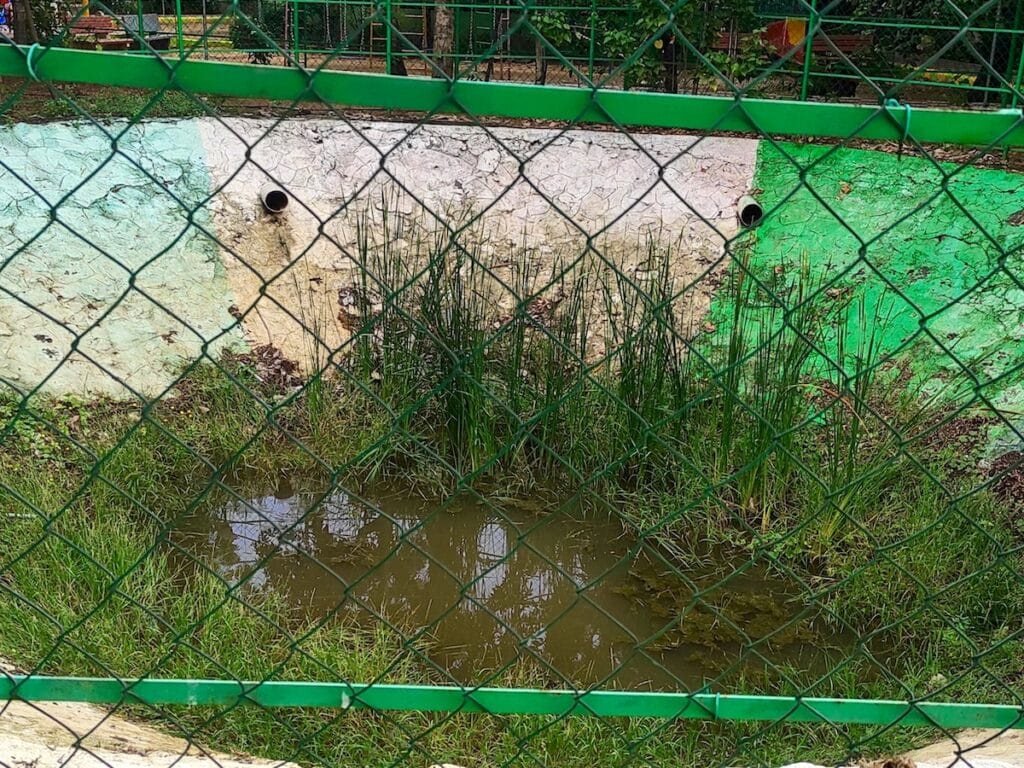
In other cases, design choices have impeded functionality. Harris Sultan, an expert on water management from Arappor Iyakkam, notes that the ponds should first be constructed in the low-lying part of the park. Only then will water from the park flow naturally into the pond. “Instead, the pond bunds are raised with cement, leaving no way for the water from the park to flow into the pond,” he says. Harris has visited a few sponge parks in the city to check their functionality.
These issues are compounded by broader institutional shortcomings. A document accessed by the author through the Deutsche Gesellschaft für Internationale Zusammenarbeit (GIZ), a German agency supporting the project, which highlights systemic gaps in Chennai’s sponge park programme.
Key concerns include:
- Lack of technical understanding within the department and lack of data/information
- Lack of stakeholder engagement and environmental assessments in most planning phases
- Selection of contractors based on the lowest-cost bidding, without employing specialised consultants or contractors
- Non-compliance with open space design standards.
Maintenance: a persistent weak link
Where construction is complete, poor maintenance threatens to undermine long-term effectiveness. Dilip notes that many sponge parks in his locality are overgrown with weeds, reducing their capacity to absorb water. “Even the park staff do not seem to understand the purpose of these ponds,” he adds.
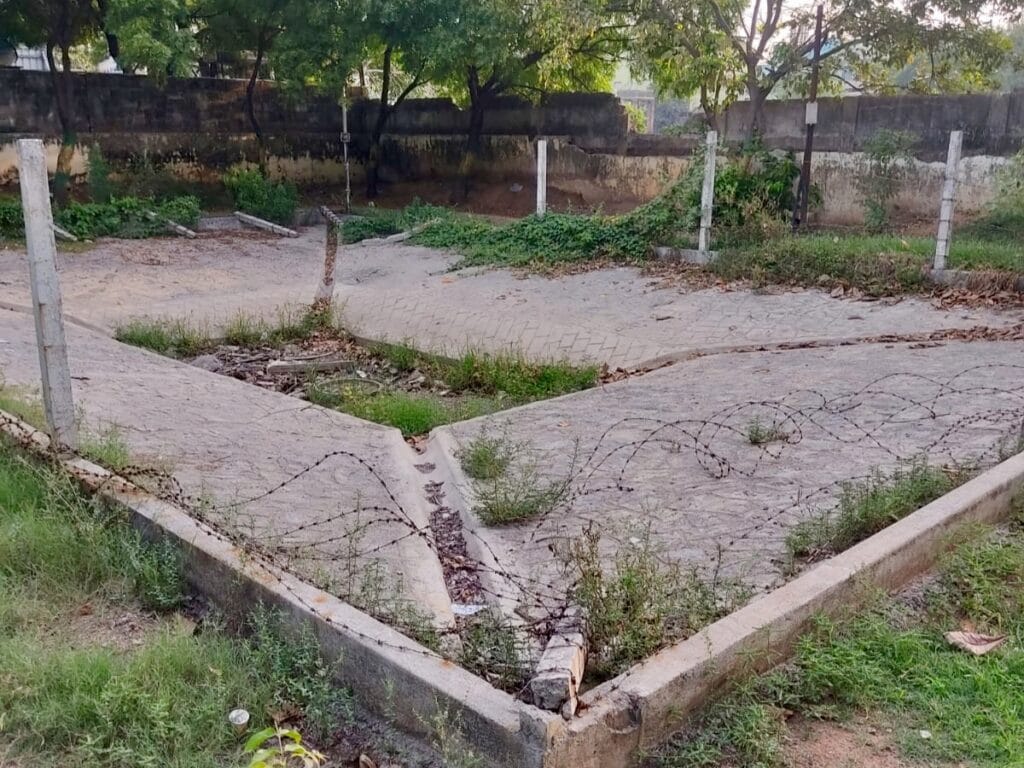
Harris Sultan echoes this concern, citing the Tondaiyarpet park as an example where neglect has turned the pond into a mosquito-breeding ground and a dumping site. Without regular maintenance and public awareness, sponge parks risk becoming liabilities rather than assets.
Here is the list of GCC sponge parks and their locations. You can check the status of the parks in your area. If you find similar issues, you can reach out to your zonal engineers or raise a complaint through GCC’s grievance redressal mechanism.
Sponge parks must be more than cosmetic fixes
As Dr Janakarajan aptly puts it, “Constructed wetlands should not be cosmetic interventions; they should be scientific ones.”
Sponge parks hold immense potential for flood management if implemented thoughtfully. However, the current GCC model, driven by quick fixes and grey infrastructure, falls short of the ecological promise that the term “sponge park” implies. Chennai still has time to course-correct and lead by example. But it must commit to building sponge parks, which are sustainable in practice, not just in name.