COVID-19: New plasma bank and night shelter on the cards
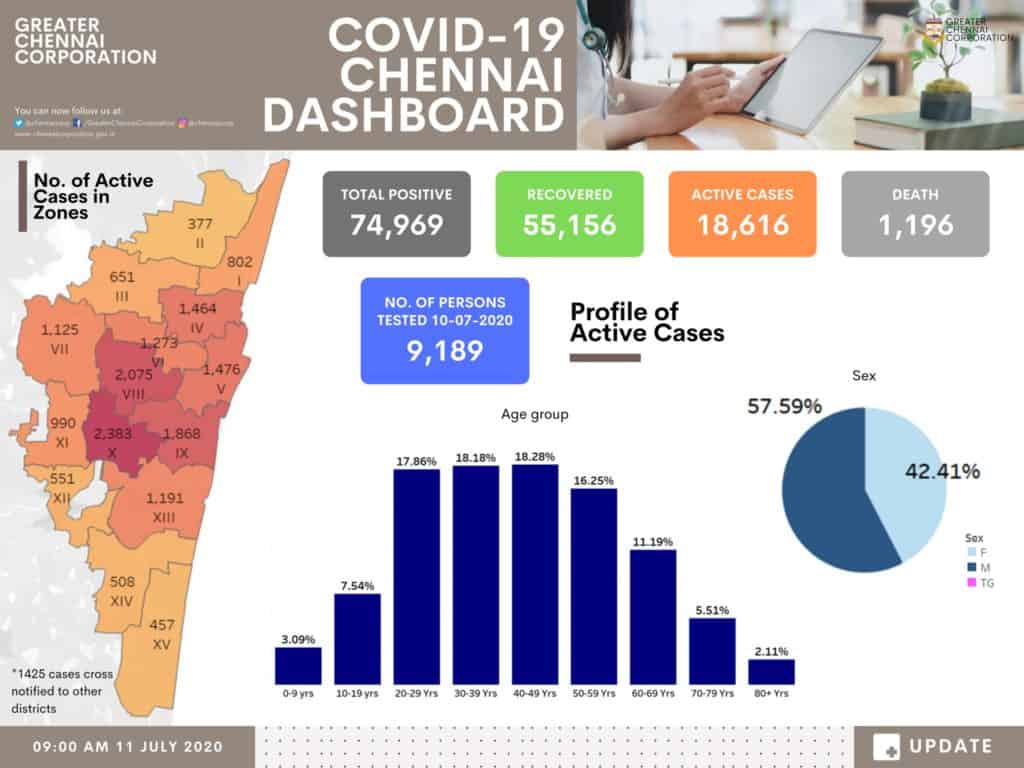
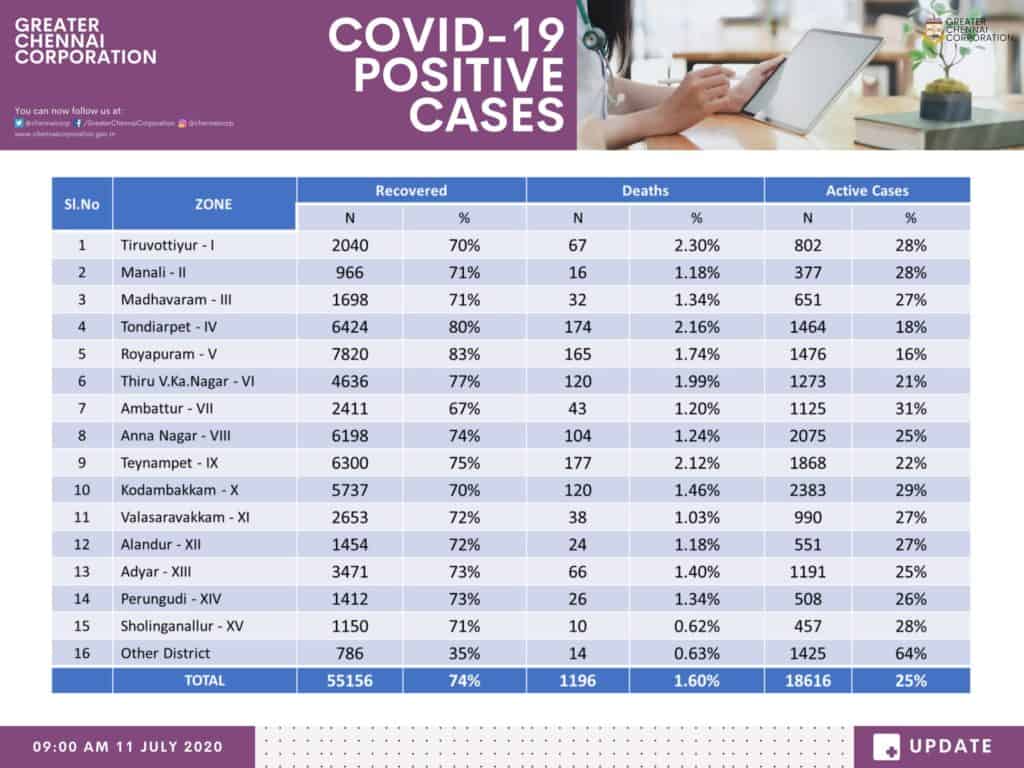
Chennai recorded 1,205 fresh COVID-19 cases on July 10th. There were 2,869 recoveries and 27 deaths. A total of 18,616 patients are under treatment in the city’s various hospitals and COVID Care Centers.
The state government has announced that the Rajiv Gandhi Government General Hospital (RGGGH) will soon get India’s second plasma bank. The facility will be established at a cost of Rs 2 crore.
As Chennai witnesses a drop in the number of COVID-19 cases, the civic body data showed that the overall average growth rate of new cases stood at -5.2% for the past one week until July 9th. According to officials, the cases in Manali have come down considerably and recorded -13.3% growth rate.
However, the number of containment zones have more than doubled in two weeks’ time. According to the data released by GCC, the number of containment zones was 104 on June 26 and 276 on July 10.
The civic body has begun testing traders in North Chennai markets in a move to detect cases early and curb the transmission. Ennore Express Highway, fruit market in Madhavaram, Kothavalchavadi and other standalone markets in Manali and Tondiarpet are a few of the focus areas. In the past few days, more 2,000 traders have been screened in the city.
In a bid to contain the infection among the inmates of night shelters run by the Greater Chennai Corporation, an exclusive COVID care centre-cum-night shelter will be set up in the city. It is to be noted that the civic body has also identified 15 homeless people who have been infected. Officials also stated that many residents of night shelters tested positive for the virus and most have recovered.
Source: The Hindu | DTNext | The Times of India | The New Indian Express
50% of IT employees in Chennai to work from home
The Tamil Nadu government issued a notification on reducing the staff strength of Information Technology/ Information Technology Enabled Services (IT/ITES) companies working from the office. According to the notification, the firms located within the Chennai Police Commissionerate limits should allow 50% of the employees to work from home. The new order also stated that the company should arrange transportation for 90% of the workforce reporting to the office.
Source: The Times of India
Vegetable vendors suffer nature’s fury
Following heavy showers last week, the makeshift Thirumazhisai and Madhavaram markets suffered heavy damages. Officials quickly flung into action to suck out the knee-deep water.
Traders noted that 1,000 tonnes of vegetables that arrived on July 9 were unsold. About 20% of retailers could not reach the market due to the downpour and difficulty in reaching the shops.
Source: The Hindu | The New Indian Express
Power shutdown to be back in Chennai
As lockdown came into force, power cuts took a back seat. As the city is unlocked, the load shedding activity will resume implementing emergency maintenance works. According to the Tamil Nadu Generation and Distribution Corporation Ltd (Tangedco), the time period has been revised to 9 am to 2 pm as against the earlier schedule 9 am to 5 pm.
Source: The New Indian Express
Funds sanctioned for desilting waterways
The state government has allocated Rs 9.9 crore to carry out 14 pre-monsoon preparedness works for this year, such as desilting, removal of debris and clearing obstruction in waterways. The projects will be carried out in major watercourses in Chennai, Chengalpattu and Thiruvallur districts. As part of the project, debris from the Cooum, the Adyar, Otteri nullah, Buckingham and Virugambakkam canals would also be cleared.
The Government Order (GO) also noted that the Public Works’ Department (PWD) should take measures to prevent dumping of solid waste in water bodies, while the Water Resources’ Department (WRD) should formulate strategies to prevent discharge of wastewater in lakes and ponds and divert the liquid waste to treatment plants.
Source: The Hindu | The Times of India
Compiled by Bhavani Prabhakar