City gets third miyawaki forest
The civic body has begun work for developing the city’s third miyawaki forest in Mugalivakkam, Alandur zone. Regional Deputy Commissioner (RDC) South Alby John said the plan was to have been kickstarted in March, but faced delay due to the COVID-19 pandemic. The corporation plans to plant 2,000 saplings in 35 cents of land. The city already has two miyawaki forests , one each in Adyar and Valasaravakkam, where 2,000 and 700 saplings have been planted. The civic body calculated that the forest in Adyar would consume 11.7 tonnes of carbon dioxide and give out four tonnes of oxygen in its first year.
Source: The Times of India
COVID-19: 984 cases in Chennai, hospital conducts study to identify how foetuses contract COVID
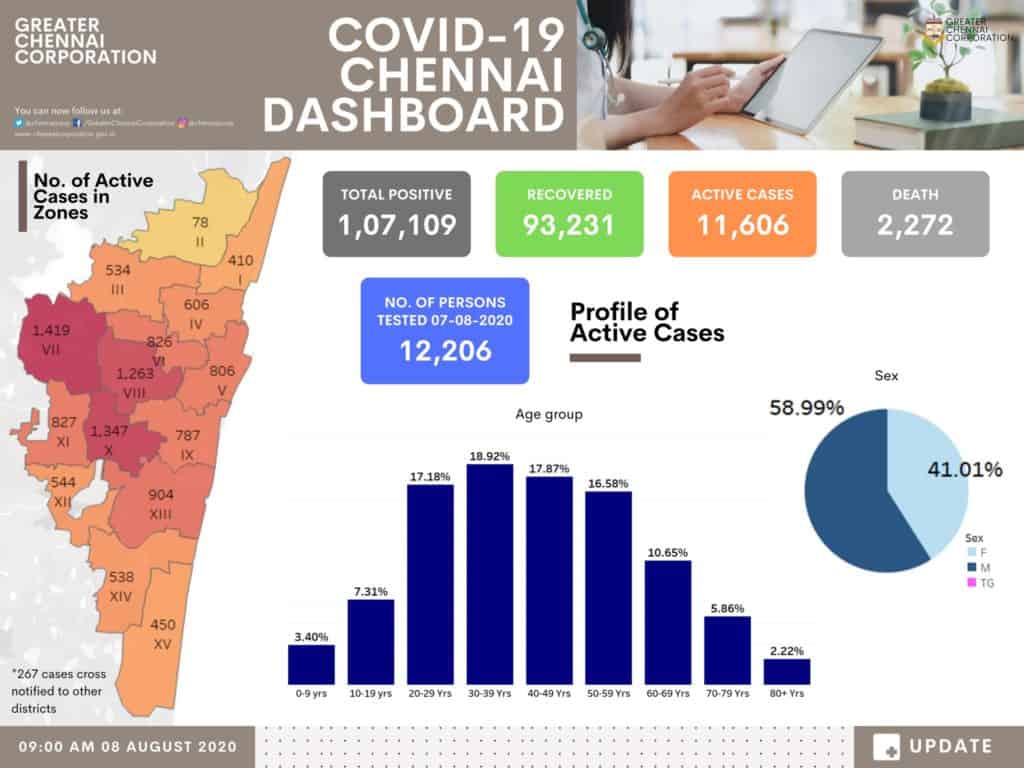
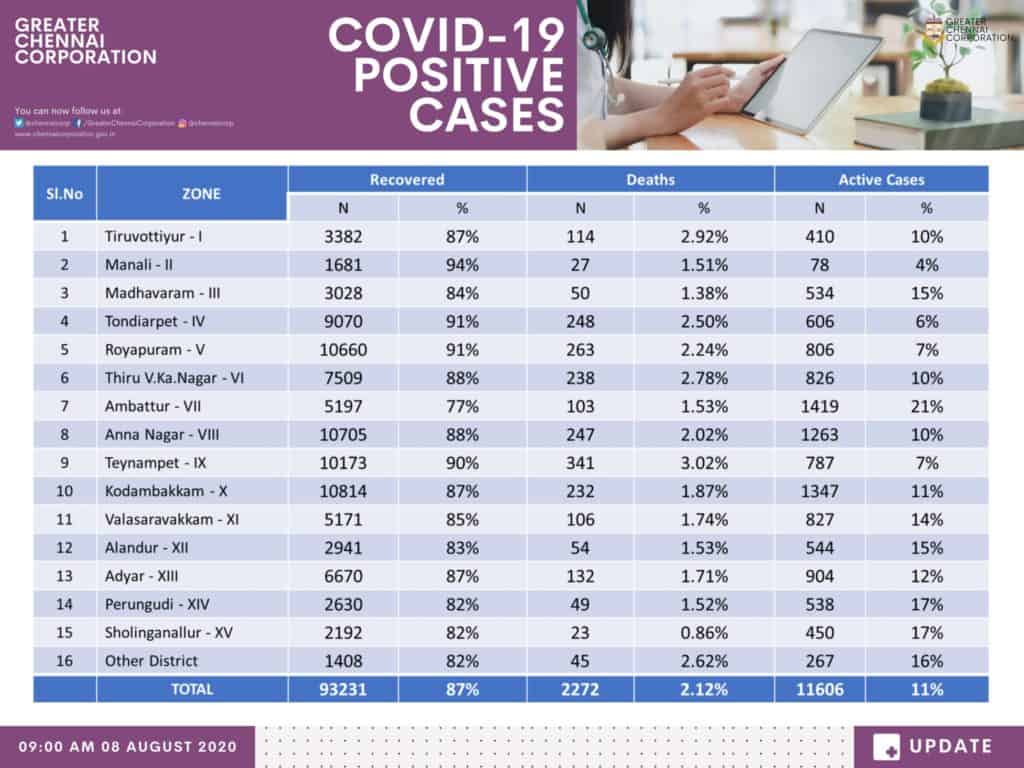
On August 7, Chennai recorded 984 fresh COVID cases. There were 1103 recoveries and 24 deaths reported.
The Government Hospital for Women and Children, Egmore, has begun a study on foetuses contracting COVID. The study analyses if the risk of COVID-19 is high due to labour or close contact with an infected mother. The research will be conducted by testing the placenta, amniotic fluid, cord blood and breast milk. Around 400 pregnant women with the viral infection delivered children at the hospital. Among them, 11% of the children reportedly contracted the virus.
Early last week, the Directorate of Medical Services (DMS) cancelled the COVID treatment license of Be Well Hospital in Kilpauk for levying exorbitant fees. The hospital reportedly charged Rs 16 lakhs for a patient who was admitted with mild symptoms of COVID-19. The patient stayed at the hospital from July 13 to 29.
Source: The Times of India
Explosive substance stored in North Chennai since 2015
Customs officials in the city began a safety check in the freight stations in North Chennai as it was discovered that a consignment of 740 tonnes of ammonium nitrate has been there in storage since 2015. The move comes shortly after the explosion in Beirut caused by the storage of ammonium nitrate.
A report on the site by the Tamil Nadu Pollution Control Board (TNPCB) revealed that two neighbourhoods – Manali New Town and Sadayankuppam – with a population of around 12,000 are located in the vicinity of the dock. The consignment, stored in 37 containers, was reportedly seized from a Karur-based company.
Source: DTNext | The News Minute
Artificial reefs sunk along coasts
The State Fisheries Department and Central Marine Fisheries Research Institute (CMFRI) sank the artificial reefs along the coastal areas of Chennai, Chengalpattu and Thiruvallur. The project was announced in the previous budget and has been completed at a cost of Rs 10 crore. The clearing of the structure helps the fishing community to get more catch and prevents trawler operations.
Source: The Times of India
Fine system to control mosquito breeding
Cases of Dengue have been on the rise in the city even as it battles COVID-19. Mosquito breeding has been the main case of the spread of Dengue. With seasonal rains and stagnation of water, breeding grounds for mosquitoes have emerged in all parts of the city.
In order to curb the spread of Dengue and ease the burden on the city’s health systems, the civic body has evolved a fine structure to be levied on those who do not curtail mosquito breeding in their premises.
The fine structure for various categories is as follows:
| Buildings | First violation | Second violation | Third violation |
|---|---|---|---|
| House owners | Notice | Rs 100 | Rs 200 |
| Apartment owners | Rs 500 | Rs 5,000 | Rs 15,000 |
| Small shops | Rs 500 | Rs 2,000 | Rs 5,000 |
| Commercial establishments, government buildings and industries | Rs 10,000 | Rs 25,000 | Rs 1,00,000 |
Source: The New Indian Express
Compiled by Bhavani Prabhakar