Mumbai on red alert despite rains subsiding
Despite some respite from heavy rainfall on the morning of July 8th, the India Meteorological Department (IMD) issued a red alert in the city for the weekend, citing heavy rainfall at isolated places.
There is the additional possibility of occasional strong winds reaching 40-50 kph.
The city’s local trains and buses – its lifelines – have remained normal, barring a few inconveniences. The Brihanmumbai Municipal Corporation (BMC), in the meantime, has barred entry into beaches on days of heavy rainfall.
Source: NDTV, Mint
COVID cases reduce
Mumbais daily COVID cases have continued on a downward trail, with only 695 cases registered on one day. No deaths were reported.
On July 6th, out of the 695 fresh cases, 40 patients needed hospitalisation and 10 were put on oxygen support. The total tally went up to 1,116,827. There are currently 5,600 active cases and 1,504 patients recovered and discharged. The number of total recovered patients in the city is 1,091,607.
Source: Mid-day
Urban local bodies to adopt airshed management for clean air
For the first time in the state, our different urban local bodies (ULBs) have come together to work on air pollution abatement, following what is known as an “airshed management” approach.
Thane, Navi Mumbai, Badlapur, and Ulhasnagar, are working together with the Maharashtra Pollution Control Board (MCPB), MCGM Centre for Municipality Research (Powai) and the Institute for Sustainable Communities (ISC) to execute the National Clean Air Program (NCAP) under a pilot project known as the ‘Maharashtra Clean Air Accelerator’.
“These four ULBs together have not spent even 10% of funds under the National Clean Air Program (NCAP). And the MPCB itself cannot implement any interventions, other than increasing air quality monitors. The main issue is that we are a regulatory body, meant to ensure that industries are complying with various environmental laws. The capacity and technical expertise required to tackle air pollution are actually lacking at both the MPCB’s regional level and among ULBs. So, a collaborative approach will help both of us. Both MCMR and ISC will be steering the pilot, which can hopefully be reproduced for other airsheds in Maharashtra,” said a senior official in the Maharashtra Pollution Control Board (MPCB).
Source: Hindustan Times
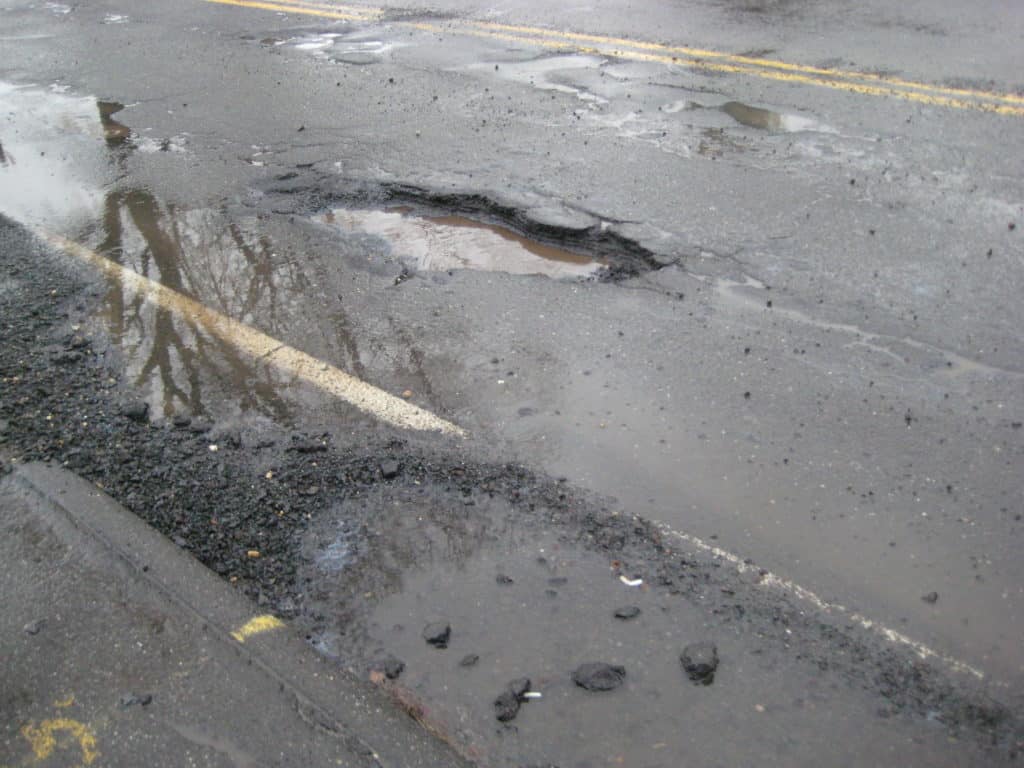
Bombay HC directs civic bodies to take prompt action on pothole complaints
When, recently, a 23-year-old man was run over by a bus after he fell off his motorcycle after hitting a pothole in Thane, the Bombay High Court asked civic bodies to take prompt action whenever they get complaints of potholes.
“People are dying. You (civic bodies) must prevent accidents, and save lives. You have to act immediately once potholes are brought to your notice,” a bench of Justices A K Menon and M S Karnik, said.
In 2018, the high court directed all municipal corporations and councils across the state to repair arterial roads under their jurisdiction.
Source: Mid-day
Read more: The easiest way to fix Mumbai’s potholes is to complain on Twitter
Ganesh idols in Mumbai to be immersed only in artificial lakes this year
The BMC has made it mandatory this year for citizens and organisers to immerse Ganesh idols in artificial lakes. In a release issued on July 4th, the BMC also made it compulsory to mention that the idols are made of Plaster of Paris (PoP).
In 2023, the BMC plans to ban PoP idols entirely. “There will be a complete ban on PoP idols in the BMC’s jurisdiction from the 2023 Ganesh festival. It will be mandatory to buy and sell idols made only from environment-friendly material, like ‘shadu clay’, from next year,” the release said quoting BMC zone-2 deputy commissioner Harshad Kale.
Source: NDTV
[Compiled by Saachi D’Souza]