HC: Govt should pay for illegal hoardings
The Karnataka High Court said that the Bruhat Bengaluru Mahanagara Palike (BBMP) and the state government would have to deposit Rs 50,000 each in the court for every instance of unauthorised hoarding in future. There are too many unregulated and uncontrolled illegal hoardings, banners and flexes, mainly due to the callousness and negligence of BBMP officials, it said.
Even though 59,413 illegal hoardings were identified in the past four months and 58,429 of them were removed by spending BBMP’s funds, or taxpayers money, why hadn’t the BBMP collected any penalty? the court asked. The registration of just 123 complaints and 40 FIRs on nearly 60,000 illegal hoardings could shock anyone, it said.
However, the BBMP had defended that during the recent Assembly elections, supporters of parties had put up thousands of illegal banners and hoardings to wish politicians.
Source: The Hindu, Deccan Herald
Action on encroachments in lakes, SWDs
The Chief Commissioner of BBMP submitted a 109-page compliance report on the action taken to remove encroachments on SWDs (storm water drains). About 160 lakes have been identified and the Revenue Department has been informed to clear them.
The report said that about 114 lakes have been developed, home guards surveillance 24/7 is in place and Rs 5 crore was earmarked for CCTVs. Citizens can file complaints on the ‘Sahaaya’ app and on an average 325 complaints per day are being received. ‘Project Rajakaluve’ aims to protect SWDs.
Source: Deccan Herald
Read more: Open letter to the BBMP Commissioner on BBMP’s expenditure and efforts in waste management
Drugs at govt hospitals delayed
The supply of medicines and essential drugs at government hospitals is affected, especially those on the national list of essential drugs. This is mainly due to the prolonged procurement cycles by the KSMSCL (Karnataka State Medical Supplies Corporation Ltd), the earliest procurement being 45 days.
Hence, patients bear an average of Rs 500 as out-of-pocket expenses at government hospitals in 11 districts of the state, said the Sarvatrika Arogya Andolana Karnataka (SAAK), a state-level network of health rights-based organisations.
Source: Deccan Herald
Kuki-Zo protest at Freedom Park
More than 2,000 Kukis, under the Bangalore Unao Forum, protested at Freedom Park on August 1st, demanding justice for victims of the Manipur conflict. The Unao Forum was formed on May 4th by many associations representing the Kuki community and its sub-tribes. The protestors comprised many Kuki community members and victims who fled Manipur.
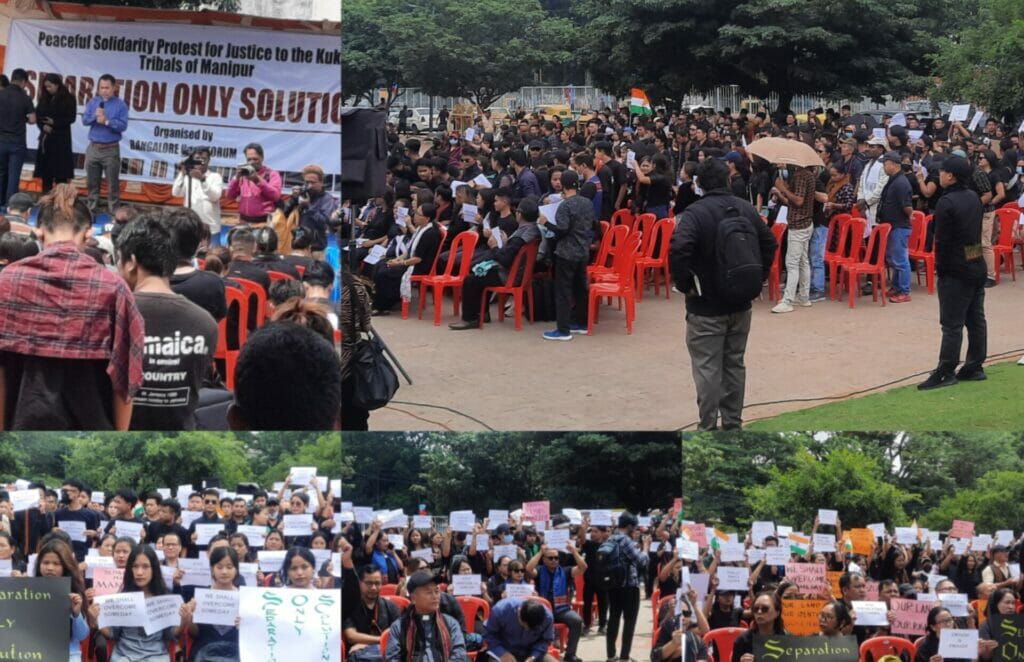
The protesters wore black shirts, and trousers, with their traditional shawls, to condemn the ongoing violence in Manipur. The protest was organised by Savio T Lupho, President of the Kuki Student Organisation in Bengaluru.
Source: Deccan Herald, SouthFirst, The News Minute
Read more: Temple food and midday meals: need for hygiene protocols
Midday meal staff asked to follow hygiene SOPs
School kitchen staff have been asked to subscribe to ‘PMPOSHANKARNATAKA2023’ over YouTube and follow the SOPs for the preparation of midday meals for government schools. The shows include talks on multiple topics, such as proper ways to clean utensils and vessels and storage of food grains and vegetables in hygienic conditions, among others.
PM POSHAN, Karnataka department, issued circulars on this last month after it got complaints about unhygienic midday meals. It stated that one day in a week, i.e., every Friday afternoon from 3 pm to 4.30 pm, the training for kitchen staff must be strictly followed.
Source: Indian Express
[Compiled by Revathi Siva Kumar]