Beat boredom by watching beetles!

They come in various sizes and shapes. Some are harmless, some are not. Observing them can be an interesting task that gives you insights into their world!

When we are scared of creatures, we often don’t look closely at them… and so miss out on seeing how beautiful they can be. We often categorise a lot of insects as “bugs” and try to stomp on them!

However, beetles are slightly different from bugs. Click here to find the major differences between bugs and beetles.

We can observe beetles closely in our own gardens… but be careful in handling them. Some are harmless, but others can pack a wallop!

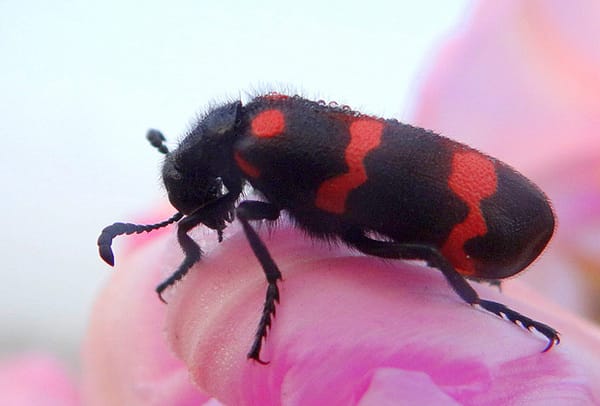
Here is a Blister Beetle.This is called so because touching it alarms the creature, and it releases a fluid which raises blisters on human skin. But see how beautiful it looks, with the dewdrops on its body!
Pic: Deepa Mohan

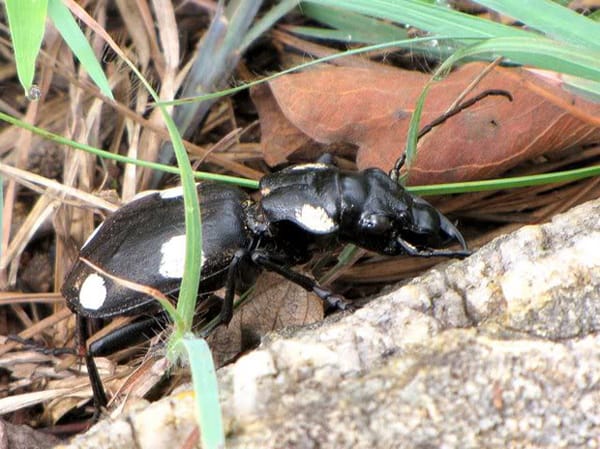
Here’s the Six-spot Ground Beetle. Look at the jaws… it can hurt when it snaps together those pincer-like jaws. So, keeping one’s distance is advised.
Pic: Deepa Mohan

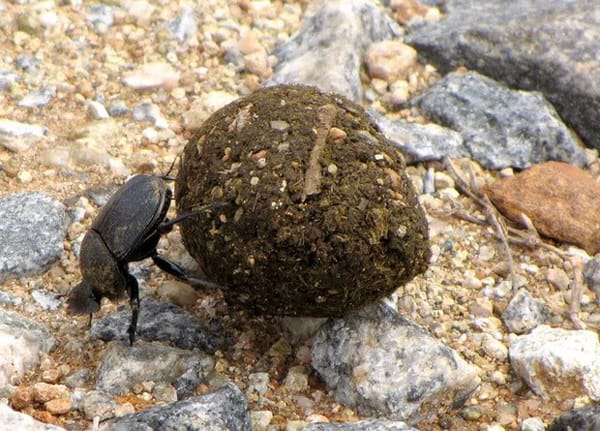
Another very interesting beetle is the Dung Beetle; this actually collects waste material, and rolls it along to its underground nest. Here, it lays eggs on the material, so that the hatched young ones have food to eat!
Pic: Deepa Mohan

Here’s a video of the Dung Beetle rolling the ‘dung’ along.

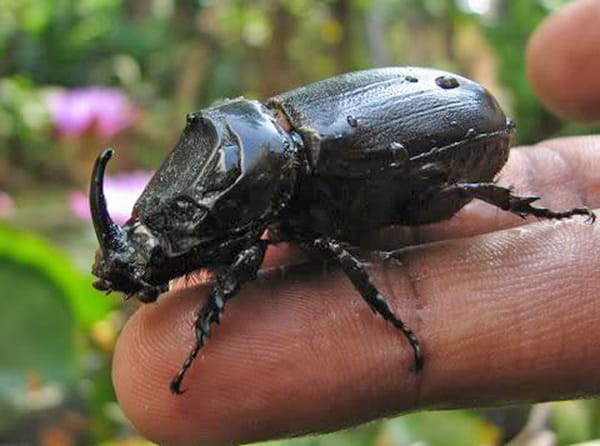
This is a Rhinoceros Beetle, named so because of that ‘horn,’ that looks like a rhino’s!
Pic: Deepa Mohan

I hope this makes people look at beetles…with respect, without fear!

Comments:

  1. Deepa Mohan says:

    These beetles can often be found in our own backyards.

  2. Deepa Mohan says:

    These beetles can often be found in our own backyards.

Leave a Reply

Your email address will not be published. Required fields are marked *

Similar Story

The wild in the city: What citizen scientists tell us about Bengaluru’s biodiversity

Spatial and temporal biodiversity patterns, as observed by citizen scientists in the city during 2016-2025, were studied at a datajam in December 2025.

Imagine you’re out on a morning walk, phone in hand, when you spot a butterfly you’ve never seen before. You snap a photo, log it into a citizen science app, and voila! You’ve just contributed to crucial biodiversity monitoring. This isn’t just a hobby; it’s part of a global movement where ordinary people collect, record, and sometimes analyse data about plants, animals, and ecosystems. Citizen science stretches the reach of ecological research. Every observation adds to unique longitudinal datasets that reveal phenology — periodic events in the life cycle of a species — along with species distribution shifts and population…

Similar Story

Air quality management is a governance problem, not just an environmental one

Despite massive funding, Indian cities face weak governance, poor data, and limited capacity, as air pollution continues to worsen.

Indian cities are struggling to breathe. Air pollution is a year-round governance challenge. In 2024, 35 of the 50 most polluted cities globally were in India, with PM2.5 concentrations above 66.4 μg/m3. This is at least 13 times the World Health Organization (WHO) guidelines and at least 1.6 times the National Ambient Air Quality Standards (NAAQS) in India. Citizens continue to bear the brunt of worsening air quality, and urban local governments (ULGs) are at the forefront of the problem, being primarily accountable for their citizens' first mile. While they do have a role to play in addressing this threat,…