Beat boredom by watching beetles!

They come in various sizes and shapes. Some are harmless, some are not. Observing them can be an interesting task that gives you insights into their world!

When we are scared of creatures, we often don’t look closely at them… and so miss out on seeing how beautiful they can be. We often categorise a lot of insects as “bugs” and try to stomp on them!

However, beetles are slightly different from bugs. Click here to find the major differences between bugs and beetles.

We can observe beetles closely in our own gardens… but be careful in handling them. Some are harmless, but others can pack a wallop!

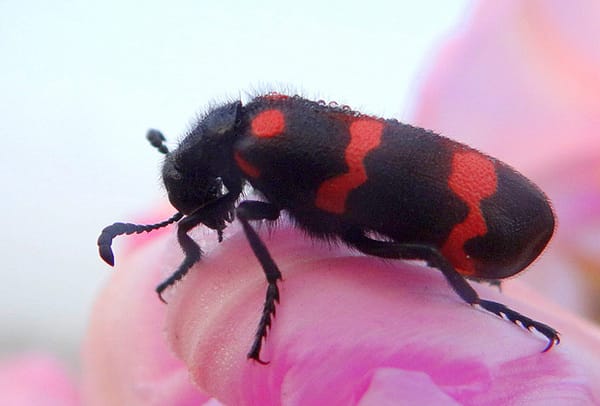
Here is a Blister Beetle.This is called so because touching it alarms the creature, and it releases a fluid which raises blisters on human skin. But see how beautiful it looks, with the dewdrops on its body!
Pic: Deepa Mohan

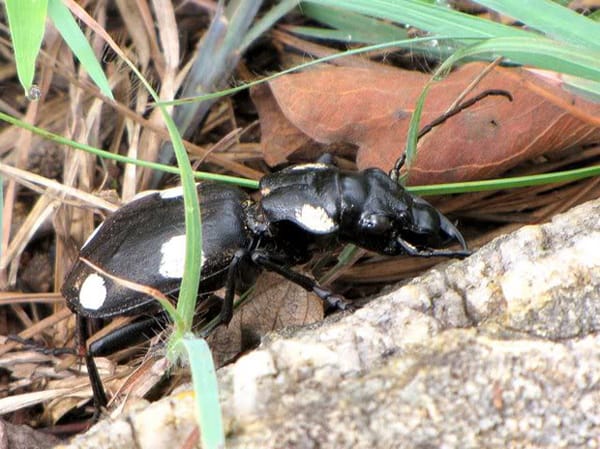
Here’s the Six-spot Ground Beetle. Look at the jaws… it can hurt when it snaps together those pincer-like jaws. So, keeping one’s distance is advised.
Pic: Deepa Mohan

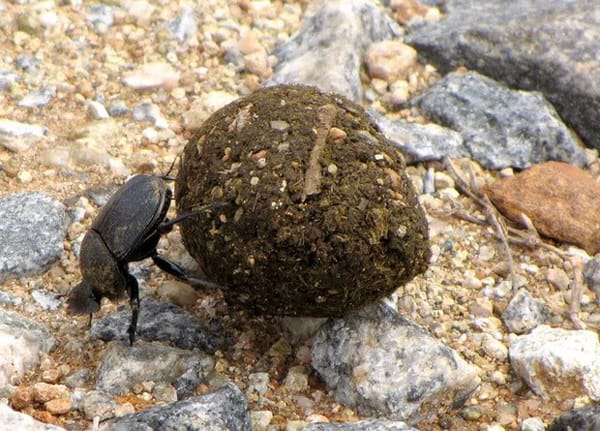
Another very interesting beetle is the Dung Beetle; this actually collects waste material, and rolls it along to its underground nest. Here, it lays eggs on the material, so that the hatched young ones have food to eat!
Pic: Deepa Mohan

Here’s a video of the Dung Beetle rolling the ‘dung’ along.

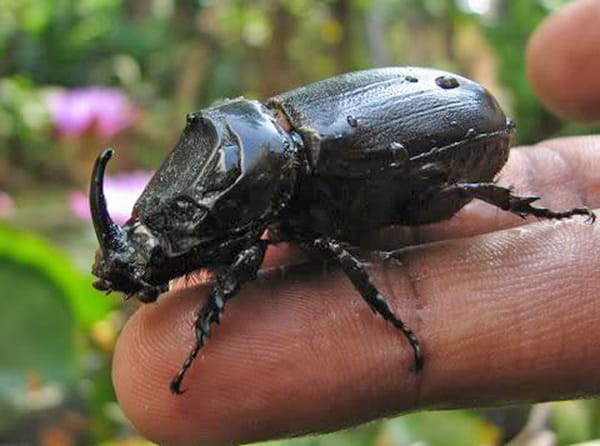
This is a Rhinoceros Beetle, named so because of that ‘horn,’ that looks like a rhino’s!
Pic: Deepa Mohan

I hope this makes people look at beetles…with respect, without fear!

Comments:

  1. Deepa Mohan says:

    These beetles can often be found in our own backyards.

  2. Deepa Mohan says:

    These beetles can often be found in our own backyards.

Leave a Reply

Your email address will not be published. Required fields are marked *

Similar Story

Explained: How Mumbai is losing its tree cover to infrastructure projects

Mumbai's landscape is changing with big infra projects. Experts suggest better use of government plots and improved street design to retain green cover.

Long before Mumbai’s relentless summer even began this year, the city was already simmering. In March, Mumbai was hit by a severe heatwave, with the temperature reaching a five-year high of 40° Celsius. As rapid urbanisation and a flurry of infrastructure projects replace dense tree cover with steel and mortar, heatwaves seem to have gone from being rare occurrences to an annual threat.   The Mumbai Metro Rail Corporation Limited (MMRCL) cut a whopping 3,093 trees in Aarey Colony to make way for Mumbai’s Aqua Line ( Metro 3). For environmentalist Stalin Dayanand, this is not just a temporary problem.…

Similar Story

Notes from the field: Why Begur Lake is losing its waterbirds

71% of waterbirds at Begur Lake are declining. A visit to one of Bengaluru’s rapidly deteriorating lakes shows what's causing the collapse.

During the Open City biodiversity datajam held in December 2025, our group examined the ecological trends around Bengaluru’s lakes. Our analysis suggests a majority of waterbirds are declining across the city's lakes. Earlier, we addressed crucial questions on how migrant and resident waterbirds are surviving across 14 of Bengaluru’s lakes, how the shape of the lakes influence microhabitats, and how a scoring system can be used to record the decline in lake quality and bird populations. The last of our four-part series turns its attention to an individual site. As part of this study of waterbirds in 14 city lakes,…