After the anti-CAA protests last year, for the first time Mumbai’s Azad Maidan was teeming with people throughout this week.
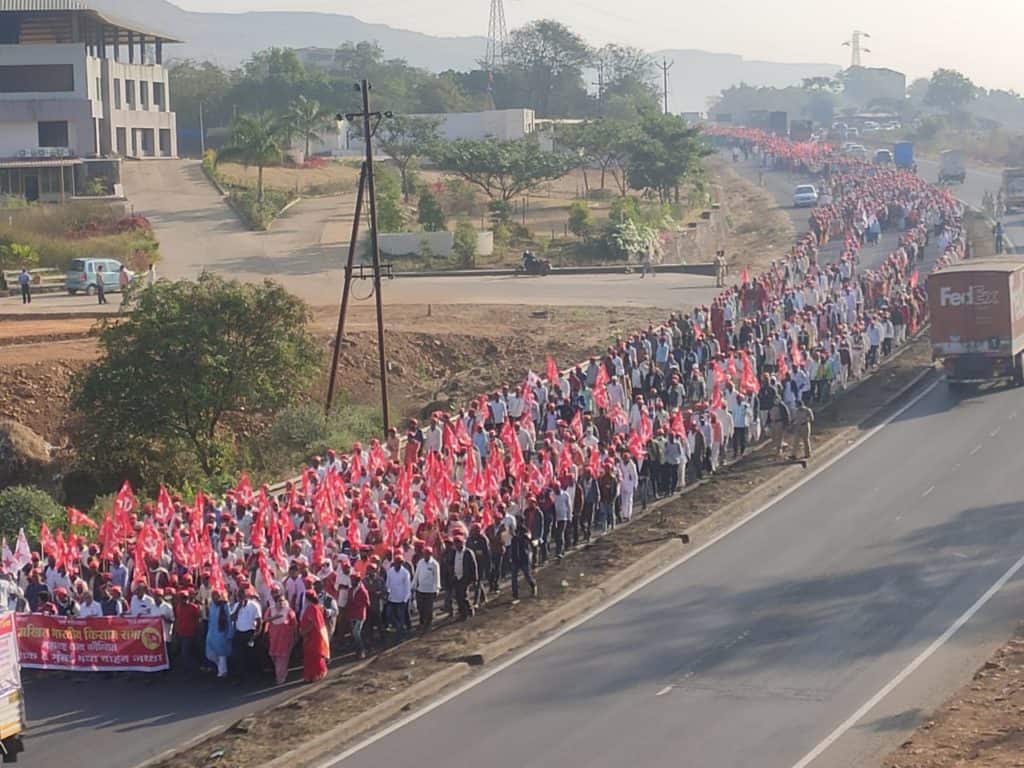
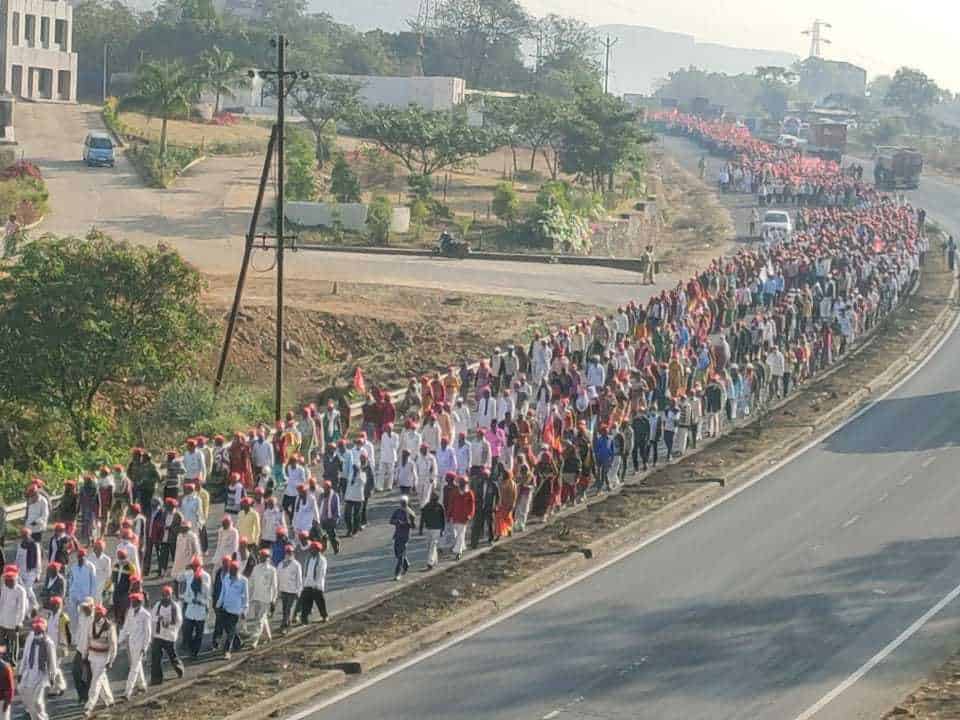
On Sunday, farmers affiliated with the All India Kisan Sabha (AIKS) marched 165 kilometers from Nashik to reach Mumbai. They farmers spent the night in Azad Maidan.
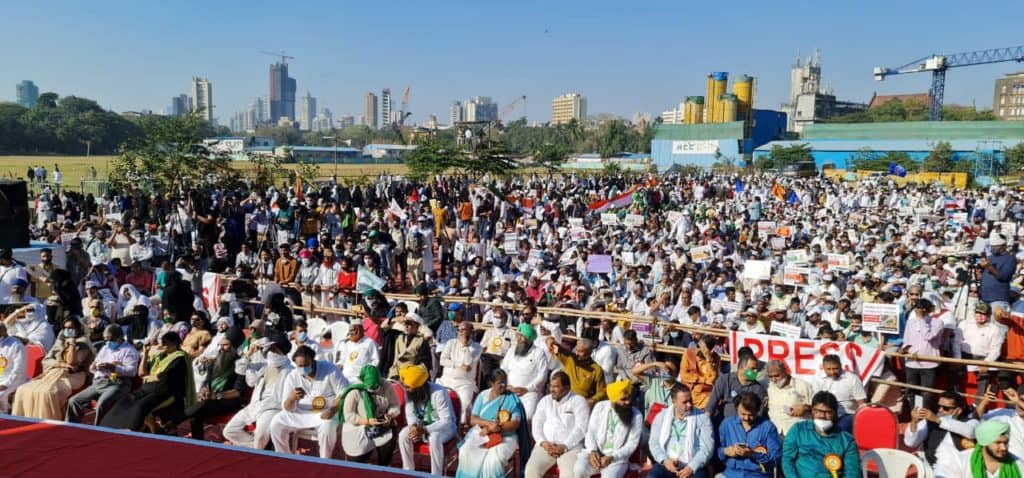
On Monday, several other organisations joined them in support. On India’s 71st Republic Day, they unflured the flag and hosted programmes with leaders of the Congress Party and the Nationalist Congress Party.
On Tuesday, the Maharashtra government agreed to the demands of the farmers and refused to implement the three farm laws hastily passed by the central government in December, without sufficient consultation with the farmers organisations.

On 16 January, under the unbrella organisation Kisan Alliance Morcha (KAM) led by the social activist and former Justice B G Kolse Patil, a hundreds of local organisations galvanised opposition to the farm laws.
Agriculture under state jurisdiciton
The AIKS, the farmers group of the Communist Party of India the three
argued that agriculture was a state subject and the centre was irresponsible in passing laws that would affect the farmers without consulting the state governments.
Farmers of different states work under conditions unique to them. Those from Haryana and Punjab primarily produce wheat and rice. In Maharashtra, farmers suicide due to non repayment of loans are higher. “Here, farmers do not get a good price for their crops,” says Dr Ajit Nawale, state General Secretary of All India Kisan Sabha, while talking about Maharashtra. “The sugarcane cultivator farmers make decent money due to the co-operatives formed but those who cultivate soybean, cotton, groundnut and aloe Vera are always steeped in debt,” he adds.
Therefore, it is imperative for agriculture to remain within the jurisdiction of the states.
“If the new laws are enacted,” Medha Patkar says, “it will lead to total control of corporates on the agricultural sector. The fear is, Corporates might create artificial shortages by stockpiling, leading to inflation.”
Addressing the question of the high handedness of the middlemen and corruption in the APMC, Justice Patil says, “there is always room for
correction and the AIKS has been seeking amendments to the laws governing the APMCs.”
All groups unite
The swift action taken by the Maharashtra government on the refusal to implement the farm laws was also due to a memorandum submitted by the KAM delegation, which included social activists Medha Patkar and Teesta Setalvad, former Justice Kolse Patil, General Secretary of the All India Ulema Council Maulana Mehmod Dariyabadi and Raju Shetti President of Swabhimani Shetakari Sanghatana.
Shetakari Sanghatana a farmers organization founded by the economist and agriculturist Sharad Joshi had supported the laws. Wamanrao Chatap former President and now the trustee of Shetakari Sanghatana says the new laws give farmers a free hand to decide with whom they want to sell their produce to.
However, Anil Ghanwat, President, Shetakari Sanghatana says, “I see that the Centre did not take farmers in confidence while drafting these laws hence the issue has cropped up.” He says that’s why the central government should stay these laws.