Stone cutting units ignore KSPCB order

Three months after the deadline, one of the units continues to function. Neighbouring residents continue to lose sleep over noise and dust pollution.

One of the three stone cutting units ordered to shut down in April is still functioning. While KSPCB says BESCOM has been asked to cut power supply, BESCOM officials say they haven’t received any written order in this regard.

This stone cutting unit is located in the Bank of Baroda colony in JP Nagar 7th Phase. KSPCB had earlier ordered all the units to shut down by 30th April.
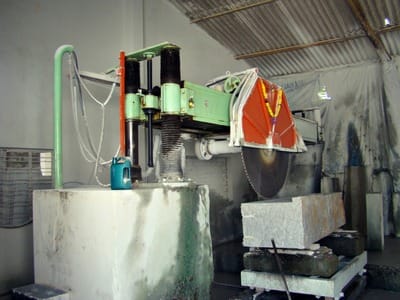
Stone cutting unit. Pic: Yograj S Mudalgi

Sadiq Ahmed, Senior Environmental Officer, KSPCB reiterates that the action has been taken. He says, “We have ordered the BESCOM officials to cut the electricity supply for the units still operating. Further action will be initiated soon.”

However, Basavaraj, Junior Engineer, S6 subdivision, JP Nagar says that they have not received any letter from BESCOM. He says, “We need a written order to disconnect the electricity supply.”

Earlier, residents complained to KSPCB because of loud noise generated out of the three stone cutting and polishing units – Ashwini, Alankar and Vijaya.

The residents of Brigade Palm Spring, an apartment complex behind stone cutting units, met Sadiq Ahmed in February. After listening to them, Notice of Proposed Action (NPD) was issued to the unit owners. Also, a copy was sent to BESCOM. Citizen Matters reported this issue on 29th February.

Rahul Rai, who has been active in demanding the the closure of all stone cutting units, says that KSPCB asked for an affidavit from all stone cutting units by 31st March 2012. At that time stone cutting units had agreed to shut them down by 30th April.

Mahendra Kumar, owner of the Ashwini Granites, that is still operating says that he will take another three months to his new factory in Hosur. He adds, “Right now we are doing some finishing work from this unit and we have informed KSPCB about this.”⊕

Leave a Reply

Your email address will not be published. Required fields are marked *

Similar Story

The real estate shift: How Karnataka’s proposed apartment law shortchanges homeowners

Karnataka apartment owners may not get a fair share of their land as the KAOMA 2026 replaces value-based UDI with an area-only formula.

The Karnataka Apartment (Ownership and Management) Bill, 2026 (KAOMA) changes how a homeowner's share of the land is calculated — and the new formula gives the individual less than what the old law, that is the Karnataka Apartment Ownership Act, 1972 (KAOA), promised. The KAOMA Bill was passed by the Karnataka legislature in August, but is yet to receive assent from the Governor, who has sought clarifications on certain provisions. What is UDI and why does it matter? When you buy an apartment, you buy two things: The flat — a depreciating asset (buildings lose value over time). Your Undivided…

Similar Story

Big promises, unheard residents: Bengaluru’s new parking rules need a rethink

The draft rules meant to manage road space demand end up expanding supply, outsourcing enforcement, and pricing residents out of their streets.

On August 11, the Urban Development Department quietly published the draft Greater Bengaluru Authority (Parking) Rules, 2026 — the legal framework  meant to give teeth to Bengaluru's much-discussed Parking Policy 2.0. Citizens have thirty days to send in objections. Yet, few will read all eighteen pages of the notification. Fewer still will notice that a law framed as a way to curb traffic demand is, on close reading, a plan to expand parking supply and hand over enforcement to private players, while leaving the ordinary resident worse off.  That gap between the promise and what’s on paper matters, because parking…