Remember the tragic incident that happened two yeas ago, where a nine-year-old child fell into a gap in the footpath during heavy rains, was carried by the gushing storm water and was found dead in a lake three kilometres away?
The incident evoked sharp criticism and responses. A Public Interest Litigation was filed on the issue. The High Court asked the BBMP to repair all the deathtraps on footpaths and clear the encroachment.
It’s almost two years since then. Has the attitude of the administration changed? And has there been enough precaution this rainy season? Citizen Matters did a reality check around the city, and asked the readers to send the photos of broken footpaths. Here is the result:
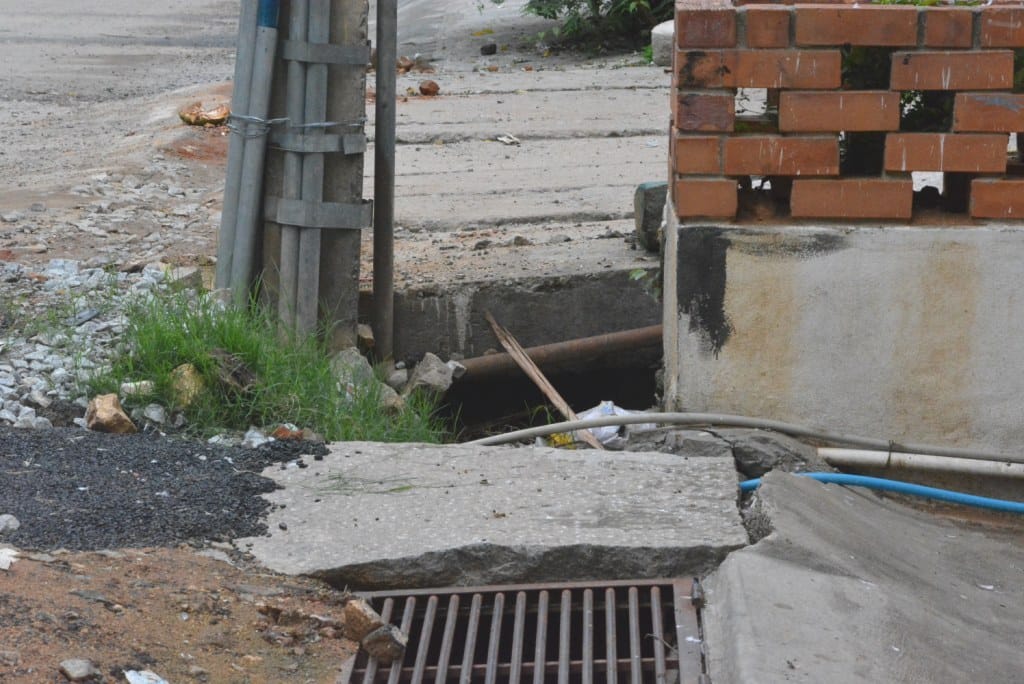
A dethtrap near Ramanjaneya Road, 1st Block, Dasarhalli, Srinagar, Banashankari, Bengaluru. Pic: Akshath G V
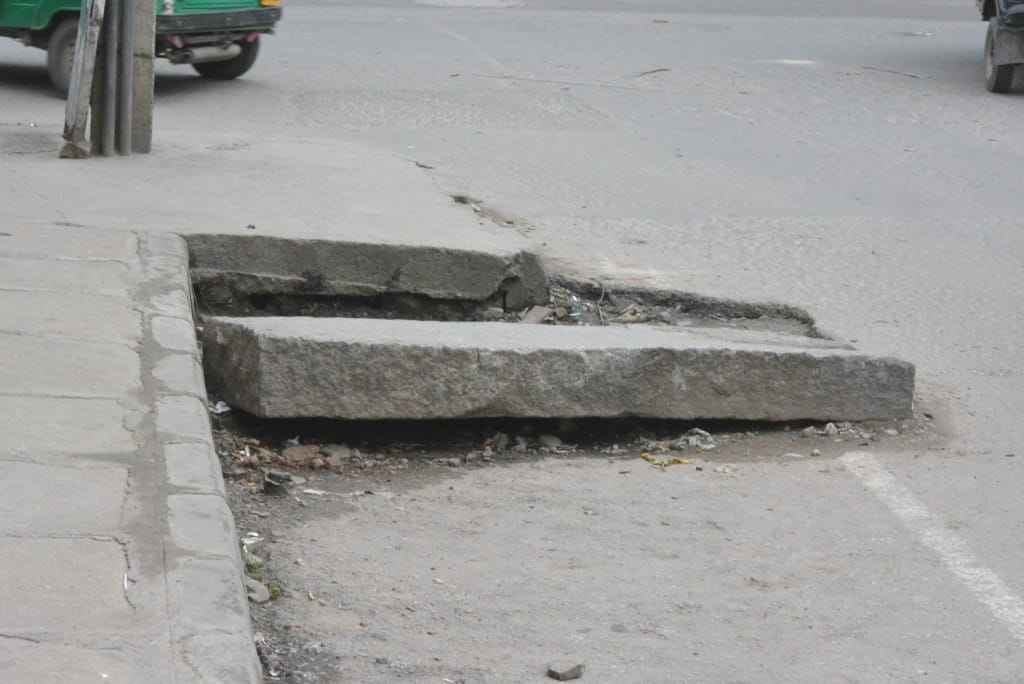
An obstacle near Sampige Road, Mantri Square, Malleshwaram. Bengaluru. Pic: Akshath G V
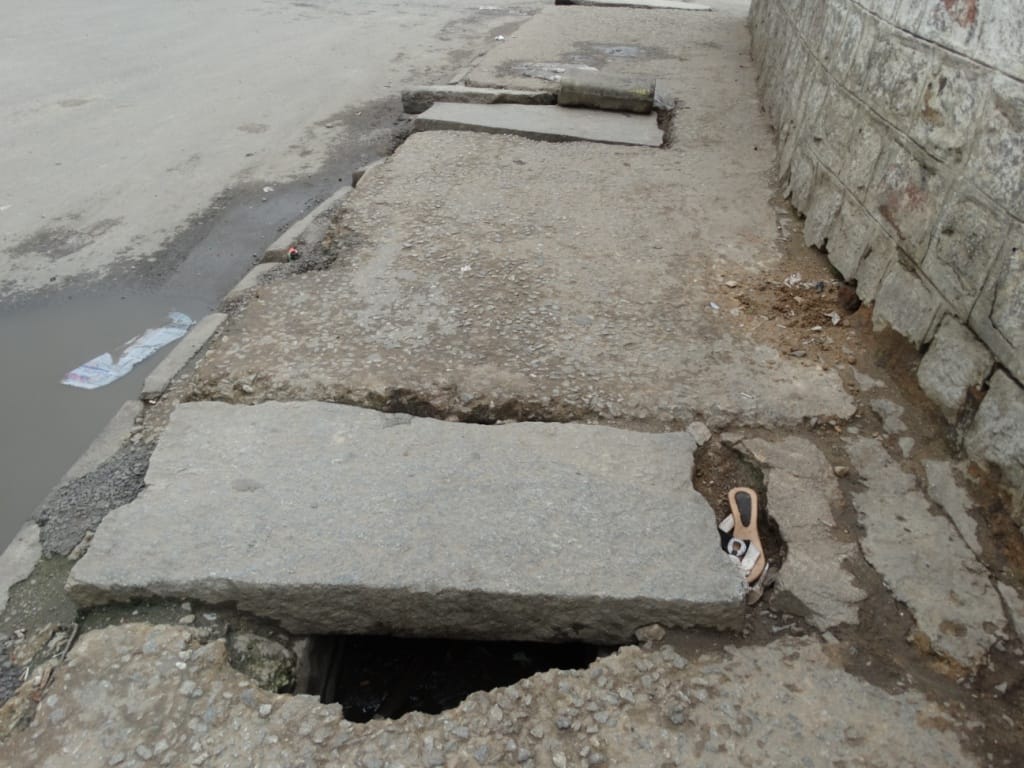
Indian Express Building, Queens Road, Vasanth Nagar, Bengaluru. Pic: Akshath G V
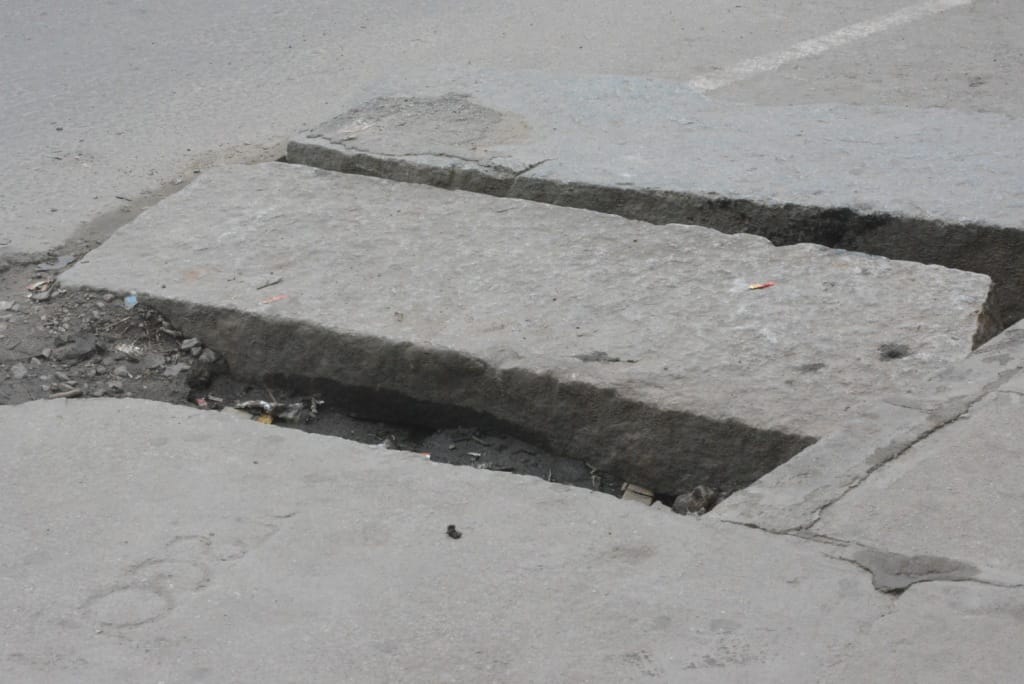
An obstacle on footpath near 685, Adarsh Gardens Apartments, Marenahalli Road, J P Nagar 1st Phase, Bengaluru. Pic: Akshath G V
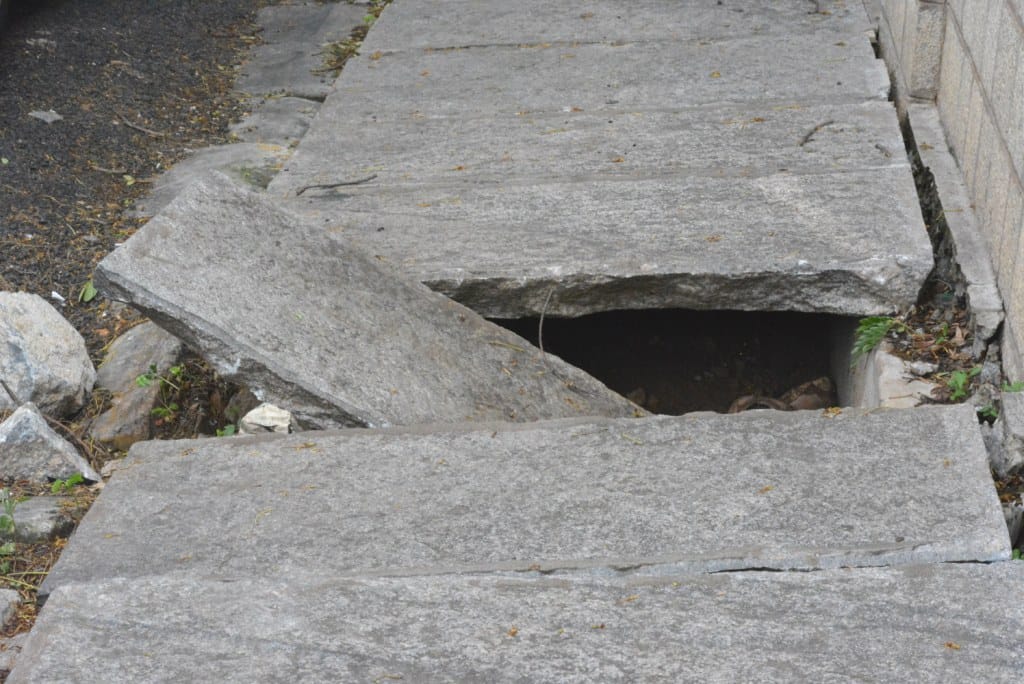
A trap on footpath near 80 Feet Road, 1st phase Girinagar, Writers Colony, Giri Nagar, 1st phase Girinagar, Banashankari, Bengaluru. Pic: Akshath G V
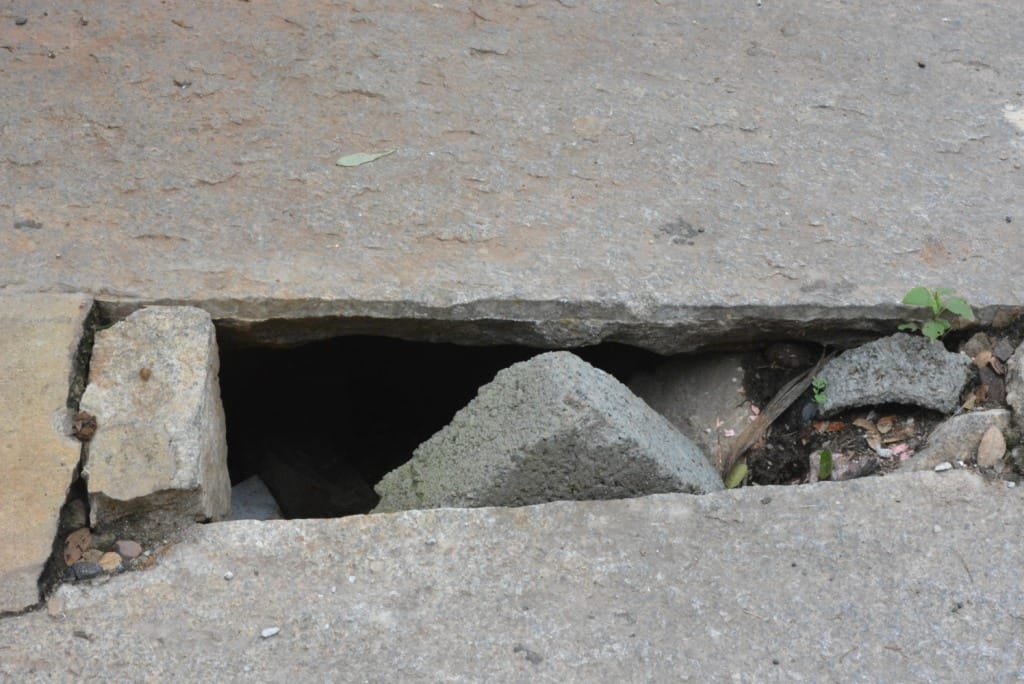
A deathtrap near 50 Feet Road, Muneshwara Block, Banashankari, Bengaluru. Pic: Akshath G V
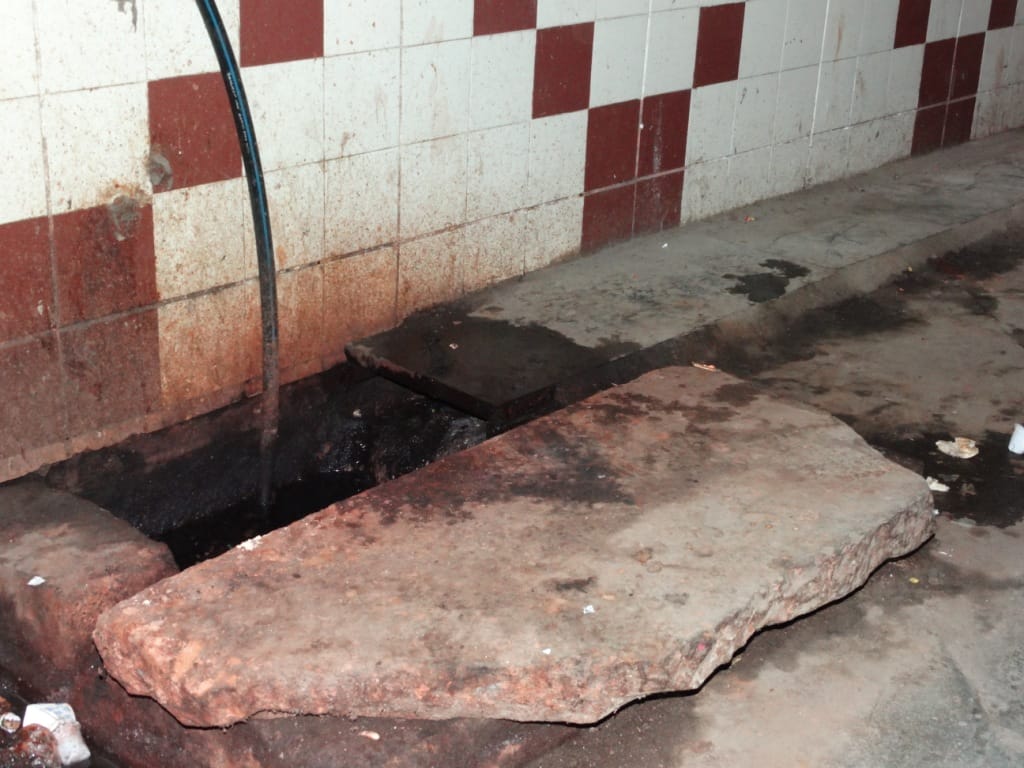
Inside a subway in Majestic Bus Station. Pic: Akshath G V
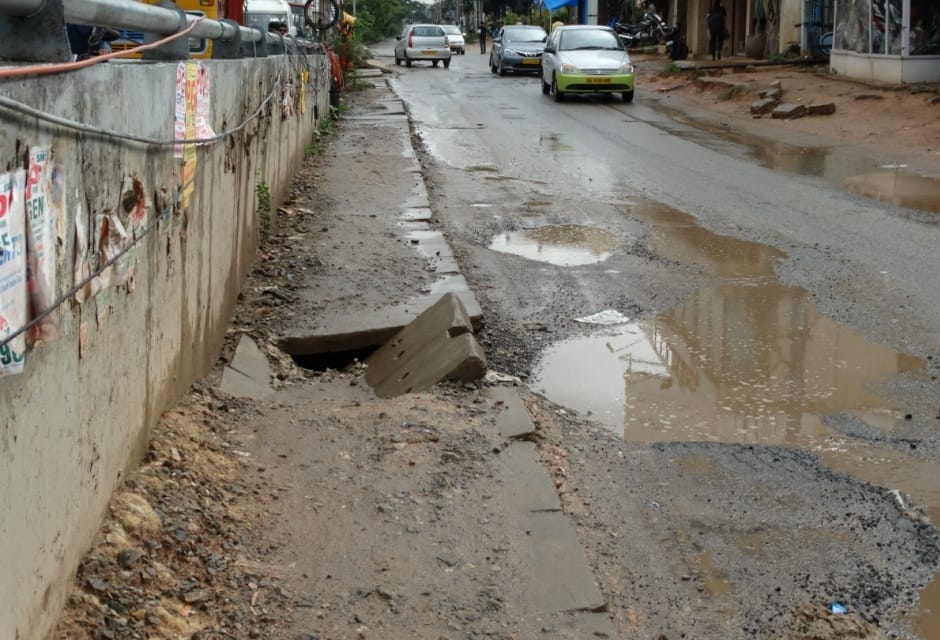
Near K C General Hospital, Behind Police Station, Malleshwaram. Pic: Akshath G V
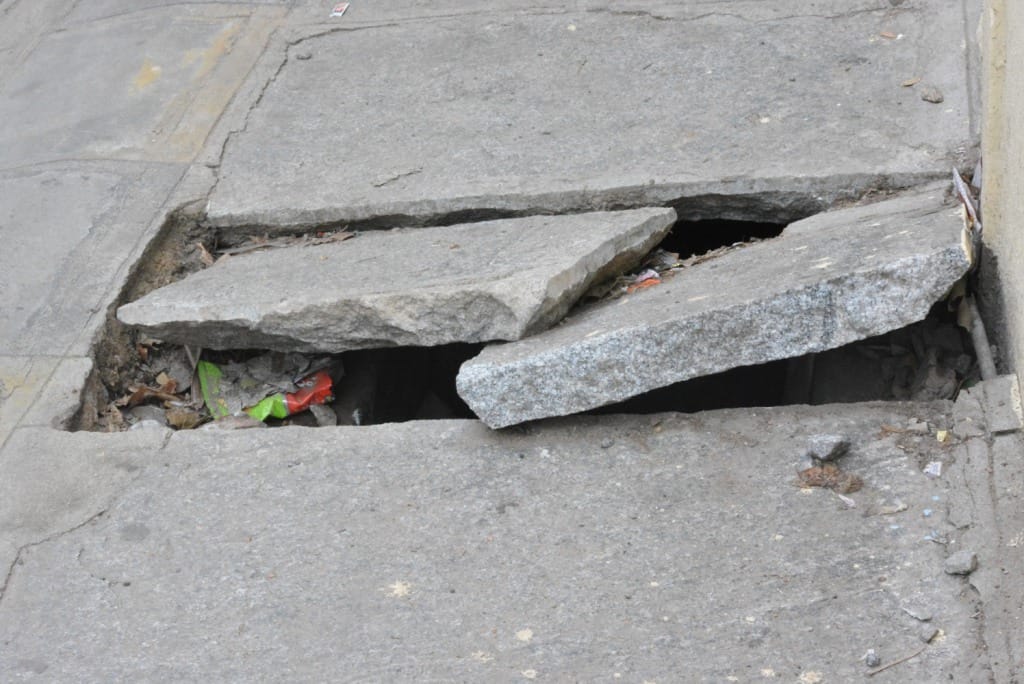
80 Feet Rd, Banashankari 3rd Stage, Banashankari, Bengaluru. Pic: Akshath G V
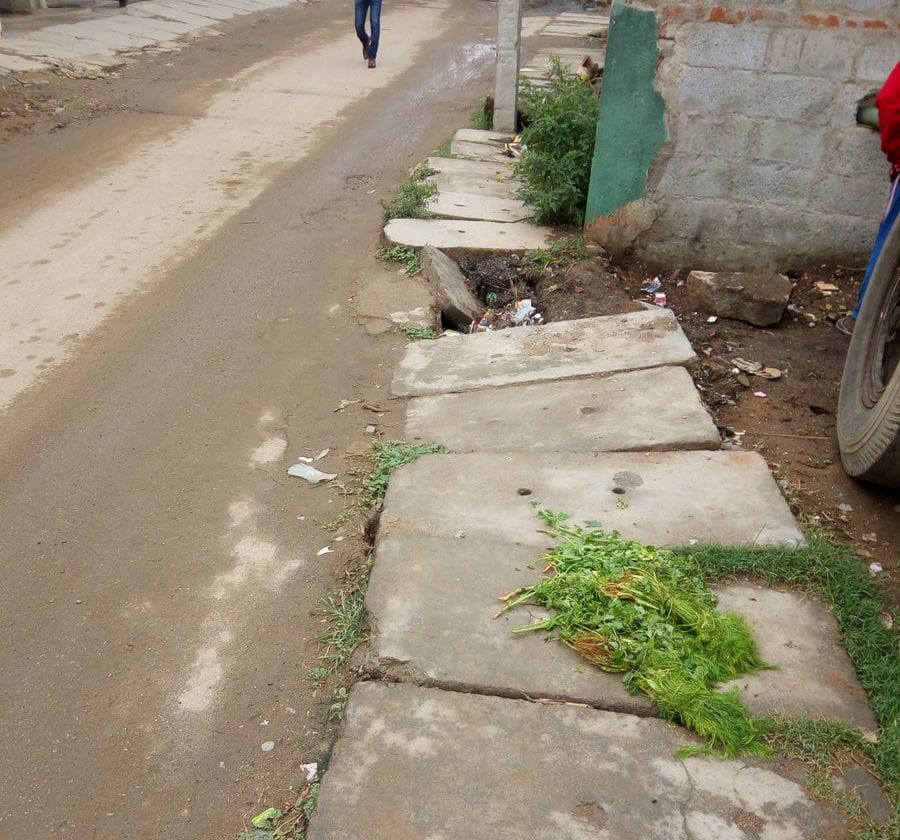
A footpath in a lane adjacent to Byrasandra government school, ward 58, C V Raman Nagar.
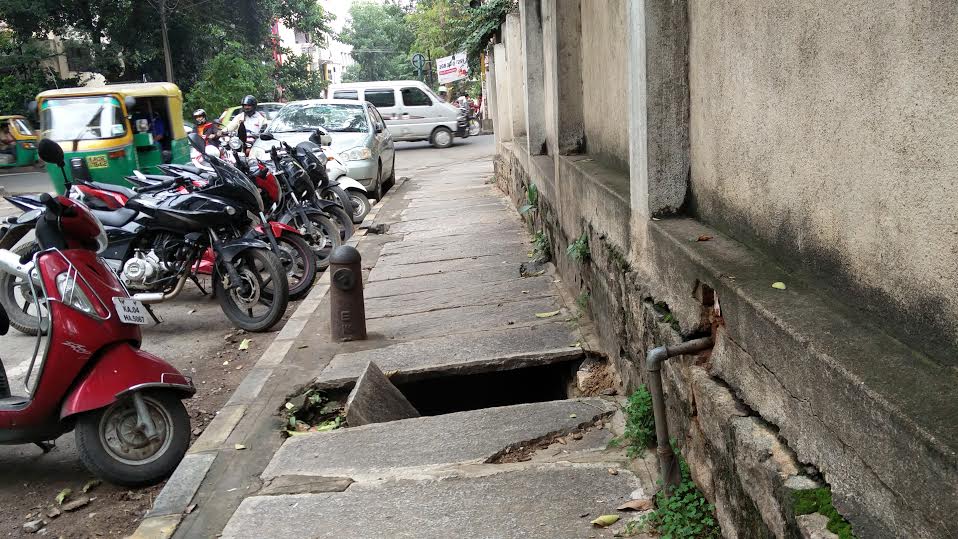
A deathtrap on 11th cross, between 3rd and 4th main, Malleshwaram. Pic: Shree D N
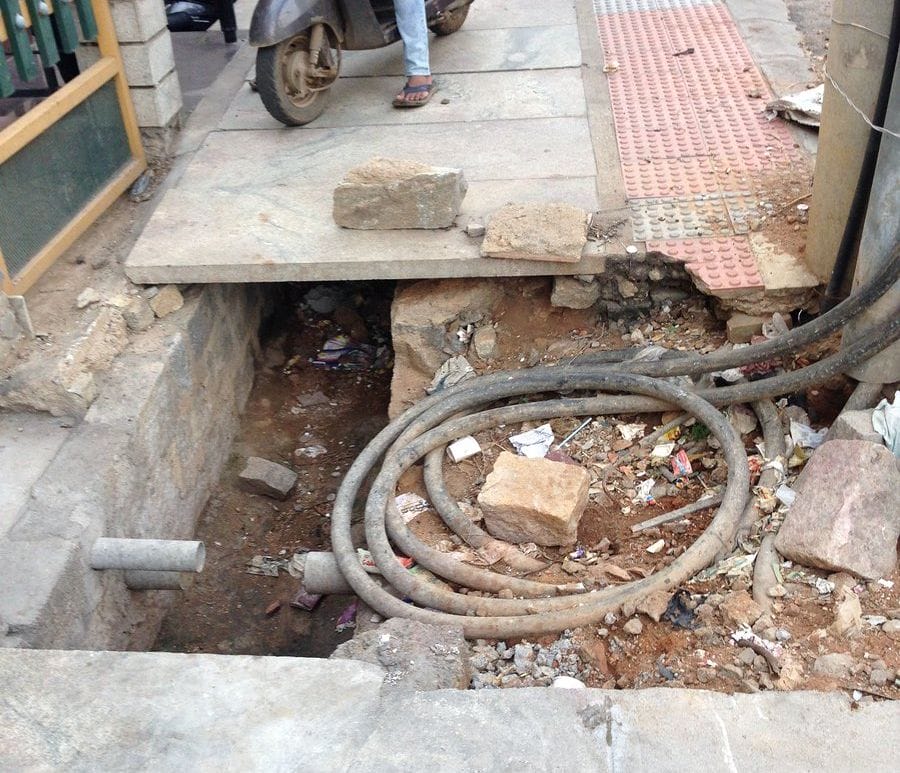
A block near Chandra Layout, near Nagarabhavi. Pic: B S Deepak
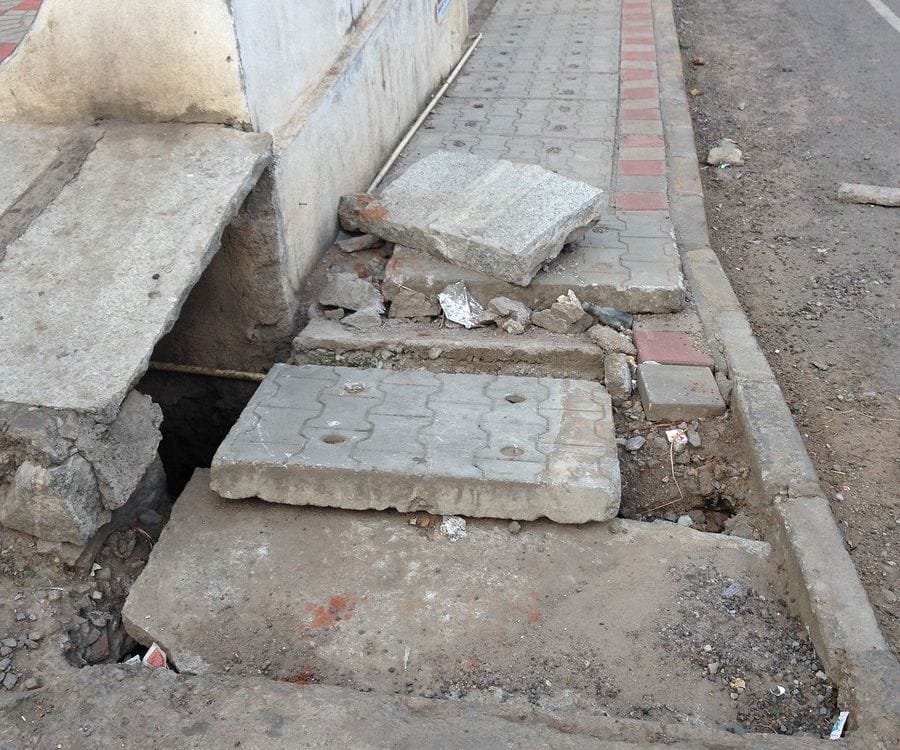
A block near Chandra Layout, near Nagarabhavi. Pic: B S Deepak
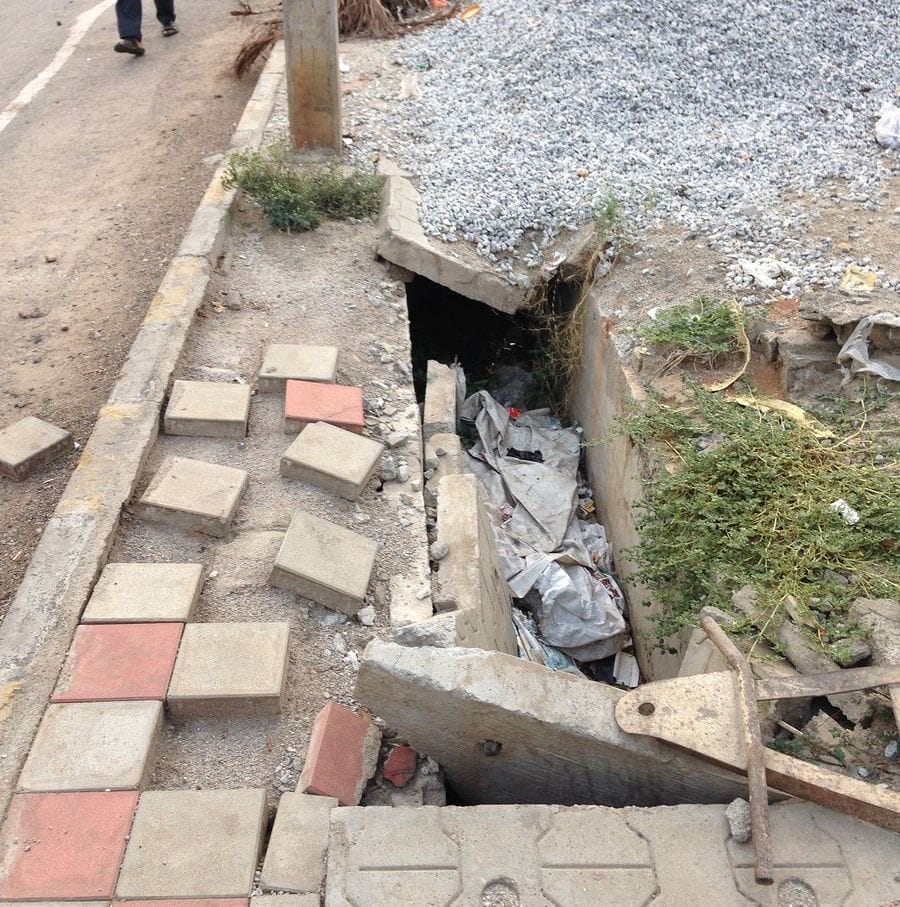
A block near Chandra Layout, near Nagarabhavi. Pic: B S Deepak
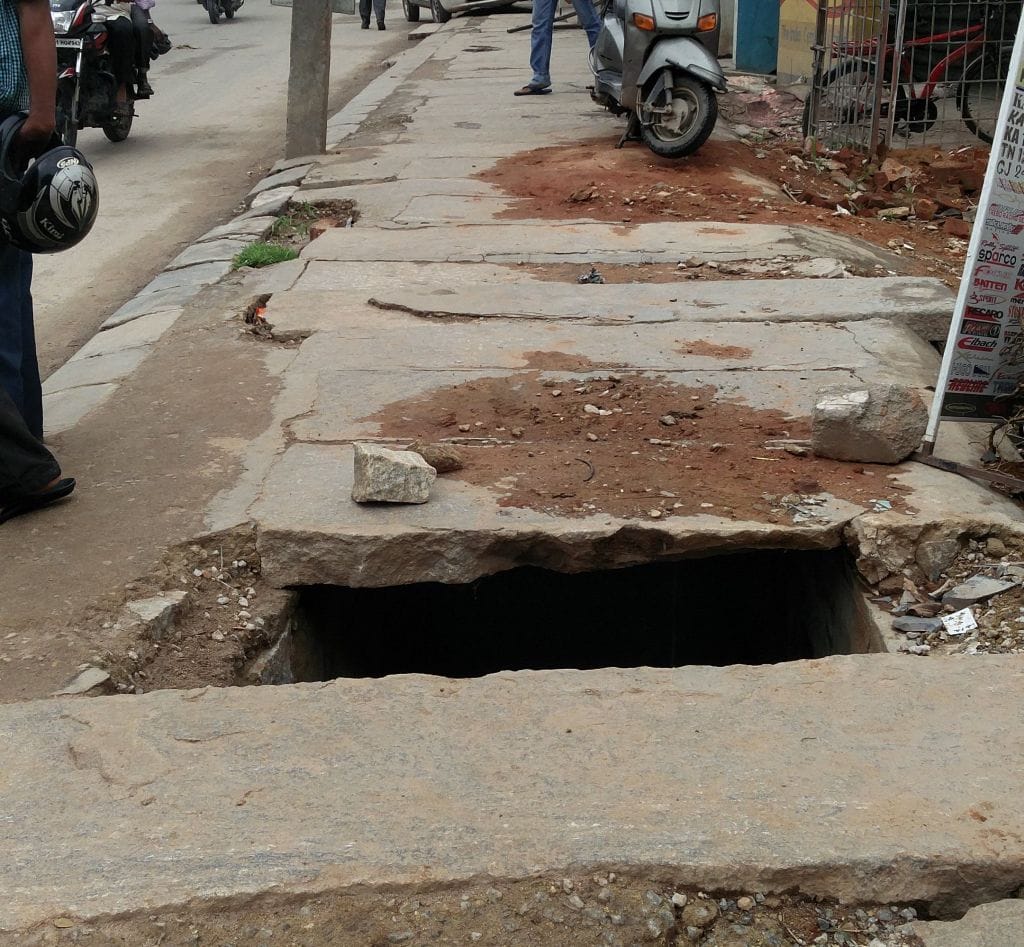
A trap on a footpath off Sarjapur Main Road in Jakkasandra, near Koramangala. Pic: Shree D N
//
Footpath slabs are broken almost in every locality. There are some volunteering groups that have taken the situation in their hand are finding solutions to the problem, by fixing it themselves.
Yet the BBMP seems to have closed its eyes towards the existence of death traps and broken slabs on footpaths.
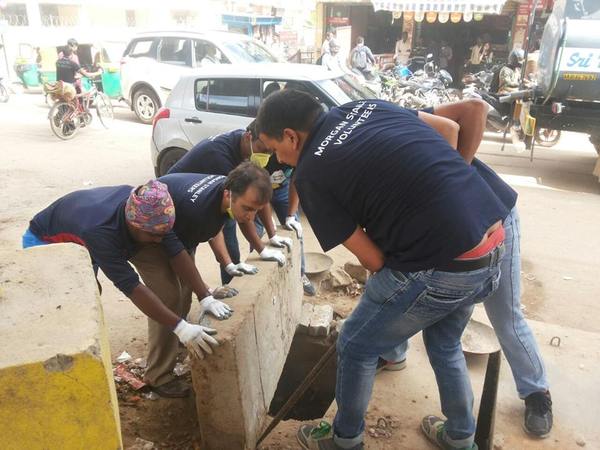
Volunteers fixing the footpath on Outer Ring Road. Pic courtesy: The Ugly Indian FB page
If you happen to see a death trap, you can do the following:
1) Complain to BBMP, through http://bbmp.sahaaya.in/ website or the app.
2) Call the rain help centers and ask the BBMP to fix it
3) Call the ward level officials, corporators or MLAs and ask them to help citizens by getting them closed.
4) Take BBMP officials into confidence and help them fix it, by volunteering, contributing your time and ensuring that it’s done.
Helplines to call: