In 2023, John d’Souza, retired architect, fulfilled a long-standing dream by solarising his house in Goa. His nephew had been singing the praises of solar’s ecological and financial benefits.
“We were privileged,” says John. “We didn’t have to borrow; we funded our solar installation with our savings. The brand we chose was not eligible for subsidies but that didn’t bother us. The savings on power bills is nice. We’re on track to recover our investment in five years. But our main motive was environmental. Goa’s environment has already changed so much in my lifetime. We could afford to make this small contribution. Now I’ve become the neighbourhood solar expert and several neighbours are already planning to go solar.”
Like John, most residential users of rooftop solar panels/water heaters we spoke to, during field research in Panjim, Jaipur, Udaipur, Kolhapur, and Kuppam, are happy with their vendor experience and savings on power bills.
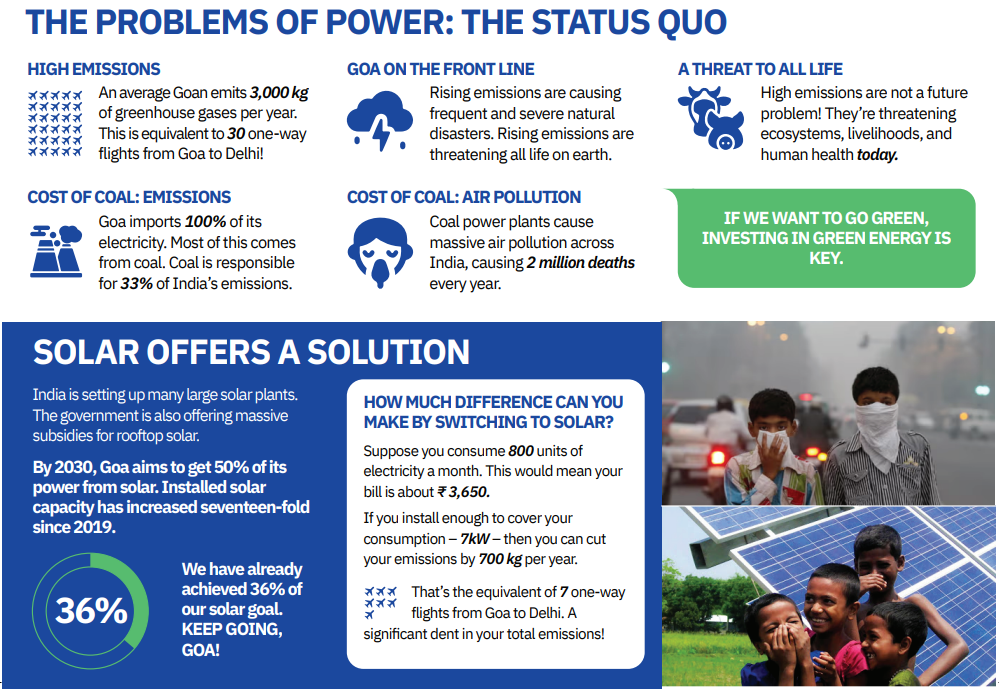
Most of India’s energy comes from coal. Carbon emissions from solar power are many times lower, though solar has other environmental costs linked to mining and manufacturing.
Solar farms impose massive costs in terms of land use, ecology, and equity. While these are valid concerns, rooftop solar (RTS) circumvents these conflicts. TERI estimates that India’s residential rooftops alone could support 637 gigawatts of power-generating potential, whereas total power demand in India was 270 GW as of July 2026. RTS will thus be key to India’s ambitious net-zero targets.
John’s solar journey was relatively smooth. But numerous potential solar users face various challenges. Despite subsidies and ambitious national solarisation targets, India lags in RTS adoption.
Common barriers
With Phase 1 of the P. M. Surya Ghar Scheme (PMSG) solar subsidies ending soon, I explore some common barriers and solutions for households to go solar based on field research across urban India.
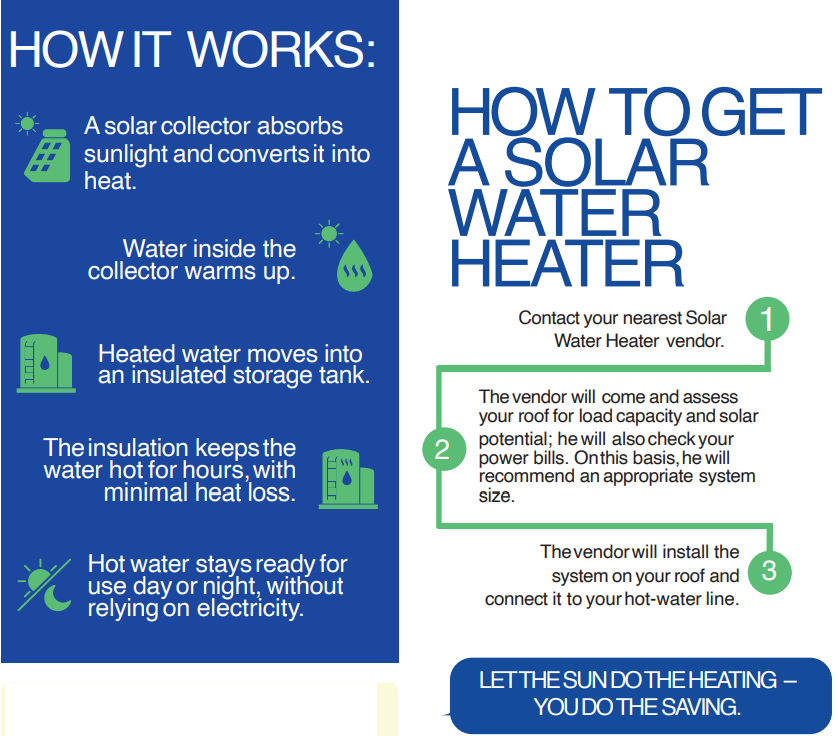
Concerns around roofs
While John’s house has tiled roofs, other homeowners with flat roofs use them for drying clothes, making pickles, gardening and sleeping outdoors. Many interviewees in Rajasthan worried that because of RTS, they wouldn’t be able to fly kites, despite only doing so once a year on Makar Sankranti. Some felt solar would make their roofs ‘ugly.’ Others raised concerns about heavy mounting structures causing roof damage, and solar water heaters leaking.
Cost
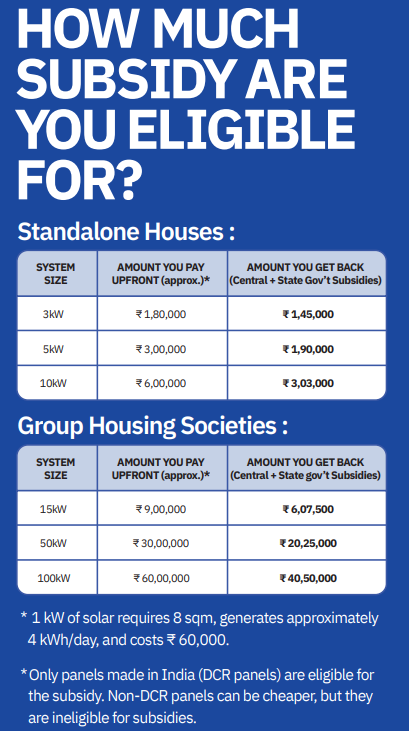
The biggest barrier to RTS adoption is financial. Unlike John, most homeowners contemplating solar would need to borrow. Solar vendors demand full upfront payment, and none of the vendors we “mystery shopped” (where we posed as potential customers) offered payment plans. While some banks market “solar” loans, these simply carry regular interest rates.
After the State electricity board approves the installation and it is completed, the vendor uploads all documents on the PMSG portal for the subsidy application process. We found the Central government subsidy arrives within a month, while state-level subsidies take longer, sometimes up to 12 months. And they mostly cover a fraction of the cost.
Read more: Explainer: How Bengalureans can generate rooftop solar power in their homes
Information gaps and vendor issues
Despite the government’s massive investment in PMSG, most homeowners we interviewed had never heard of solar subsidies and rarely applied for them..
Rather than official information sources, most domestic users first heard about solar through their social networks or by spotting installations on local commercial and government buildings. When ready to install, they usually hired a vendor recommended by friends or colleagues rather than using PMSG’s list of empanelled (officially registered) vendors.
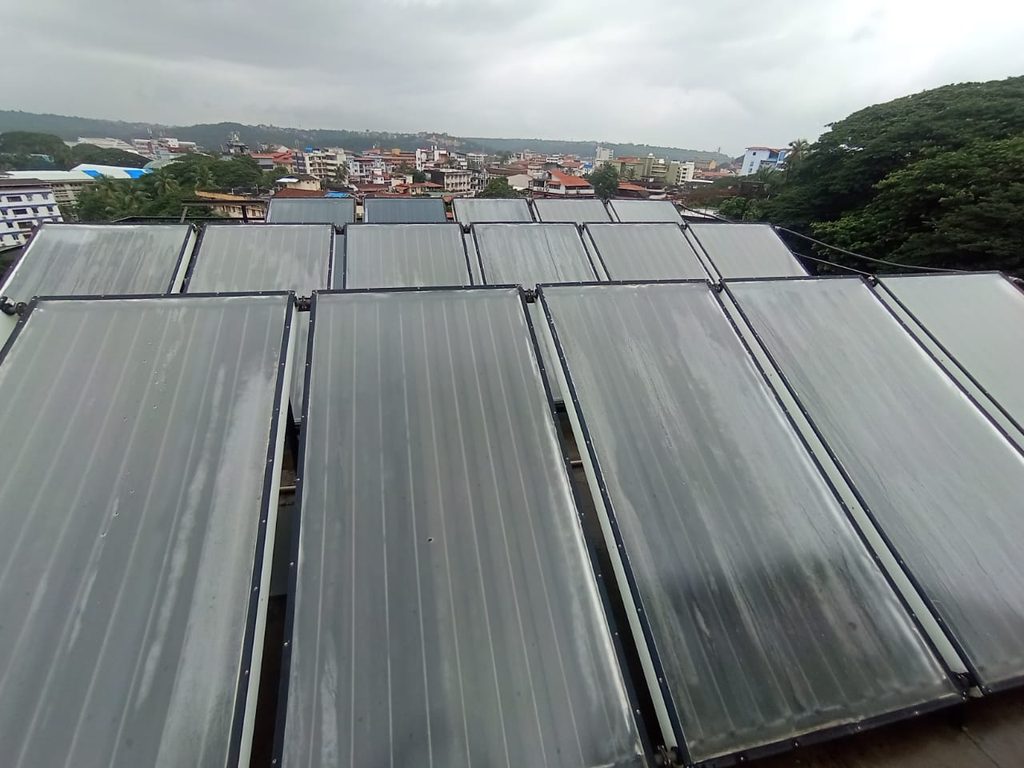
Solar subsidies are valid only under certain conditions, including:
- Solar is purchased from an empanelled vendor.
- The brand chosen meets a Domestic Content Requirement (DCR), meaning a fixed percentage of the components are manufactured in India.
The problem is that:
- Most solar vendors in India are not empanelled. If a vendor’s sales are ineligible for subsidies, he’s unlikely to mention them.
- In our mystery shopping interviews, even empanelled vendors failed to mention subsidies. This is because brands consumers prefer might be non-DCR brands and therefore ineligible for subsidy. (This scenario is now changing, with Tata and other trusted Indian manufacturers rapidly expanding their solar market.)
While Phase 1 of PMSG officially ends on March 31, 2027, experts, including Ajay Yadav of the Renewable Energy Association of Rajasthan, expect its one-crore application limit to be hit by mid-December. So, now is a good time for homeowners to research solar subsidies even as Phase Two plans get underway.
Similarly, most potential users we spoke to wanted tailored, precise information on capacity and net costs.
- How much solar should they install based on their power bill and roof size?
- How much would their net out-of-pocket costs be? When would they recover their investment?
These information gaps constitute another major barrier to homeowners going solar.
The way forward
Is navigating solar starting to feel like a mammoth task? Good news: solutions already exist for each of the above mentioned barriers.
Rethinking your roof
Homeowners do not need to cover their whole roof with solar. Excess power can be sold back to the city’s main power grid. But power buyback rates are low across India. Selling excess power back to the grid is therefore not profitable. Homeowners should install only enough solar to cover their own consumption.
Shantanu Roy, former solar vendor and Sector Coordinator (Renewables and Energy Conservation) at the Centre for the Study of Science, Technology, and Policy (CSTEP) recommends the following approach to deciding how much solar to install. Calculate the average number of units you consume per day for a year, and install a solar system that will generate the same number of units per day on average. Typically, a solar system of this size will only take up part of the rooftop, leaving plenty of space for other uses.
Solar installations can even improve roof functionality. Kshama from Udaipur installed her solar panels on 8-foot-high pillars, creating a shaded terrace for hosting parties and drying laundry. “Actually, it stops the pigeons from messing up the clothes. Thanks to the shade, the rooms below are cooler, bringing down my power bill.” Other homeowners use solar panels to cover their garage.
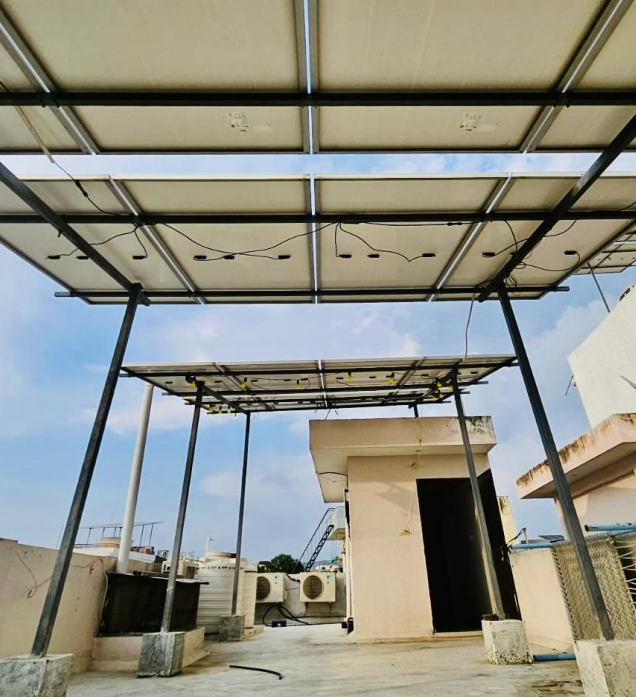
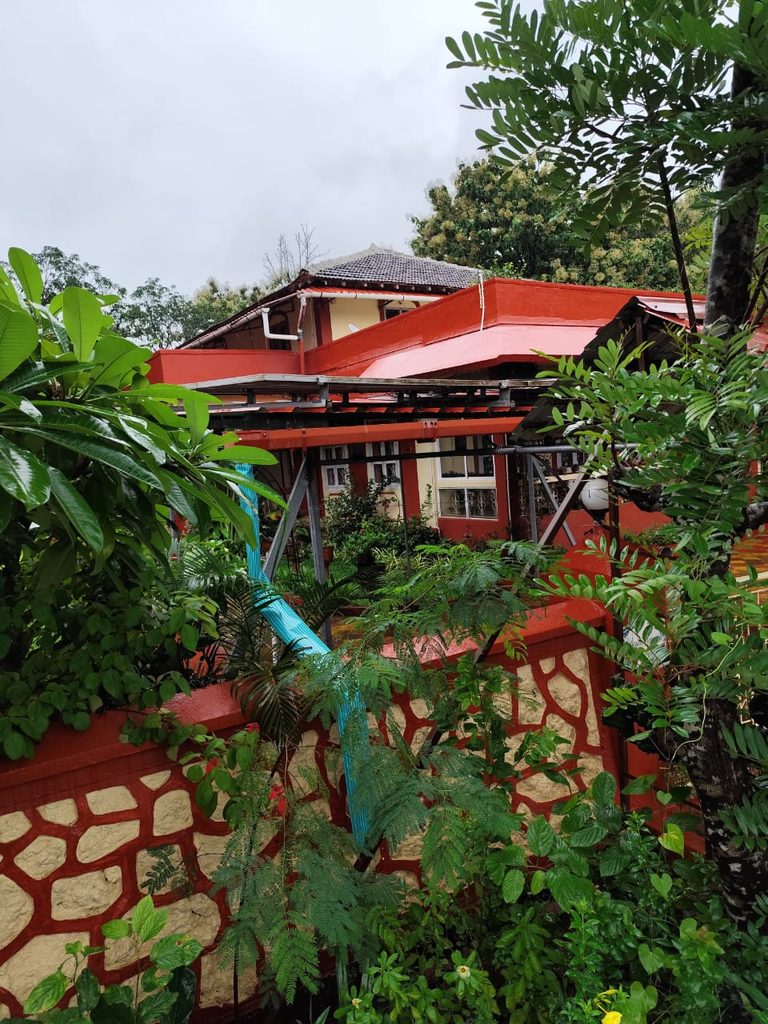
To protect the roof from damage, it’s important to hire a reputed vendor for installation and maintenance. Solar insurance is also recommended for damage from weather and other factors.
Getting the best value for money
To estimate the ideal system size, net costs, and payback period, PMSG and other major solar manufacturers offer calculators, which provide rough approximations.
For more precise, tailored information, CSTEP, our research partner, has developed free, easy-to-use tools for this exact purpose.
CSTEP’s Rooftop Solar Explorer (RTSE) and Rooftop Evaluation Tool for Solar (CREST) use high-resolution imaging to map rooftop solar potential. Based on numerous factors including roof height, latitude, your power bills, and how much roof space you can spare — these fully customisable tools offer precise cost breakdowns, cost recovery periods, and projected month-wise power generation.
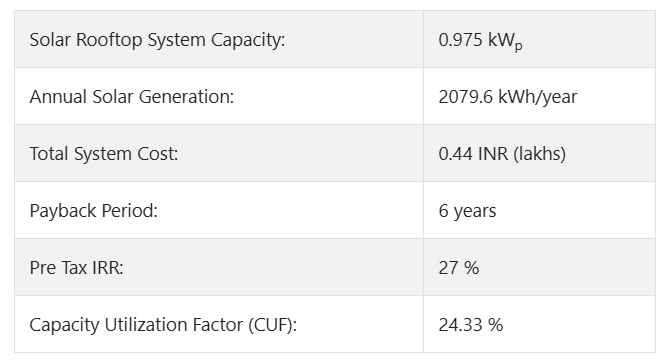
CSTEP’s tools are currently only available in Bengaluru and Chhattisgarh. Mapping is underway in Rajasthan.
A good solar vendor will use an app to simulate the proposed solar installation, including space needed and expected output. Prospective consumers should not hesitate to request a detailed evaluation, visualisation, and cost breakdown proposal (including for support structures) before choosing a vendor and an installation that works for them. Recently, I have myself obtained detailed, no-strings-attached cost proposals from three separate solar vendors in Pondicherry.
Solar is a costly and long-term investment. Comparison-shopping is encouraged!
Informative interactions between prospective users, policymakers, and solar manufacturers and vendors are also enthusiastically received and effective in driving solarisation.
Identifying the right vendor
Our research finds that a vendor is often a consumer’s first and only point of contact in the official solar landscape. A well-planned, well-mounted solar installation is far more likely to last long, be weatherproof, and work with the structure of the house instead of against it. Vendors typically also offer maintenance and cleaning services over the solar system’s lifecycle (25-35 years).
All this means that the consumer-vendor relationship will be a long one. Identifying a good vendor is key. The state-wise list of empanelled/registered solar vendors is a good place to start. But there’s more to it. Ajay Yadav and Surendar Chaudhury of REAR caution that empanelment alone doesn’t guarantee technical quality.
Before signing, ask to speak with a vendor’s past customers, especially those whose systems have been running for a few years, not just recent installs.
Rooftop solar is financially viable for homeowners and is also key to climate action. The solar landscape is highly technical and rapidly changing; regulation and oversight are often playing catch-up. But India’s rooftop solar potential is immense. If you’re a homeowner planning to go solar, this guide could be the first step in your journey.
[Research participants’ names have been altered for privacy. Similar experiences reported by multiple participants have been clubbed into composites.)]
This article is based on research led by Amita at Transitions Research between 2024-2026 in Panjim, Goa; Jaipur and Udaipur, Rajasthan; and Kuppam, Andhra Pradesh. 150+ households were interviewed, as well as 50+ empanelled vendors via “mystery shopping” (where we posed as potential customers).