On a normal day, fatigue is a persistent challenge for Smitha Sadasivan, Senior Adviser at the Disability Rights India Foundation and a person living with Multiple Sclerosis. Yet, it is manageable with rest periods, nutritional supplements, hydration, and some mild activity. But heatwaves worsen her symptoms. “During heatwaves, none of these measures help. Only limited nutrition and hydration offer some relief,” says Smitha.
Extreme climate events, such as heatwaves, floods, or cyclones, pose problems for everyone. Yet for people with disabilities, the challenges are far greater, as daily barriers to safety and mobility become worse during such crises.
Smitha explains that she experiences an increase in physical and cognitive fatigue, with heightened spasticity during heatwaves. This makes her restless and leads to insomnia. “I am unable to rest and feel a growing weakness in my muscles and motor functions. My sense of touch also diminishes,” she adds.
“At the height of cognitive fatigue, I am unable to grasp anything. I can hear what people are saying, but I cannot understand or process their words.”
Her experiences also reveal how hospitals often fail to recognise that the heightened fatigue could be linked to extreme heat. “Instead, these symptoms are frequently attributed only to the disability, and doctors respond by increasing medication dosages. As a result, I feel more drowsy, but remain unable to sleep due to restlessness,” she explains.
Whether it is a person with multiple sclerosis struggling with fatigue during intense heat or an individual with a spinal cord injury requiring assistance during evacuation, disaster management policies and emergency systems during climate events often fail to take into account the specific needs of persons with disabilities.
Living with disability during heatwaves
D Gnana Bharathi, Founder of Spinal Injured Persons Association, says that individuals with spinal cord injuries often cannot sweat effectively, making it difficult for their bodies to regulate temperature. Constant cooling measures such as spraying water, applying a wet cloth and accessing air-conditioned spaces are essential for survival.
“Without appropriate care during heatwaves, the consequences can be fatal. The lack of understanding among first responders and disaster management teams only makes matters worse,” he emphasises.
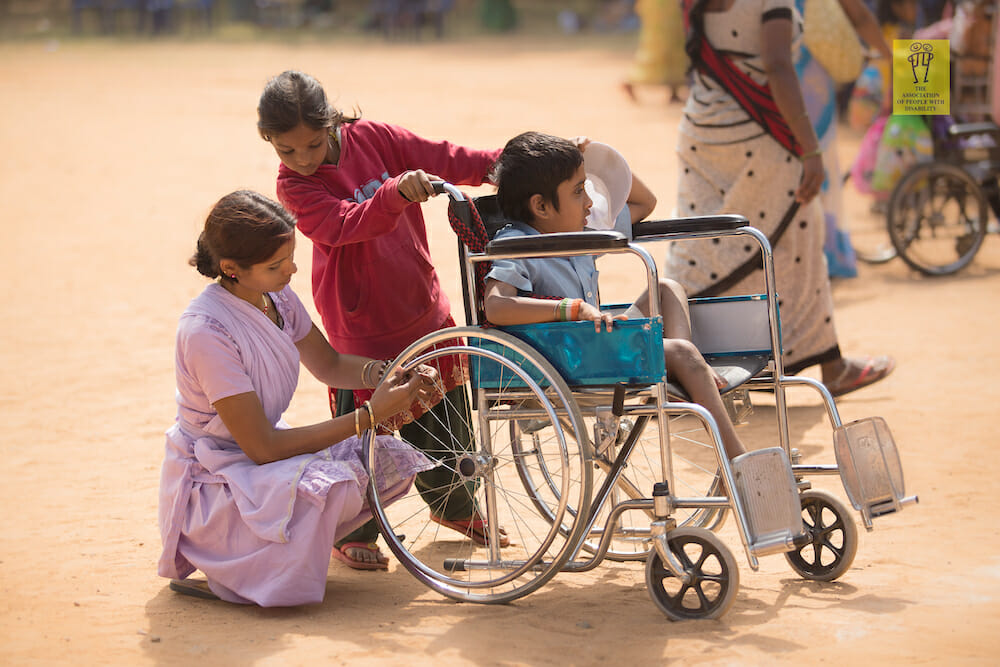
Adding to this, Vaishnavi Jayakumar, disability activist and a member of Chennai Cares, points out that many wheelchair users deliberately avoid drinking sufficient water due to inaccessible toilets. “During heatwaves, this significantly increases the risk of urinary tract infections,” she explains.
Similarly, individuals with blood disorders are at greater risk during extreme heat, as the likelihood of bleeding increases. While heatwaves create one set of difficulties, urban floods bring other life-threatening challenges.
Read more: When can persons with disability look forward to regular beach outings?
Floods and the challenge of evacuation
Floods disproportionately affect people with disabilities, particularly those who rely on mobility aids or live in inaccessible housing. For them, evacuation can become an almost impossible task.
Recalling the plight of her friend Prabhakar, a wheelchair user, Vaishnavi shares that he was trapped in neck-deep sewage water without food, water or assistance during the 2016 Chennai floods. “He had no access to a toilet and no way to call for help. Without proper support, disabled persons are often left to fend for themselves in life-threatening conditions,” she says.
Little has changed since then. In early December 2023, as Cyclone Michaung lashed Chennai with 31 hours of rain, Aiswarya Rao, who has a post-polio locomotor disability, was at her home in Anna Nagar. She woke in the morning to find two inches of water had entered her house. “Around 11 am, when the water level began to rise, my brother, who lives upstairs, hauled me up five steps with much difficulty. Then both of us gave up,” she recalls.
Sitting just one step above the water, Aiswarya tried calling all the helpline numbers that appeared on her social media feeds. Eight hours later, she was still on the same steps, with no sign of any assistance arriving. Eventually, her neighbour, who had called to check on her, came to her rescue.
Aiswarya, a disability rights advocate, also runs a shelter for homeless women with disabilities in Chennai under the aegis of the Greater Chennai Corporation. A few days before Cyclone Michaung, she had been conducting a series of workshops with officials for persons with disabilities on monsoon preparedness measures. “We shared a list of helpline numbers and shelters, yet when I needed help, none of them were useful,” she notes.
Effective response and communication
Gnana Bharathi highlights the need for training among emergency responders. “Before lifting a person in a wheelchair, responders must ensure that the seat belt is fastened. They must check whether the person experiences spasticity and know how to handle it. If a urinary catheter is attached, the uro bag should be carried carefully with the person, as pulling it could cause severe bleeding,” he explains.
Smitha adds that during floods, the material losses of people with disabilities often go unnoticed. “My friend’s car, which serves as an assistive mobility device, gets submerged almost every year because they live in a low-lying area. Repairing it makes a big dent in their income,” she notes. Persons with disabilities also struggle to protect their valuables, as many cannot reach higher shelves.
Communication during emergencies is another major concern. Vaishnavi points out that information about shelters, resources and evacuation routes is rarely made accessible.
The role of shelters and evacuation centres
Shelters are meant to offer safety to disaster victims, yet they are often ill-equipped. In India, most shelters are housed in schools or colleges, many of which lack ramps, accessible toilets or suitable flooring for mobility aids.
As a result, some people with disabilities choose to go without food to avoid the discomfort and embarrassment of seeking assistance to use toilets. “I would rather fast than eat in such shelters because using the toilets is difficult and humiliating,” says Gnana Bharathi.
He adds that different disabilities require distinct approaches. For instance, a person with visual impairment may speak loudly or repeat questions in a new environment, a behaviour often misinterpreted as irritation rather than a response to fear. Similarly, people with hearing impairment cannot communicate effectively unless interpreters are present.
Read more: How do persons with disability feel about public transport in Mumbai?
Communication is the biggest barrier
One of the most significant challenges faced by persons with disabilities during disasters is inaccessible communication. “More than 90 per cent of emergency information remains inaccessible to many individuals with disabilities,” says Vaishnavi.
“For example, government notifications and emergency updates are often incompatible with screen readers used by persons with visual impairment and people with learning disabilities,” she adds. “When crucial information is shared mainly through social media or other formats, there are usually inaccessible.”
Vaishnavi insists that communication must be multi-modal, combining text, video and voice channels to ensure inclusivity.
During the COVID-19 pandemic, the Tamil Nadu government’s disability helpline included interpreters and video call options, which proved invaluable for people with hearing impairments. “However, this service has not been extended to other disasters,” she notes. She urges that interpreters should be a permanent feature of government helplines and that the Greater Chennai Corporation (GCC) should include at least one sign language interpreter in its control room.
Policy gaps and the way forward
Tamil Nadu’s disaster management plan does include persons with disabilities as a vulnerable group and commits to inclusive disaster response (evacuation, relief, rehabilitation). However, the details of the “rescue” aspect (how exactly the evacuation of persons with disabilities happens during an event) require stronger operational specifics and stronger implementation on the ground.
The TN Rights programme is a World Bank-supported community-based rehabilitation initiative operating in four Tamil Nadu districts (Dharmapuri, Ranipet, Kanchipuram) and nine zones of Chennai. Each zone has 10–14 outreach workers responsible for conducting household surveys, distributing entitlements and services, and providing support. “Although the project is well-intentioned and has been piloted since March/April 2025, progress has stalled since the pilot phase. While some basic infrastructure has been developed, training and preparation of outreach workers to assist persons with disabilities during disasters like floods have not yet been implemented,” notes Aiswarya.
The NDMA has issued advisories on inclusive disaster planning, but Smitha, who was a core group member for Disability Inclusive Disaster Risk Reduction (DIDRR) for NDMA, notes that Tamil Nadu has yet to implement them. “There is a pressing need for the state government to operationalise these guidelines,” she emphasises.
We tried reaching the SDMA and the Department of Welfare of Differently Abled Persons to ask about this, but did not get any response from them yet.
Some of the key points from NDMA’s DIDRR guidelines include
- Mainstream disability inclusion into all disaster risk reduction (DRR) policies, plans and actions (rather than treating it as a separate “add-on”), while at the same time providing specialised support where needed (twin-track approach).
- Develop accessible and inclusive early‐warning, communication and information systems (multiple formats, assistive-technology compatible) so warnings, evacuation instructions, and relief information reach persons with various impairments.
- Incorporate inclusive evacuation, relief, rehabilitation and reconstruction — ensuring the needs of persons with disabilities are addressed in each stage (including continuity of assistive devices, accessible shelters, safe evacuation).
- Recognise the intersectionality of vulnerability, persons with disabilities often face compounded risks (age, gender, poverty, disability type), and DRR plans must reflect this.
Building a truly inclusive disaster response system requires moving beyond token recognition of persons with disabilities toward genuine integration of their needs, perspectives, and rights. Implementing NDMA’s Disability Inclusive Disaster Risk Reduction (DIDRR) guidelines is not merely a policy obligation but a moral and social imperative.
i am in chennai. i am living in flat system consists con 12houses with 2floors. our apartment became very old and needs reconstruction. we are planning for reconstrction. can you send apartment rebuilding rules in tamilnadu. we donot know how to select floors in proposed apartment. pls. send regarding this also. every day we are fighting in this issue. pls help me