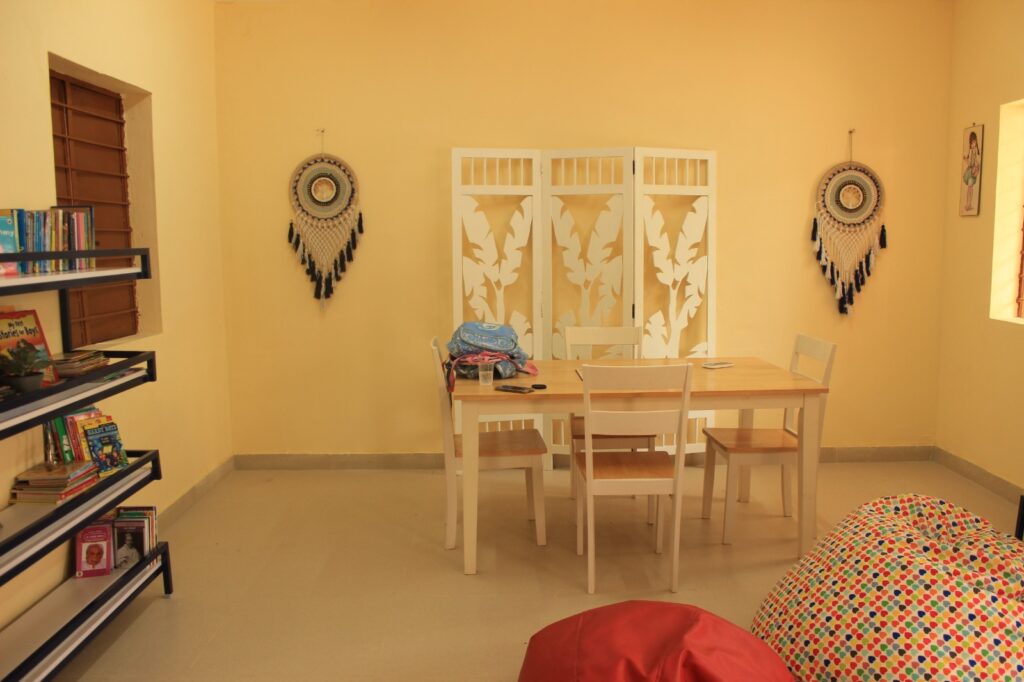
In a small government school in Mullur Colony in Bengaluru’s Mahadevapura, there was a room that always stayed locked. Today it is a library with more than 2,000 books, a puzzle corner, art supplies and a reading rug, used by schoolchildren, toddlers from the neighbouring Anganwadi and even adults from the community. It was brought to life by Shape the Future, an initiative by a group of student volunteers from across Bengaluru.
How it all began
I started Shape the Future in 2022, when I was 13. I began with weekend visits to Thayi Mane, a government-recognised residential home for about 150 orphaned children. Eventually, other interested school students joined the initiative.
It started with our group teaching children in government schools on weekends. The idea was simple. Many of us had grown up with books at home, and we had seen how much they opened up our world. The children we taught often had nothing beyond their textbooks. We felt that a child’s chance to learn and imagine should not depend on where they are born.
Today, more than 100 student volunteers are part of Shape the Future. Most of us are between 15 and 17 years old, and we work on weekends and holidays, while making time from our own studies.
How the library came together
The library started as an idea long before we had a place for it. We decided to collect books for children of every age first, and then look for a space.
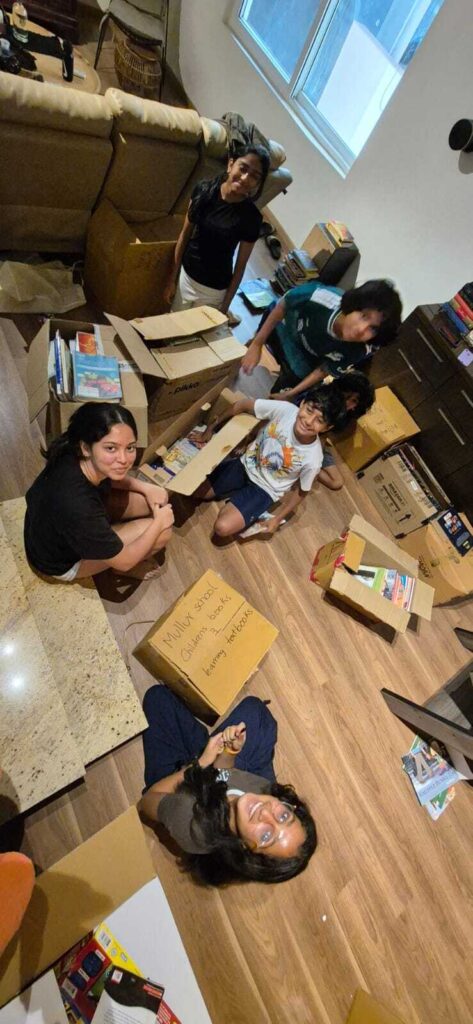
Book collection happened entirely through the community. Volunteers ran drives in their own schools and apartment complexes, and word of mouth did the rest. Not a single rupee was spent on buying books. Over about a year and a half, we collected more than 2,000 titles. For months, boxes were stacked to the ceiling in volunteers’ homes.
We had a rule from the start: if a book isn’t good enough for us, it isn’t good enough for anyone. Every child deserves the same dignity. Volunteers spent two months cleaning, sanitising, sorting the books by age and repacking them. Only books in good condition made it to the shelves.
Read more: Bridging the inclusion gap: How to support every child in Mumbai’s BMC schools
Community comes together for a good cause
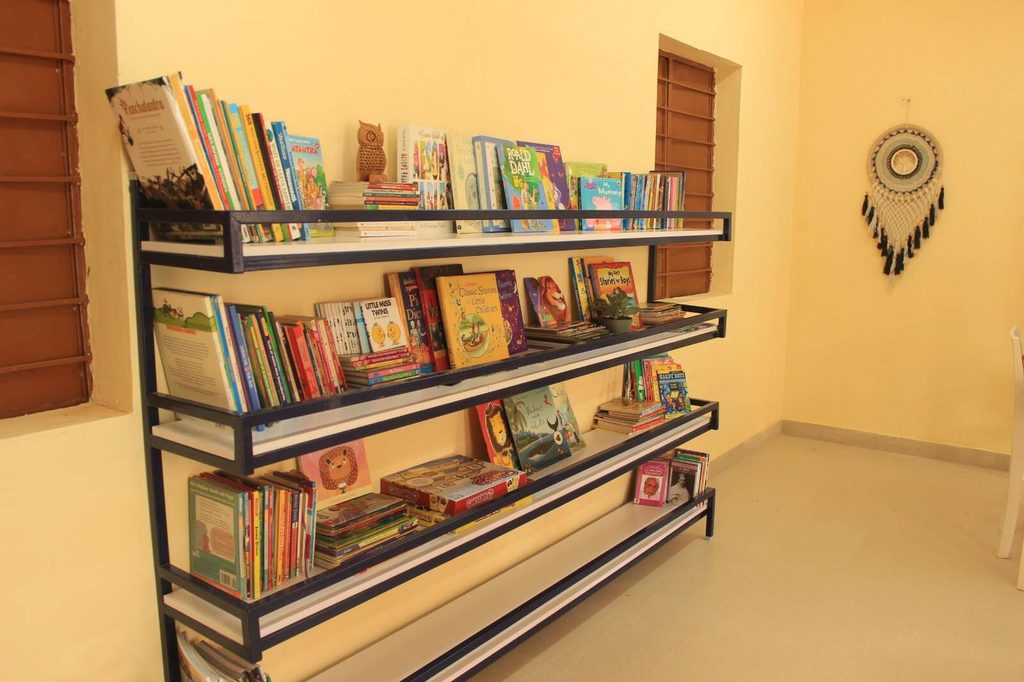
While we were looking for a space, the Kodathi Gram Panchayat members introduced us to the Government Lower Kannada and English Medium School in Mullur Colony. It was a small school with two teachers. There was one room in the school that was always locked. When the principal opened it, we noticed the wall paint was peeling, water was leaking in, the windows did not close and the room had no lights. We asked for permission to turn it into a library, and the school agreed.
The room needed major repair work, and we had no funds. Volunteers emailed hundreds of companies. FirstSteps Babywear and Mini Klub agreed to support the library as a CSR initiative. The panchayat helped us with permissions, and most of the logistical support we needed along the way. The Dash Square donated a table and rug, and the library was inaugurated by Manjula Aravind Limbavali, MLA, Mahadevapura.
The community has kept adding to the school since. Recently, PayPal and DonateKart brought around 100 of their volunteers to the school and painted its walls in bright, cheerful colours, making it a space that children love to visit.
Who uses the library
The school had 24 students when we first started our work there in 2024. It now has 47, and the number seems to be growing. But the library reaches people well beyond the school.
The area around the school is mostly informal settlements, and there is no public library nearby. Today the library is used by:
- Schoolchildren, for reading, workbooks and activities
- Toddlers from the Anganwadi attached to the school, for picture books and storytelling.
- Teachers and school staff, who borrow books.
- Akshaya Patra drivers who deliver the children’s midday meals and now take books home.
- Women from the neighbourhood, many of them domestic workers, who join our storytelling sessions.
The books include picture books, storybooks, folk tales, novels, comics, encyclopaedias, activity books and subject workbooks, in English, Kannada, Hindi and Tamil. Books can be borrowed freely, and we don’t mind if some never come back. New donations keep arriving, so the shelves are replenished regularly.
Since volunteers are in school on weekdays, adults from our community take turns visiting to read to the children. Sessions include puppet shows, show-and-tell and acting out stories, because we knew not every child would want to sit and read.
Read more: Can cool roofs beat Chennai’s heatwaves? A look inside the state’s Green Schools push
Challenges and what we learnt
- Funding was the biggest hurdle. We had none, and doing a poor job just to finish quickly was never an option. It took persistence, and many unanswered emails, before partners came on board.
- Time was another challenge. As students ourselves, we could only visit on the weekends. That pushed us to build a rota of adult volunteers from the community, which turned out to be one of the best things about the project.
- Storage and sorting were harder than expected. Two thousand books need space, care and time to clean and organise.
- We also learned that a library is not only about books. Children came for the puzzles, music and stories first, and stayed for the books.
- Most of all, we learnt that consistency matters more than grand gestures. The children don’t remember the best session. They remember whether we came back.
The impact so far
The children now have something many had never had: books of their own choosing. Volunteers have watched them pick up new words, correct each other’s pronunciation and ask about things they first saw in a book. Many of them ask for story after story, and know a book by heart after a few readings. Some children who love maths and English finish their workbooks so quickly that we keep bringing new ones.
It is too early to measure academic results. But the library has become a gathering place for children, mothers and workers in a neighbourhood that never had one.
The way forward
We collected more books than the school could use, since it only teaches younger classes. The extra age-appropriate books have gone to Thaye Mane and the Government Higher Primary School, Mulluru.
We are now piloting a system that would let other schools nearby borrow books from the Mullur Colony library, and we are seeking permission from the Panchayat and the Block Education Officer. Book collection continues, and a library in another government school is in the pipeline. We are looking for support from individuals and organisations to set up a basic structure there.
Our hope is that every child in the area can walk into a library, and that more young people in Bengaluru see they don’t have to wait to start something in their own neighbourhood.