Ahead of the art exhibition ‘Pugai Padam’, this photo essay captures the contrasting realities of air and the lived experiences of air pollution in Chennai.
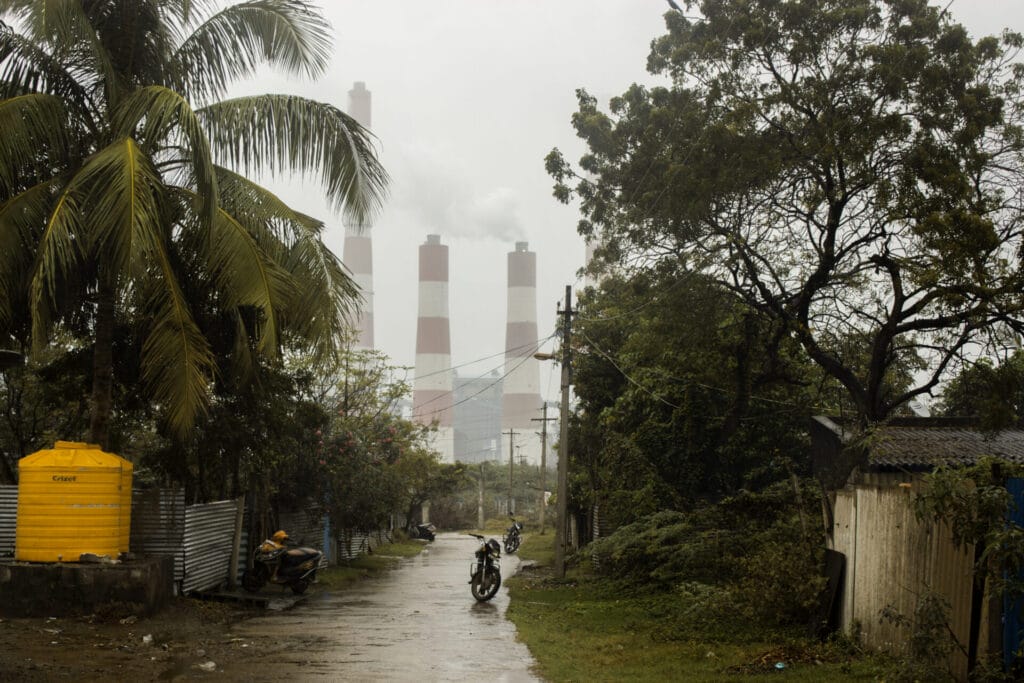
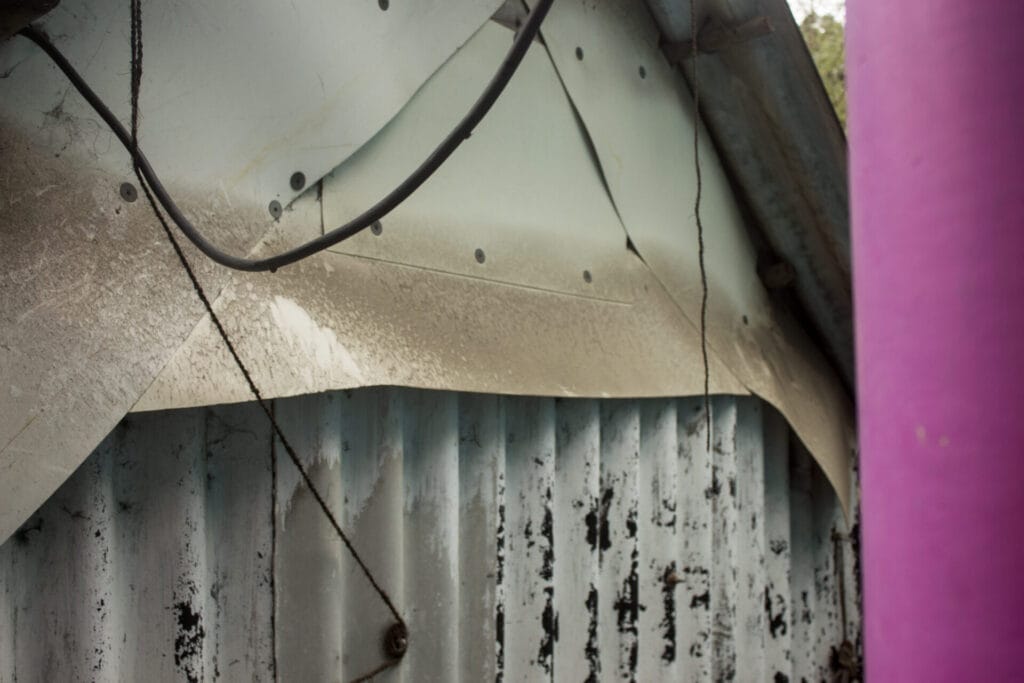
Fly ash is the everyday reality of residents in Kuruvimedu. Pic: Sathish S.
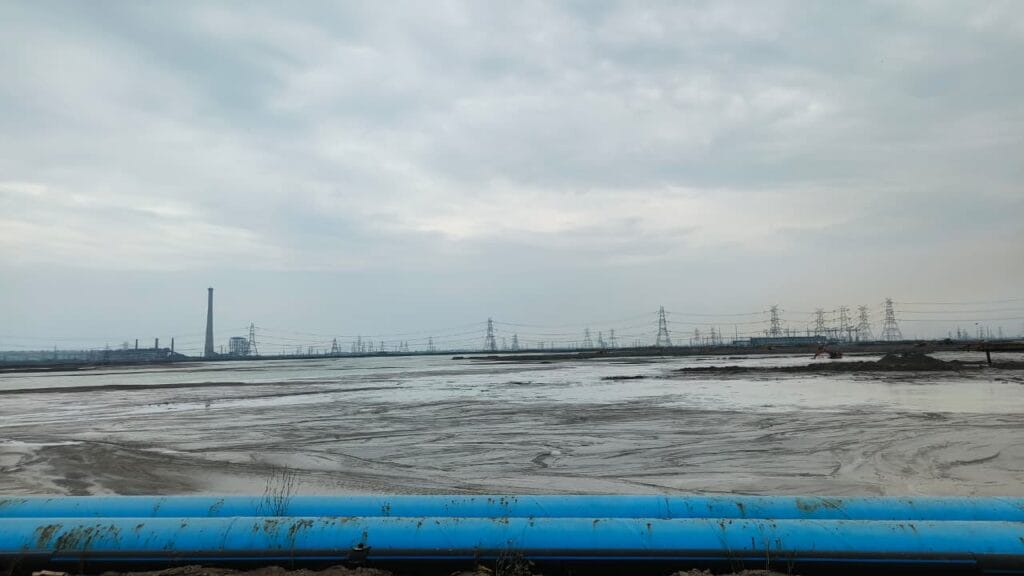
The chimneys of the NTECL Vallur Thermal Power Station, billowing smoke, loom over Kuruvimedu in Ponneri, Thiruvallur near Chennai. Wedged between the plant and its sprawling 300-acre ash pond, the hamlet lies under a blanket of kari (coal) and sambal (ash), coating its narrow streets, colourful homes, and trees.
Kuruvimedu is hard to find on Google maps, just as its namesake bird. The main road leading to this place is flanked by factories and industrial complexes, its surface riddled with potholes that make every journey dangerous for motorists.
Home to mangroves, networks of canals, and fields, Kuruvimedu once buzzed with economic activity and trade. “This area was green, and our livelihood was making salt from uppalam (salt pan) in this area. We earned less, but we were happy,” points out Kumari*, 61. Forty years ago, she says, their home food was cooked in chemical-free pure salt, but “now we are afraid to eat as ash covers even our food.” Kumari works at a nearby company as a cook, earning less than ₹12,000.
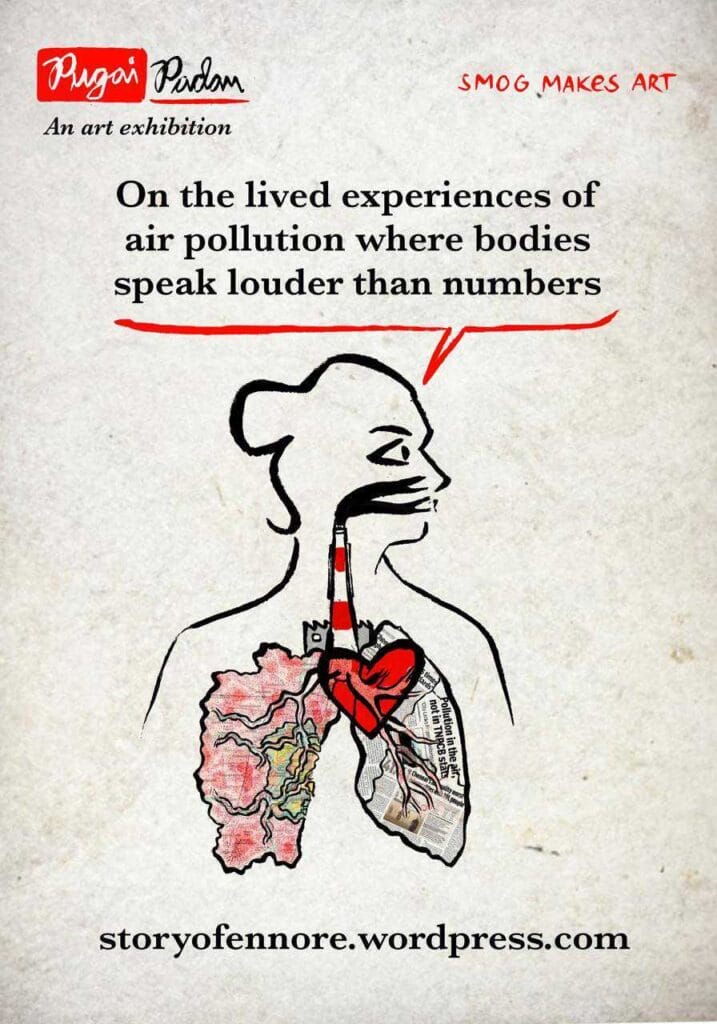
A series of experiences like Kumari’s and photos from Kuruvimedu will be presented in an art exhibition titled ‘Pugai Padam’ (புகை படம்) from February 6th to 8th. Organised by the Pugai Padam Collective, the event challenges the state’s ritual reporting of air-quality indices, and focuses on the intersectional nature of environmental discrimination, say organisers.
‘Pugai Padam’ aims to centre environmental discrimination and people’s experiences with air pollution.
How smog plates create art
“Across Chennai, the air quality varies. Often, we rely on instruments to measure air quality. But numbers often erase the bodily experiences as evidence,” says Nityanand Jayaraman, environmental activist and an organiser of the event.
In this context, to capture air and present it as art, “smog plates”—a pollution‑capturing medium created by Los Angeles artist Kim Abeles—will be presented from 14 locations at the exhibition, including north Chennai. These will show the stark differences in the quality of air across locations. Ahead of the exhibition, Citizen Matters visited two locations: Kuruvimedu and Besant Nagar to explore the lived realities of air pollution through conversations and observations.
A ghost town
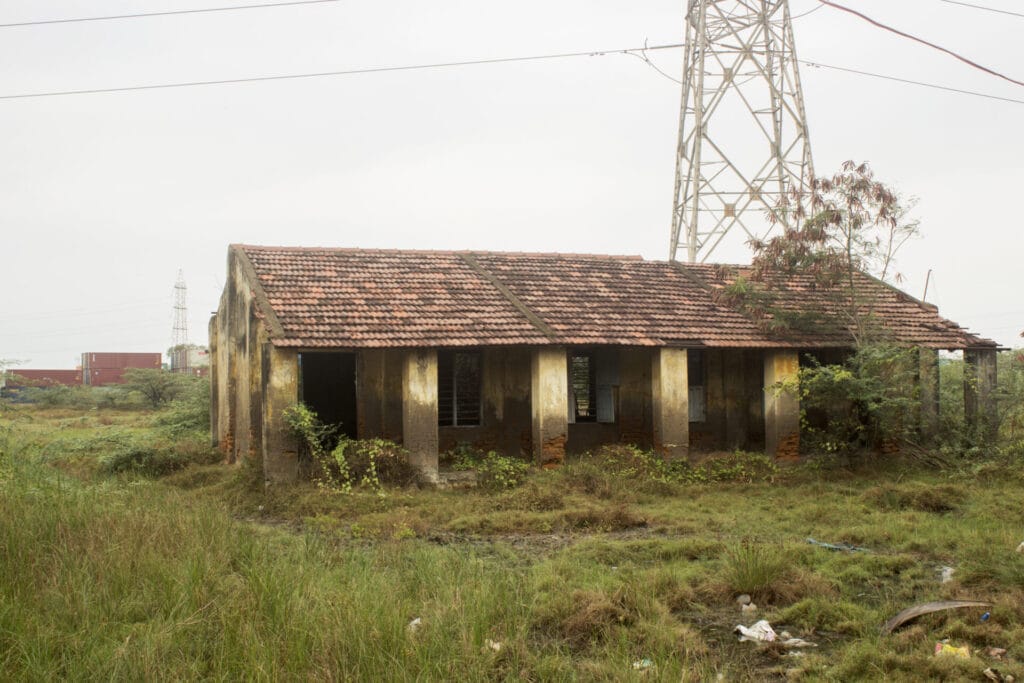
With a capacity of 1500 MW, this plant provides 70% power to Tamil Nadu and the rest to Andhra Pradesh and Karnataka, among others, notes the NTECL website. In 2007, Sushilkumar Shinde, then Union Power Minister, laid the foundation stone for the project and in 2012, it began operations. But at what cost? The coal plant and fly ash have rendered this area uninhabitable, say residents. Pic: Sathish S; Archita Raghu. “We used to study here, and now all the kids have left,” says Maari*, a youngster in this area. Abandoned homes and memories of a rich landscape haunt Kuruvimedu. A few years ago, at least 250 families inhabited this ooru. Now the 30 families that remain pray that they will be relocated. “There are no livelihoods or jobs or anything left here; we have petitioned officials to leave this town,” adds Krishnan, a town elder. “Most of the young people here are daily wage workers in the industries, despite having studied or having degrees,” says a resident. Pic: Sathish S.
A deluge of health problems, and floods
Every morning, locals wake up to find their homes covered in fly ash. “Does the government know this ooru is here or not? Only during election time they come, but when they win, they don’t even look here,” Kumari says. Meanwhile, with no bus facilities or nearby hospitals, locals are forced to pay between ₹500 and ₹1000 to go to the nearest PHC in Minjur, over 8 km away. Pic: Sathish S.
Kumari points to the ground, covered in ashy puddles. Six months ago, her husband died of a heart attack, which she believes was linked to dust allergies and prolonged exposure to pollution. No resident is spared—reddish rashes and infections mark their limbs. A 2017 report by Huma Lung Foundation & Community Environmental Monitoring found 19.2% of Ennore’s surveyed population showed chest X‑ray abnormalities from elevated pollution levels. Pic: Sathish S.
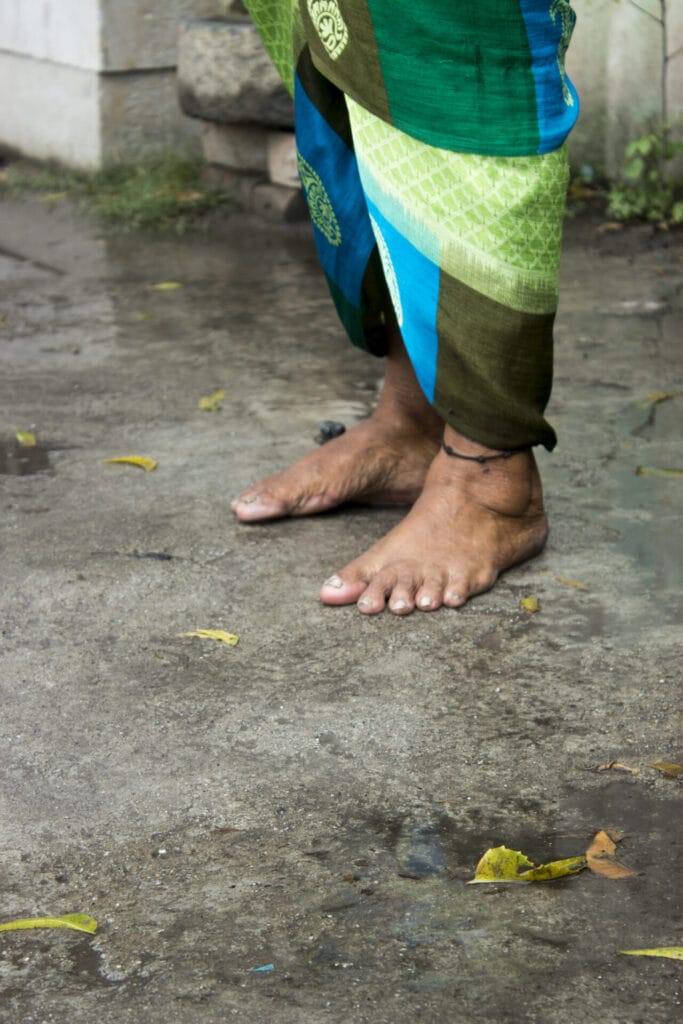
Even leaves are not spared from ash. “If we don’t wear sandals, we get skin allergies,” says Maari. Each December, floods and stagnant water add to their woes. A bund built a few years ago worsened the flooding, and since Kuruvimedu lies on the path to the sea, water remains trapped here,” adds the resident. Pic: Sathish S.
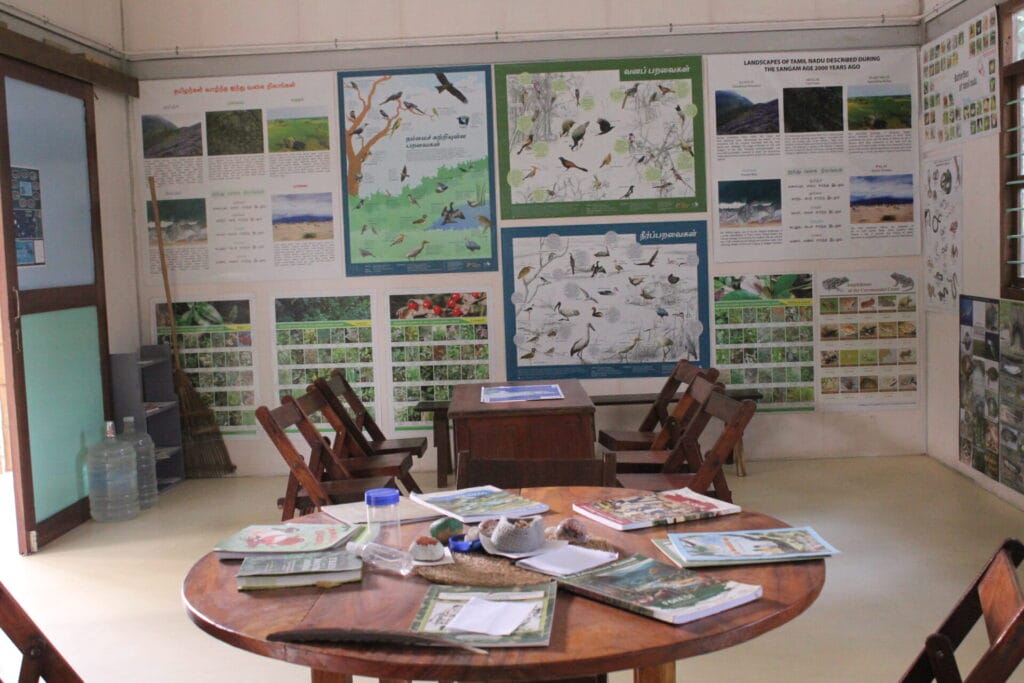
While Kuruvimedu tells the story of air in north Chennai, another unfolds 40 km away. At Olcott Memorial High School in Besant Nagar, the songs of birds and insects fill the forested surroundings. Inside the school’s Blue Green Centre (BGC), a smog plate lies covered in dust, leaves, and twigs; unlike in Kuruvimedu, fly ash is nowhere to be seen. The BGC, a collaborative effort between the Theosophical Society, Pitchandikulam Forest (Auroville), and Asian Paints, aims to provide environmental education to students.
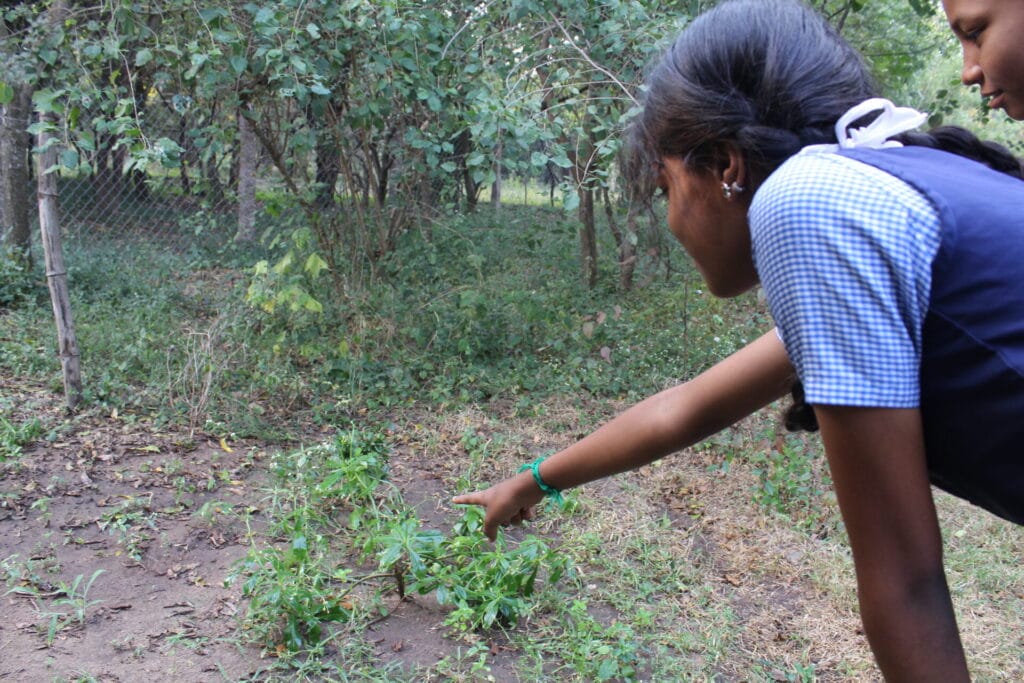
At the BGC, lessons revolve around the environment, and every question finds space. “Did you know leaf-cutter bees build nests in the hollow spaces of trees? Or that mynahs are called Naganavai in Tamil?” the students ask. Their chatter is endless, yet our conversation with the group of 11 keeps circling back to a certain winged burst of colour—butterflies. As part of the BGC, in May last year, these students came together to create a butterfly garden.
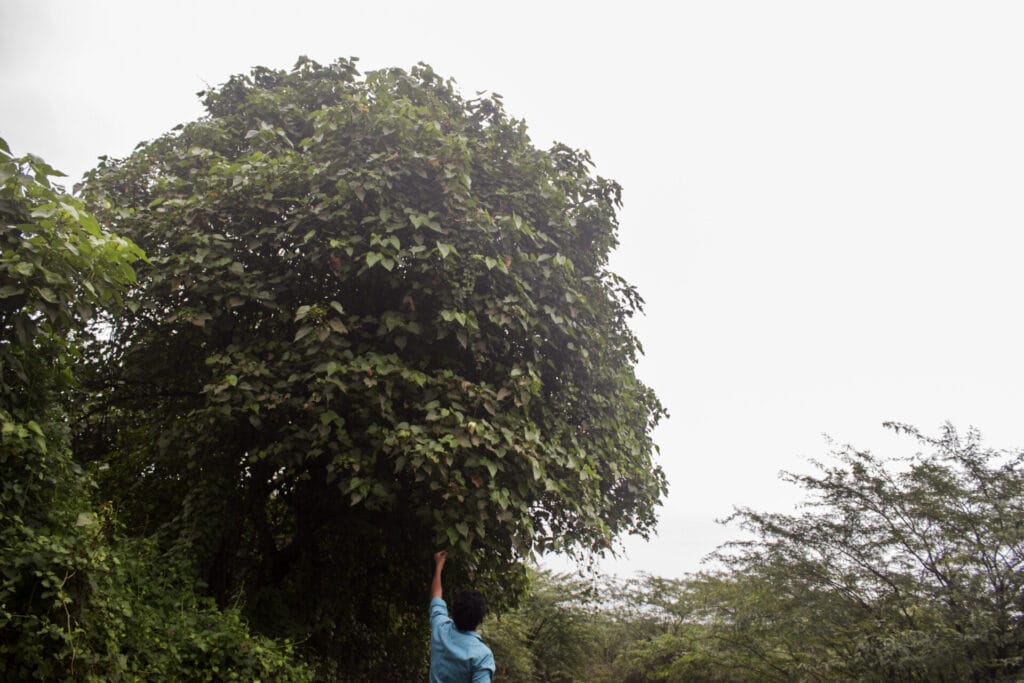
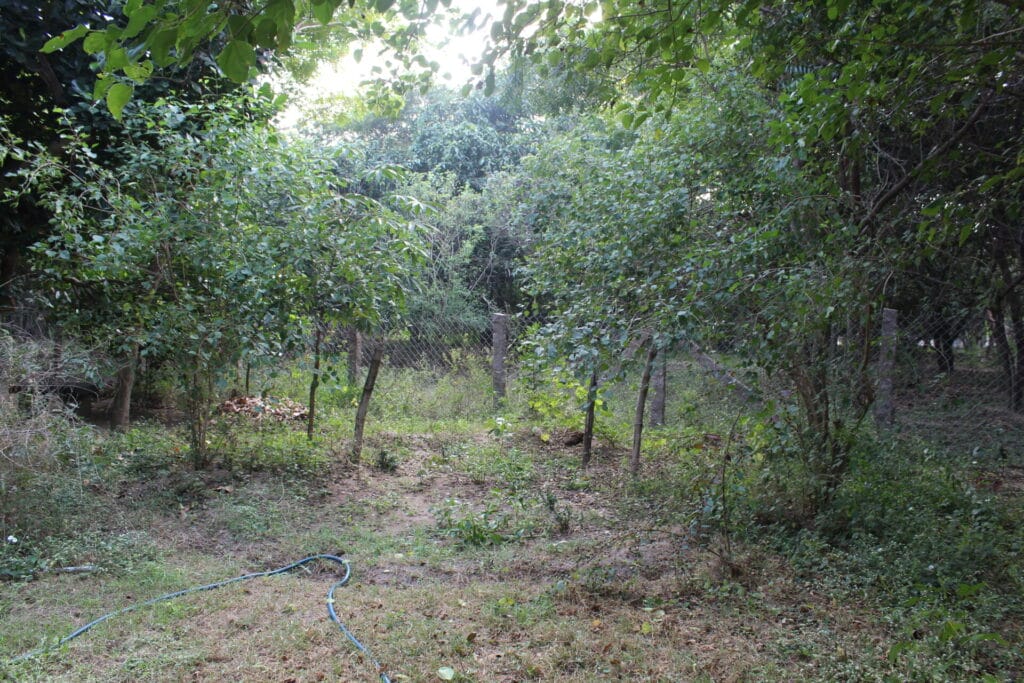
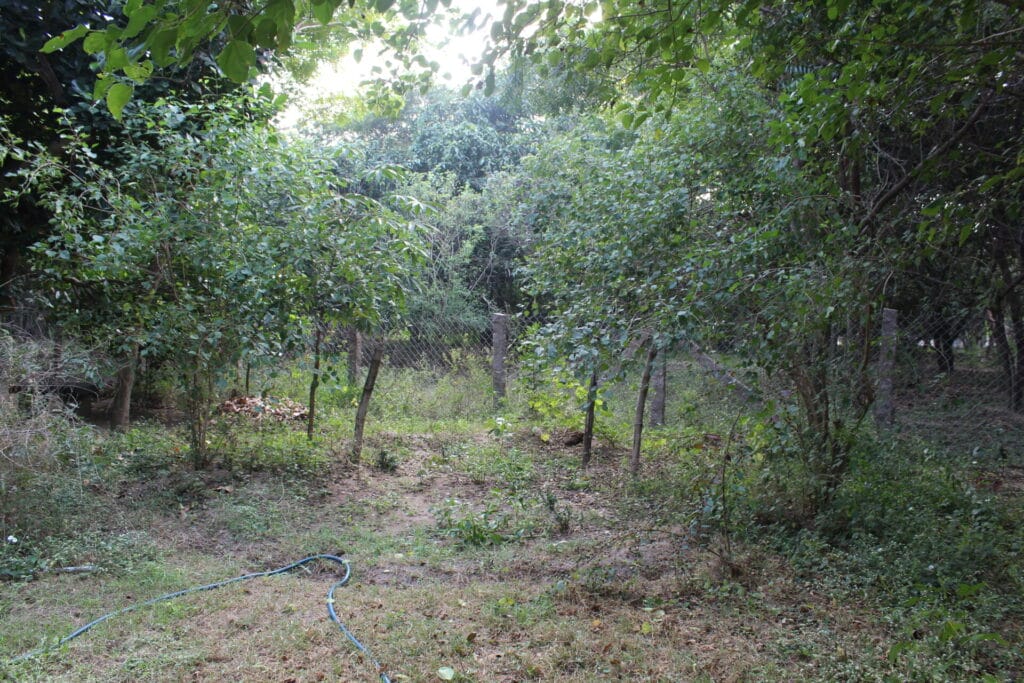
In this airy and green habitat, scores of butterflies thrive, says Meera*, a student. Last May, the students dug up holes, carefully placed native transplanted non-invasive and nectarine species in this area. “In Chennai, we have 160 species of butterflies, and since we have a centre of forests and a medicine garden, we have at least 110 species of butterflies here. We planted 17 host plants such as wild lemon and milkweed,” says BGC nature educator, Kumaresan Chandrabose. Pic: Sahana Charan. The groups of children here take care of the medicinal garden and the butterfly garden. “When we finish class, we see trees full of butterflies, colour-colourah,” says *Dinesh, a student. They carry what they learn in the BGC and return home harbouring tales of pollination, migration, and the environment. For others like Lalitha*, the butterfly garden has rooted the idea that other species have names, habitats, and lives. Pic: Sahana Charan.
Green habitat, lessons on ecology
“Earlier, I knew only kuruvi (sparrow), kaaka (crow) and pura (pigeon), and now I know more,” points out Dinesh. From visits to Puducherry, Pallikaranai and Broken Bridge, the children are pulled into the world of ecology, learning to differentiate between leaves and trees. *Anu, another student, observed that toxic air has affected her sister, causing wheezing symptoms. Pic: Sahana CharanA question posed to the children was: In a world where we do not prioritise the environment, what will happen? “We will all have to buy oxygen and water to survive,” says Meena. Other dystopian futures include a scenario where plants, butterflies and other species cease to exist. Pic: Sahana Charan.
Keeping this future in mind, the children shared a few recommendations:
Reduce the number of vehicles. Switch to alternate sustainable vehicles such as cycles or walk more.
Reduce usage of plastics, and plant more trees.
Fine factories, if emissions are above safe limits.
The exhibition is open for walk-in visitors from 4 pm to 7 pm on February 6–8 at Art Houz, Nungambakkam.
Archita Raghu is a Senior Reporter at Citizen Matters. She is interested in cities, gender, climate and policy. Archita has previously worked with The New Indian Express and BehanBox.
Mumbai's landscape is changing with big infra projects. Experts suggest better use of government plots and improved street design to retain green cover.
Long before Mumbai’s relentless summer even began this year, the city was already simmering. In March, Mumbai was hit by a severe heatwave, with the temperature reaching a five-year high of 40° Celsius. As rapid urbanisation and a flurry of infrastructure projects replace dense tree cover with steel and mortar, heatwaves seem to have gone from being rare occurrences to an annual threat. The Mumbai Metro Rail Corporation Limited (MMRCL) cut a whopping 3,093 trees in Aarey Colony to make way for Mumbai’s Aqua Line ( Metro 3). For environmentalist Stalin Dayanand, this is not just a temporary problem.…
71% of waterbirds at Begur Lake are declining. A visit to one of Bengaluru’s rapidly deteriorating lakes shows what's causing the collapse.
During the Open City biodiversity datajam held in December 2025, our group examined the ecological trends around Bengaluru’s lakes. Our analysis suggests a majority of waterbirds are declining across the city's lakes. Earlier, we addressed crucial questions on how migrant and resident waterbirds are surviving across 14 of Bengaluru’s lakes, how the shape of the lakes influence microhabitats, and how a scoring system can be used to record the decline in lake quality and bird populations. The last of our four-part series turns its attention to an individual site. As part of this study of waterbirds in 14 city lakes,…
Excellent article. Loved the way the contrast was presented with children wisely pointing to ways to correct ourselves.