“Visually impaired individuals playing cricket?” It’s a thought that often surprises people, reflecting a common misconception of what persons with visual impairment can truly achieve. Even within the blind community, the idea of confidently stepping onto a cricket pitch seemed like a distant dream. But in Bengaluru, that dream became a reality, thanks to the determination and hard work of a few passionate individuals.
Making the impossible possible
I had long envisioned a world where blind cricket thrived, but doubt crept in — could such an event be pulled off, and would anyone attend it? My apprehensions disappeared when I shared my vision with my friends, who enthusiastically agreed, “Let’s just do it!” With newfound resolve, I shared the message within a blind community group. The response was overwhelming, with over 25 enthusiastic individuals coming forward to participate.
The logistical demands of such an event are considerable; requiring a dedicated venue, practical support, and numerous helping hands. Chai Chakna, my family’s café in Varthur, Gunjur, a vibrant space run by a group of youthful friends came to our rescue. Although they had never hosted an event of this kind before, their immediate and wholehearted willingness to support was genuinely inspiring.
They generously offered their associated turf, PlayNet, a space that, under their care, became the perfect arena for this groundbreaking event. And so began the meticulous planning for the event.
Read more: How accessible is Bengaluru for a person with disability?
What it takes to make it happen
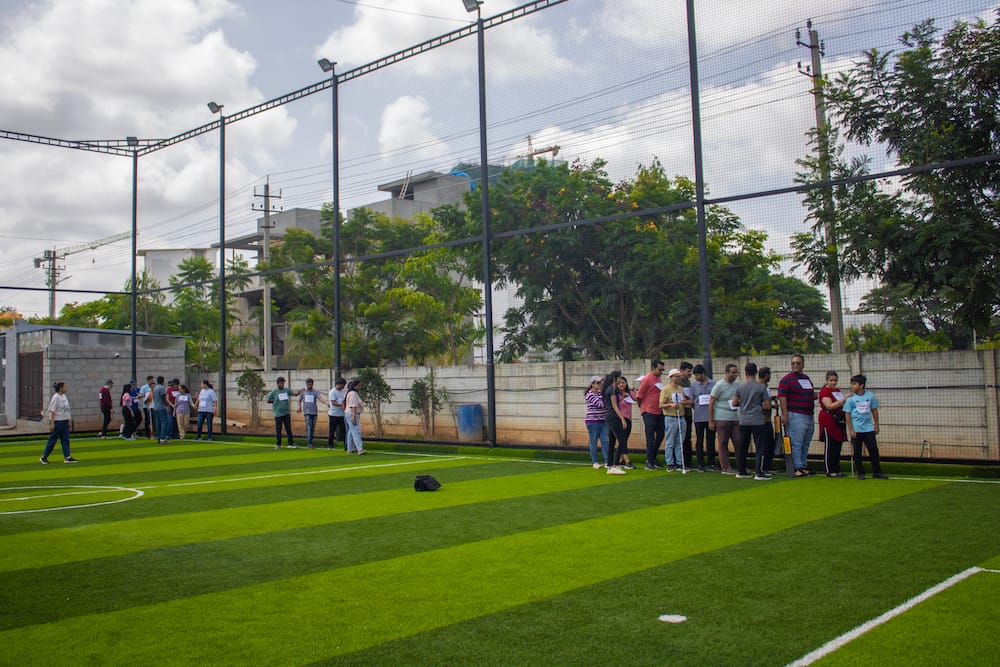
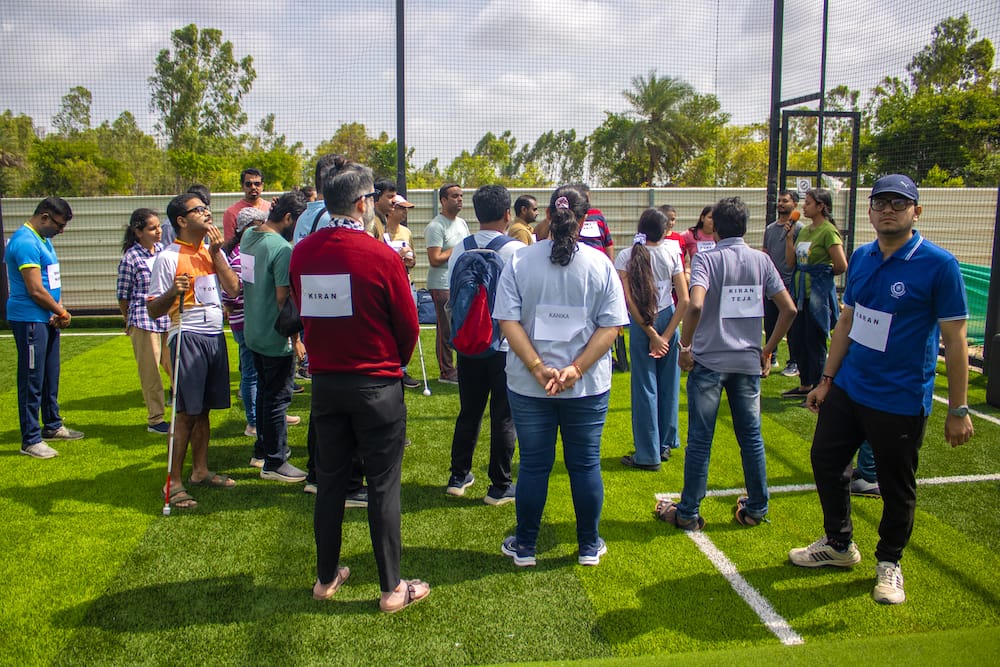
Every detail was carefully planned to ensure the event was not just well-organised, but truly accessible and inclusive. From selecting an audible ball that could be tracked by sound, to orienting the ground precisely for the players, and from offering refreshing beverages to setting up an accessible commentary system and conducting thorough briefings, no aspect was overlooked. What began with uncertainty about even finding ten players soon transformed into the exhilarating reality of two full teams of twelve, aptly named ‘Dhulai’ and ‘Pitai’.
The teams were not restricted to persons with visual impairment, but comprised a diverse mix of sighted and visually-impaired men and women and also included two children under 15 years. The youngest players, Pari and Arav, stepped forward as team captains for Dhulai and Pitai respectively.
Birth of the Bangalore Blind Premier League
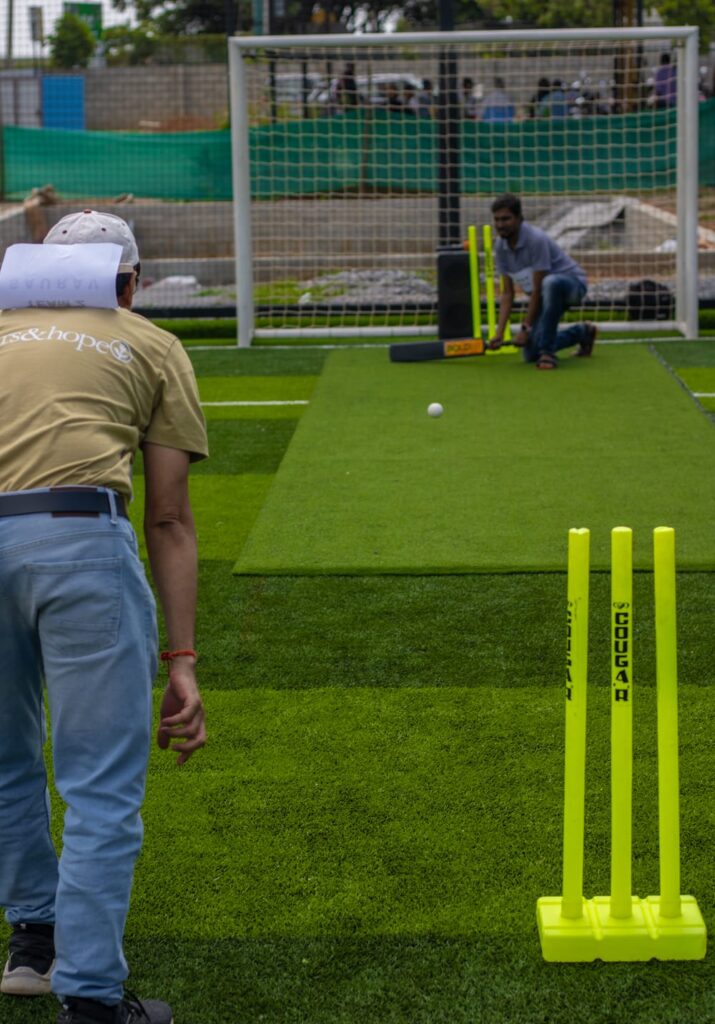
On the morning of June 1st, the cricket match began with energy and anticipation. Team Pitai won the toss and elected to bowl. Team Dhulai batted first, scoring an impressive 91 runs in 12 overs. The rules were modified to ensure every player bowled and batted at least one over, to ensure equal participation.
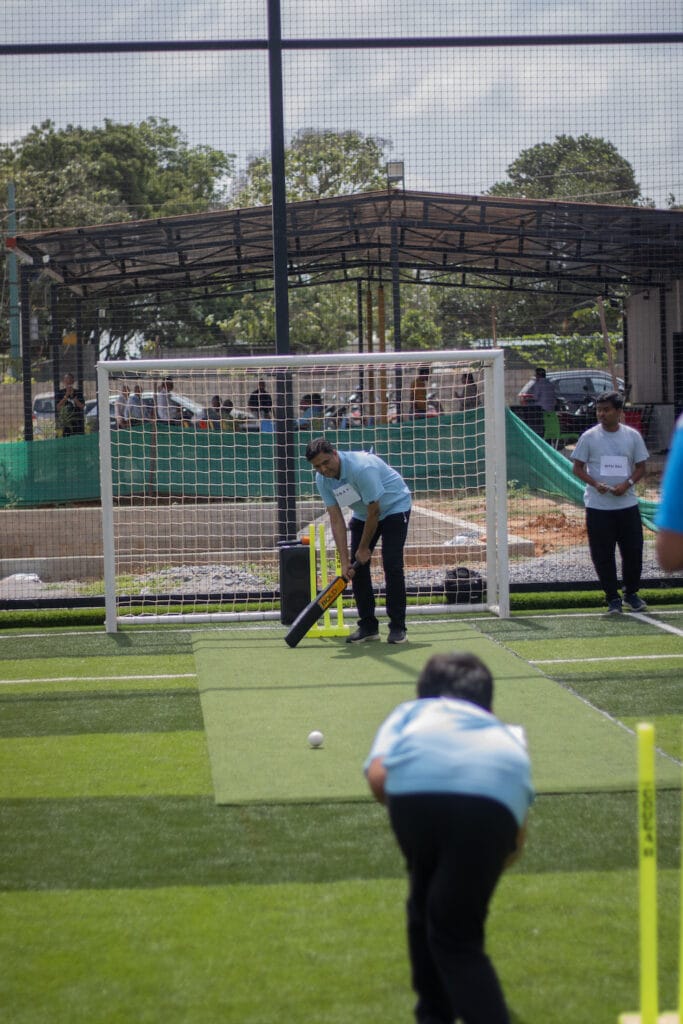
Team Dhulai clinched victory by 25 runs, showcasing remarkable skill and dedication. The ground buzzed with cheers and the thrill of competition, especially from those holding a bat and ball for the first time. We proudly called it the “Bangalore Blind Premier League,” a name that instantly sparked the players’ competitive spirit.
Community champions
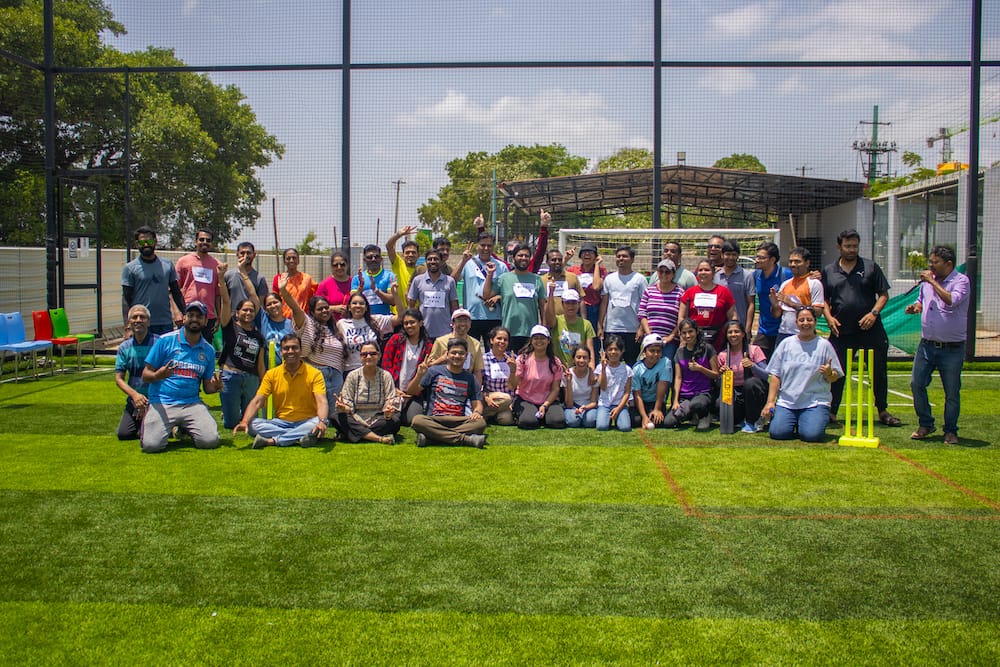
Four invaluable volunteers from the adventure sport group Explore Nations, led by Lakshmish Gowda, became dedicated “buddy runners,” and assisted the team with strategic fielding placements and game tactics. In all, 35 people participated in the cricket match, emphasising the community spirit. One of the highlights of the event was the presence of Madhu Singhal, founder and trustee of the NGO Mitra Jyothi, lending her support to this initiative.
Where there is a will
This extraordinary journey, from a nascent idea to a resounding triumph, delivers a powerful message: No disability should ever serve as a barrier to human aspiration!
When society unites beyond physical and cultural differences, it creates meaningful change. People with disabilities must feel empowered to embrace these opportunities. Equally important is the active support of organisations like Chai Chakna, PlayNet, and others in promoting and expanding such transformative initiatives.
The Bangalore Blind Premier League was more than just a cricket match; it was a vibrant celebration of possibility, a testament to the power of inclusion and collective spirit.