Across urban India, environmental awareness is increasing, and one of the ways people practise their commitment to minimise their environmental footprint is by reducing their plastic waste. In restaurants, where the sale of plastic bottles and free “filtered water” are both ubiquitous, the decision regarding which water to consume contributes to the growing plastic waste among citizens.
Opting for filtered water instead of bottled water, which is served free of cost, seems like a win-win choice that is environmentally conscious and safe. However, the actual safety of this free filtered water remains a question.
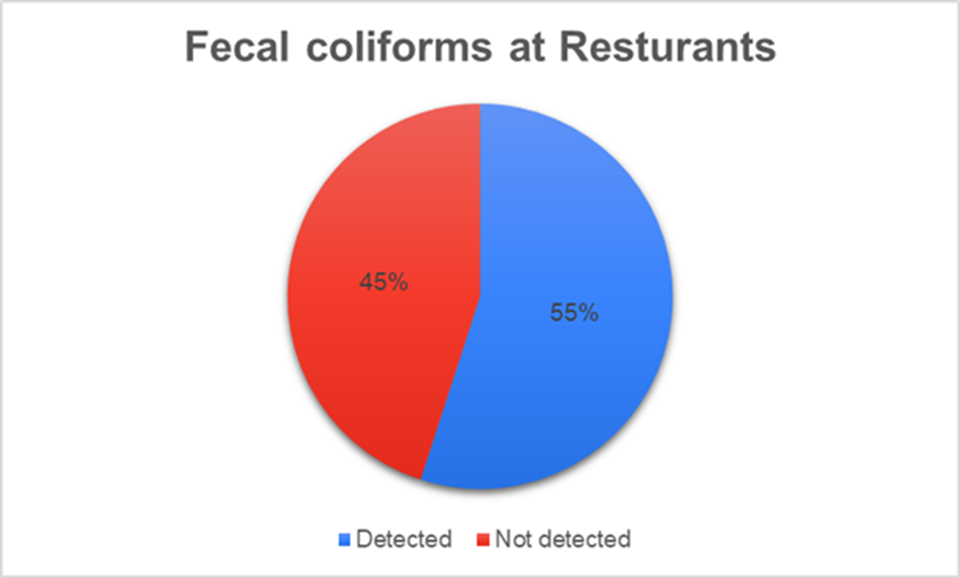
To answer this, Ashoka Trust for Research in Ecology and the Environment (ATREE) and Frontier Tech Hub (FTH) conducted a study across 20 popular restaurants in Bengaluru. Alarmingly, over 50% of the water samples collected from these restaurants were found to contain faecal coliforms (FC) above permissible limits.
Background of the survey
The project, called ‘From plastic bottles to filtered water: Leveraging digital solutions to build consumer trust and reduce plastic bottle usage’, aims to understand consumer and business perspectives on using free filtered water in restaurants as an alternative to plastic-bottled water. Specifically, it seeks to:
- Identify the key drivers and barriers that influence individuals to choose filtered tap water over plastic-bottled water when dining out.
- Understand what motivates or prevents restaurants from offering and promoting filtered water as a viable, safe alternative.
- Evaluate whether providing water quality data through digital displays can influence consumer choices between plastic bottles and filtered water.
We collected the water samples directly from the outlet of the filtration systems in restaurants. We also obtained prior permission from the restaurant owners, and we conducted all sampling under a non-disclosure agreement to ensure confidentiality.
All 20 establishments offered filtered drinking water and bottled water. The free filtered water is sourced from borewells, tankers, or municipal supply, and treated via in-house filtration systems like UV filters, reverse osmosis units, or simple carbon filters. We wanted to determine whether this “free” water was safe for consumption and whether it could be relied upon as a sustainable alternative to single-use bottled water.
Read more: Is your water safe to consume? Here’s how Bengaluru residents can check water quality
Challenges of the study
One of the challenges we faced was getting permission from hotel owners or their representatives to collect water samples. Interestingly, some high-end restaurants sell their own branded bottled water. While they do serve free filtered water as well, their bottled water was placed prominently on each table.
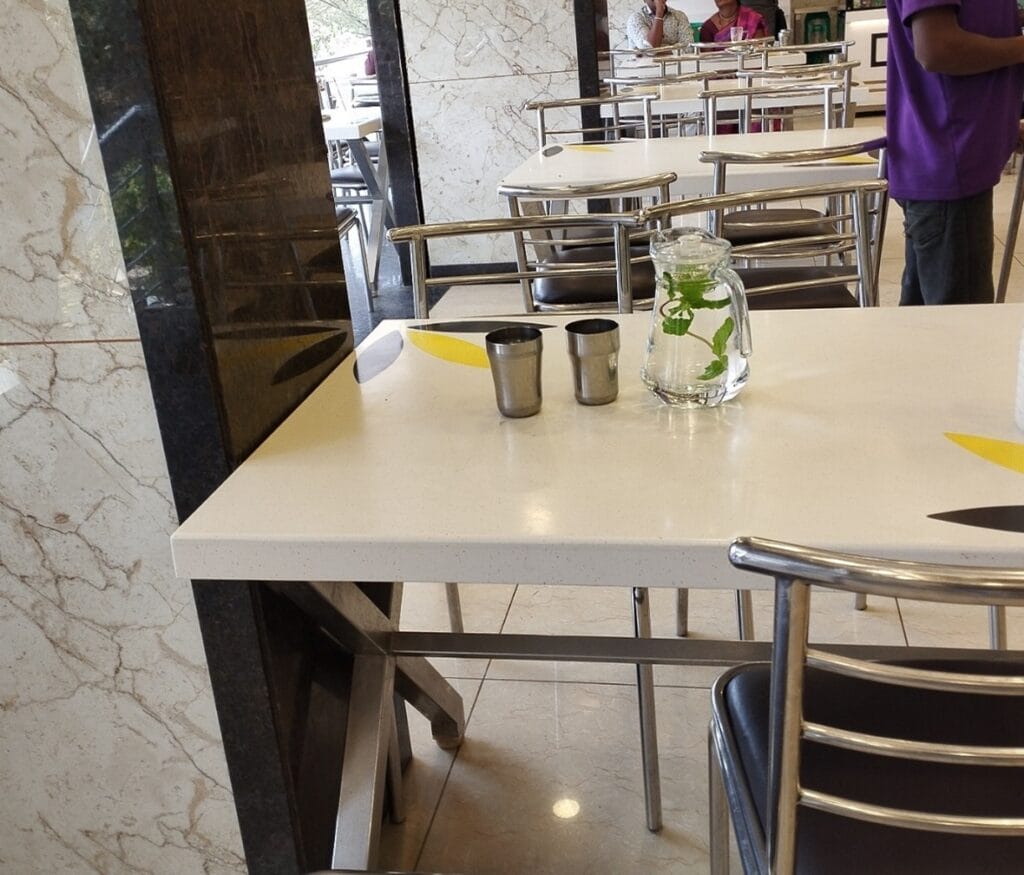
In one of these restaurants, when we asked for the free filtered water, we observed that the service was slow, and it was served in fairly small drinking glasses (two good gulps worth). We also noticed that in this restaurant with a large seating capacity (though relatively empty at the time of our visit), there were only a few jugs of free filtered water from which the water was poured when we requested.
What do the findings say?
The results of the study were alarming. Over 50% of the water samples collected from 20 restaurants were found to contain faecal coliforms (FC) above permissible limits.
Faecal coliforms are bacteria that originate from the intestines of warm-blooded animals. Their presence in drinking water is a clear indicator of contamination by human or animal waste. It indicates that disease-causing pathogens like E. coli, Salmonella, or Giardia may also be present in drinking water.
According to the Bureau of Indian Standards (IS 10500:2012), the acceptable limit for faecal coliforms in drinking water is “Not Detectable” in a 100 ml of water sample. Our data showed FC levels ranging from 3 MPN/100 ml to well over 2,400 MPN/100 ml in some cases.
Many of the restaurants tested were part of well-known local chains or branded establishments, often located in affluent neighbourhoods. The data suggests that the contamination is independent of the price point or popularity of the restaurants.
Read more: Treated water from one-third of BWSSB sewage treatment plants is unsafe
Reasons for contamination
There are multiple reasons for the contamination of free filtered drinking water at the restaurants. We found that poor maintenance of the water filters, contaminated water source and absence of regulations were among the top three reasons for contamination.
Poor maintenance of the water filters: Whether UV, RO, or otherwise, they require regular maintenance. Filter membranes need replacing, UV lamps need changing, and tanks need sanitising. In the absence of a clear service schedule or oversight, many restaurants neglect the maintenance of water filters.
Contaminated water source: Many restaurants rely on borewell or tanker water throughout the year. These sources are often contaminated with sewage either due to groundwater pollution or proximity to leaking septic tanks, open drains and degraded lakes.
Absence of regulations: At present, there is no mandatory requirement for restaurants to regularly test the quality of drinking water they serve. Nor is there any requirement to display test results or filtration service records.
At least theoretically, it is presumed that filtered water served at restaurants is safe, unless it tastes or smells odd, which forces them to prefer a plastic water bottle over free filtered water. While the crisis of plastic waste in cities is real, and bottled water is a significant contributor to that, the solution(s) cannot come at the cost of public health.
With no assurance of water quality, any programme to shift customer preference away from plastic bottles and towards filtered water is inadvertently asking them to choose between risking exposure to waterborne diseases or contributing to plastic pollution. This is an unfair trade-off; Hence, we need to look for solutions.
Solutions from individuals
To address both the health concern and plastic pollution, consumers can consider two proactive choices.
Carry your own water bottle: This may seem like an old-school habit, but it blends health and environmental sensibilities. A reusable bottle filled at home with safe drinking water sidesteps both contamination and plastic,
Ask for water quality data transparency: Just like food menus display allergen information or calorie counts in some countries, restaurants can and should be encouraged to display the date of their last water quality test and frequency of filter maintenance. It could be as simple as a sticker on the wall or something more complex, like digital displays.
Need for systemic changes
While individual choices are important, systemic change must come from policy and industry leadership. Some low-cost regulatory measures that could greatly improve consumer confidence include
- Making it mandatory for restaurants with seating above a certain capacity to conduct monthly water testing.
- Displaying water test results on the premises. Including water safety checks as part of the hygiene inspection by local municipal health departments and offering incentives to restaurants that demonstrate best practices in water safety and plastic reduction.
For environmentally conscious restaurant owners, this is an opportunity to lead and offer safe, plastic-free water that can be a hallmark of responsible business. Certification programs such as “zero plastic” or “green restaurant” labels could help distinguish such restaurants in a competitive market.
The idea of free filtered water at restaurants being both safe and sustainable is noble, but the reality is far from perfect. Until better systems and safeguards are in place, consumers must be aware, and restaurants must be nudged towards accountability. It is time that we moved beyond assumptions and started demanding evidence because when it comes to drinking water, perception should never outweigh reality.
Thats Crazy. Also need to test public transport points like Metro Stations, Railway stations, Airports for their drinking water quality.