Beyond Bengaluru’s municipal boundaries lies a troubling pattern of neglect. Many lakes that are under the control of gram panchayats are slowly being lost to unchecked encroachments and poorly executed rejuvenation efforts. In a recent series, we discussed their deterioration and mismanagement, a trend experts point out, is widespread among lakes outside Bruhat Bengaluru Mahanagara Palike (BBMP) limits.
In this interview, environmental activist and Friends of Lakes member Nagesh Aras dives into the root causes of this mismanagement. He highlights the urgent need for governance reforms and scientific guidelines to restore these lakes.
Governance and mismanagement
Why do lakes under panchayats tend to be more neglected or mismanaged?
There is no proper framework in place. Restoration efforts often ignore the larger catchment area, including upstream catchments that directly affect the lake’s water quality and quantity. Without planning a holistic water management at a regional scale, focusing on just the lake is futile. If sewage, silt, and debris aren’t addressed at the source, managing them at the lake level becomes impossible.
In some cases, authorities even build bypass channels to divert sewage-laden water, claiming they have saved the lake. But in reality, they have blocked even the entry of clean water, leaving the lake totally dry. In addition, they have sacrificed a significant portion of the lake in creating the bypass channel. Worst of all, the root cause of the pollution is not even addressed.
Unless we look at the entire hydrological system, from upstream catchments to pollution sources, lake restoration efforts will remain ineffective.
Other contributing factors include a lack of coordination among water-related departments and urban planning that overlooks the city’s expansion in the surrounding rural areas. When rural areas are converted to peri-urban areas, their lakes are affected.
Without a legally backed, data-driven institutional framework—and without integrating lakes into long-term urban and rural planning—lake rejuvenation in panchayat areas will remain a scattered, ineffective effort.
Lack of a legal framework
How does lake governance differ between areas managed by the BBMP and those under panchayats?
Lakes in urban areas at least have better provisions under the Karnataka Tank Conservation and Development Authority (KTCDA) Act, though these are poorly implemented. For panchayat lakes, the problem is worse — there’s no functioning governance model at all. Under the earlier (2014) version of the Act, there were district-level monitoring teams with officials from various departments. However, after the 2018 amendments, those teams were removed, leaving rural lake management with no structure or oversight. So, while urban lake governance has failed due to non-implementation, rural areas suffer from a complete lack of planning and institutional support.
How could the KTCDA Act help improve better governance of lakes?
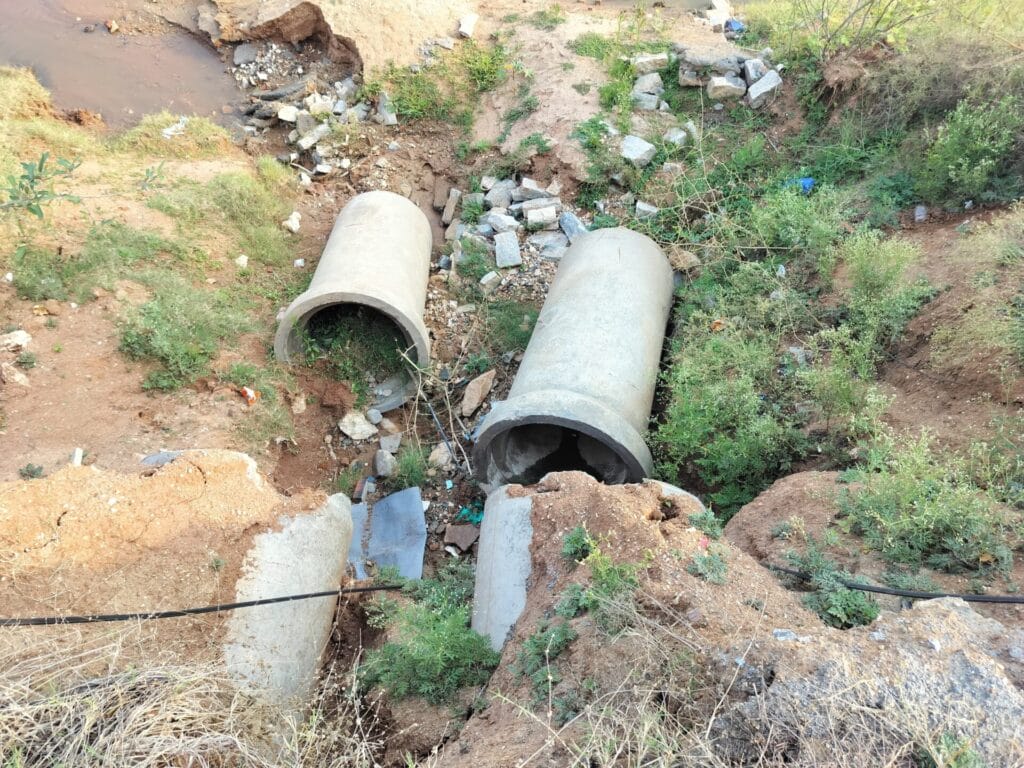
The KTCDA Act lays out a strong framework for protecting lakes, including those under panchayats. It emphasises controlling water quality, mapping lake boundaries, and securing feeder drains (stormwater drains). Publicly mapping lakes on platforms like Google Maps or OpenStreetMap can help make encroachments visible, empowering citizens to act. The Act even includes the management of feeder drains, acknowledging that lake health depends on controlling what enters upstream.
Despite having this framework, the Act is only on paper; its implementation is severely lacking across the state, especially in rural areas.
What is currently lacking
Panchayats are the custodians of lakes outside BBMP limits. What is lacking in their governance model when it comes to lake maintenance?
The biggest gap is the absence of a proper lake inventory. In many rural areas, there’s no master list of lakes—no coordinates, or delineation of lake boundaries and buffer zones.
Even within the BBMP area, agencies couldn’t produce a unified list when asked by the Karnataka High Court. If that’s the case in the capital city of the state, the situation in remote rural areas is bound to be far worse.
I was part of a project with Ashoka Trust for Research in Ecology and the Environment (ATREE), where we digitised lakes from old village maps. The process was difficult because the maps were in poor condition—faded, unclear, and unreadable in parts. That’s why we recommended local ground-truthing. People on the ground validate and confirm the actual boundaries, which is followed by a formal survey.
Another problem is that the lakes are not officially recognised as assets that serve a specific purpose. When projects like the Bengaluru–Mysuru highway cut through lakes, not a single panchayat objected—because these lakes weren’t even on their radar. They were seen as rain-fed lowlands, not water bodies with ecological or legal value.
Read more: Floods, faith, and civic action: Two Chennai lakes, one struggle for survival
Is there any institutional mechanism in place to monitor lake rejuvenation in panchayat areas? If not, what should ideally exist?
For an institutional mechanism, we can look at the National Environment Policy (NEP) for inspiration, which recognises lakes as entities of incomparable value. However, the trail stops there: No central, state, or local law converts these principles into mandates for government agencies or local bodies.
As a result, there is no institutional mechanism in place to monitor lake management or rejuvenation in panchayat areas. Governance is fragmented, and decisions are taken in an ad hoc manner without a guiding framework.
A framework is being developed under WELL Labs, which proposes a structured approach for lake rejuvenation that can be adopted for lakes in both rural and urban areas. It recommends that decisions be based on comprehensive data—catchment mapping, local ground-truthing, stakeholder inputs, and publicly available records. This framework ensures that every factor affecting the lake is accounted for, but it’s still under review. Even after this framework is released, it would serve as a guideline, and not a mandate, for the local bodies and departments.
Unscientific rejuvenation
Rejuvenation of many lakes, especially in panchayat areas, is carried out without proper DPRs or ecological assessment. Why is this a problem, and what could be the consequences?
This is a major issue across both rural and urban areas. Most DPRs are made by civil engineers with no ecological expertise. They are made with a focus on the lake, and not the ecology of the terrain. As a result, most DPRs are copy-and-paste jobs; they do not address the unique ecological issues of each particular lake.
Instead, rejuvenation becomes an exercise of sprucing up the social zone of the lake, such as adding walking paths, gardens, children’s park, gazebos, amphitheatres, etc. For the lake body, there is the standard bowl-like structure to store water, which ignores the lake’s ecological role, biodiversity, bird habitats, flood control, etc.
We are fortunate to be right in the middle of the Asian Flyway, a major migratory route for birds coming from Siberia. But when our lakes fail to offer good habitats, fewer and fewer birds make the journey.
Urban areas at least have some budget and staff, but even there, ecologists are rarely part of the team. So most of the funds are wasted in beautification of the area around the lake, not in taking care of the water body.
In comparison, in rural areas, there is hardly any funding at all, and the idea of lakes as ecosystems doesn’t even enter the conversation.
What should NGOs and corporate CSR teams consider when selecting and rejuvenating lakes, and what guidelines must they follow?
Unfortunately, because there are no strict guidelines yet, NGOs and CSR teams often proceed with a patchwork approach, focusing only on the lake in isolation, ignoring feeder drains, sewage flows, or catchment-level issues.
We have placed a framework in the public domain, which seeks to change all that.
Once it is finalised and adopted, all rejuvenation efforts, including public, private, or civil society-driven, should follow it.
- Instead of diverting polluted water coming from upstream around the lake, it should be treated and then allowed to enter the lake.
- A rejuvenation plan must begin with a baseline ecological assessment and a catchment-level DPR (Detailed Project Report).
- Treat the lake as an ecological system, not a park. That means addressing habitat, biodiversity, water quality, and resilience—not just planting trees and placing street furniture for the visitors.
Read more: Saving Bengaluru’s lakes: How citizen audits protect ecosystem assets
Governance reforms for better management
What kind of reforms are needed for better governance of the panchayat lakes?
Lakes are part of larger water systems and depend on feeder drains, sewage networks, and treatment plants. However, the officials responsible for lakes often have no control over the quality or source of incoming water. Adding to this is the lack of accountability; no agency is tracking lake water quality targets or ecological restoration outcomes.
Water and lake governance is fragmented and siloed. Even within BBMP, departments like BBMP’s stormwater drains (SWD) division and the lake division do not coordinate.
This disconnect is even worse across rural–urban boundaries. BBMP and the panchayats in the surrounding areas do not coordinate the water-related planning and execution.
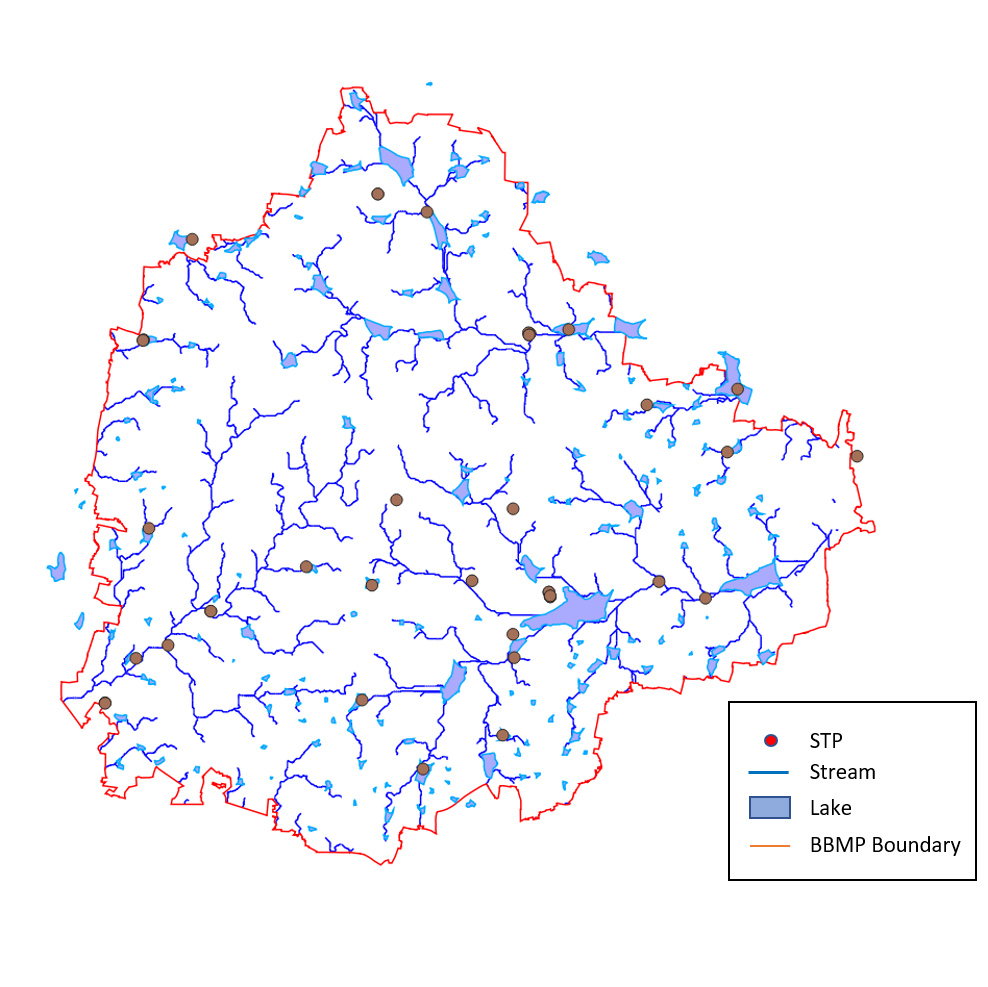
What’s needed is a nodal regional water governance authority based on the principles of Integrated Water Resource Management (IWRM) in rural areas, and the Integrated Urban Water Management (IUWM) in urban areas. This body should manage all assets in the water system: STPs, ETPs, sewerage network, lakes, wetlands, and drainage as part of an integrated system, not as isolated parts. It should have independent planning powers, dedicated funding, and a multidisciplinary team including ecologists, not just civil engineers.
Most importantly, we need measurable goals. For example, all of Bengaluru’s lakes are currently in “D” and “E” categories for water quality, but we do not have any plans and timelines to move them to better grades like “C” or “B”. The same criteria apply to the rural areas also. Without this kind of coordinated, data-driven, outcome-focused planning, lake governance, especially in panchayat areas, will continue to fail.
Active citizen engagement
What role can citizens play in protecting and monitoring lakes?
At present, the role of citizens in protecting and monitoring lakes is extremely limited. Even when people try to intervene or raise concerns, they find themselves entangled in a web of unaccountable departments. In many cases, the department just cites the lack of funds, and shrugs off its accountability, or points to another department.
That’s why we argue for a single accountable authority for all water-related issues, so this blame game ends. This should be a top-down approach, the authority must first build transparency, open communication channels, and involve citizens as part of the larger plan.
Citizens should be involved in lake management. People can assist in monitoring, feedback, and maintenance.
There have been initiatives like the Lake Vision Document, where citizens were invited to provide input. This is a small beginning. We need statutes and bye-laws that define citizen roles and institutionalise them.
We need a real fast mapping of all the current lakes to ensure that they are not being encroached.(GBA) The major cause of urban flooding is the vanishing lakes and the apathy of government departments in protecting them.