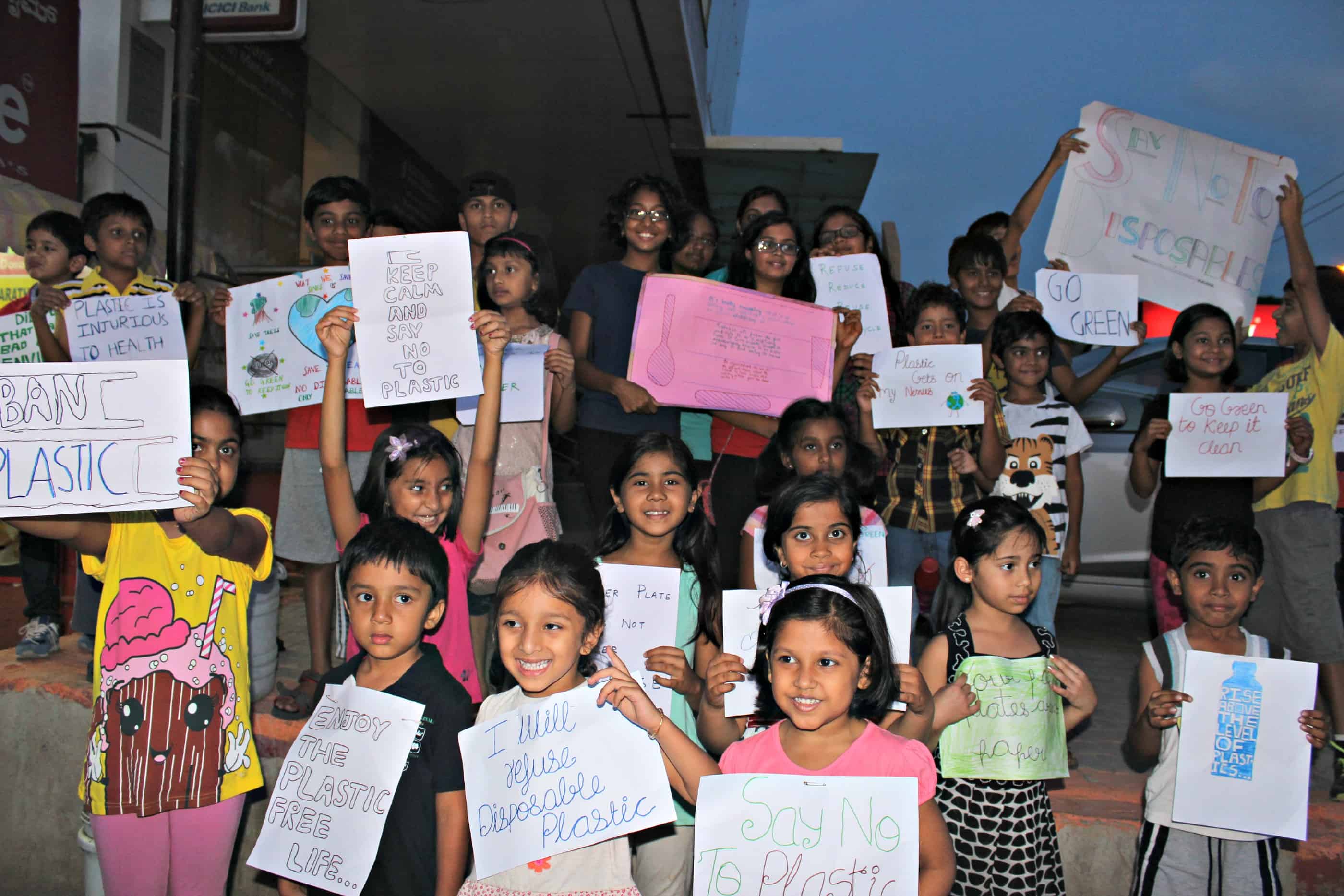
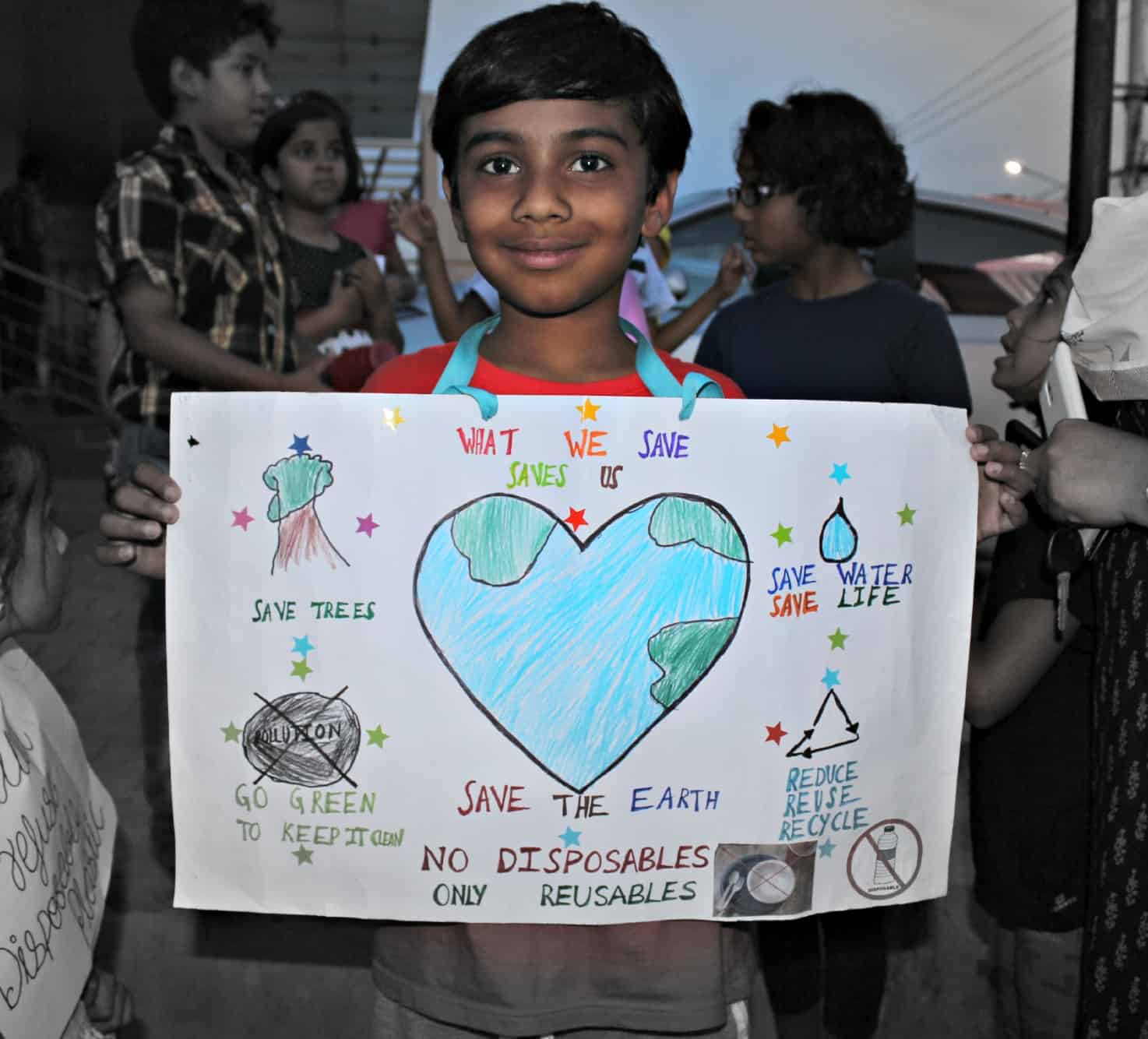
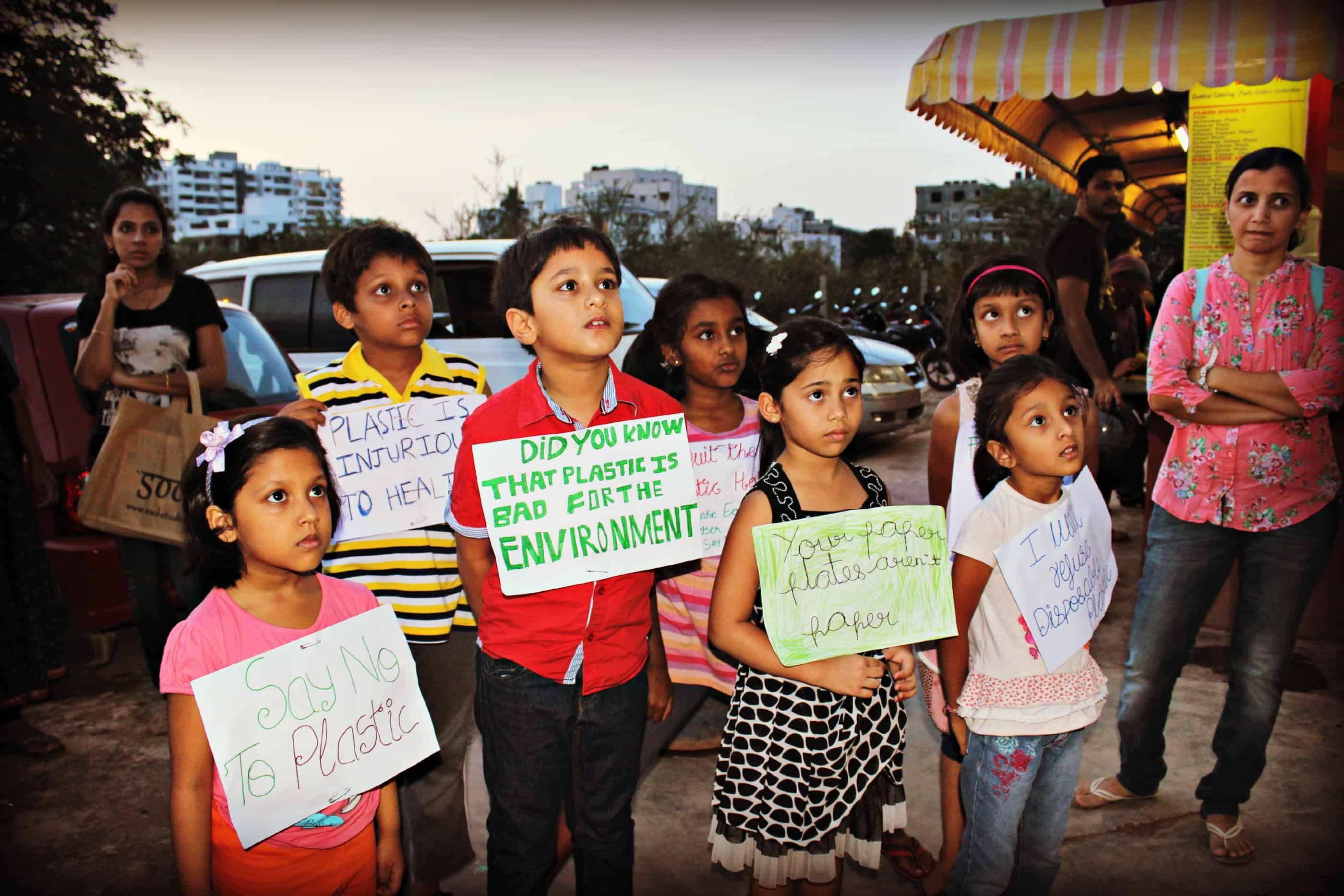
On April 24th, 40 children from the Sarjapur road area, along with volunteers from Kasa Mukta Bellandur (KMB), took to the streets to educate eatery joint owners about the hazards of serving food in disposable plates, encouraging them to adopt eco-friendly alternatives instead.
$(document).ready(function(){ $(‘.carousel .carousel-inner .item’).first().attr(‘class’, ‘active item’);});
Everyone is aware about the impact of the usage of plastic and the kind of imbalance it is causes. Indeed, pollution of the environment by chemicals leached from plastics into air and water is an emerging area of concern. The convenience of using plastics and disposable items makes it addictive, and as a result, we are neglecting its harmful effects which affect our life.
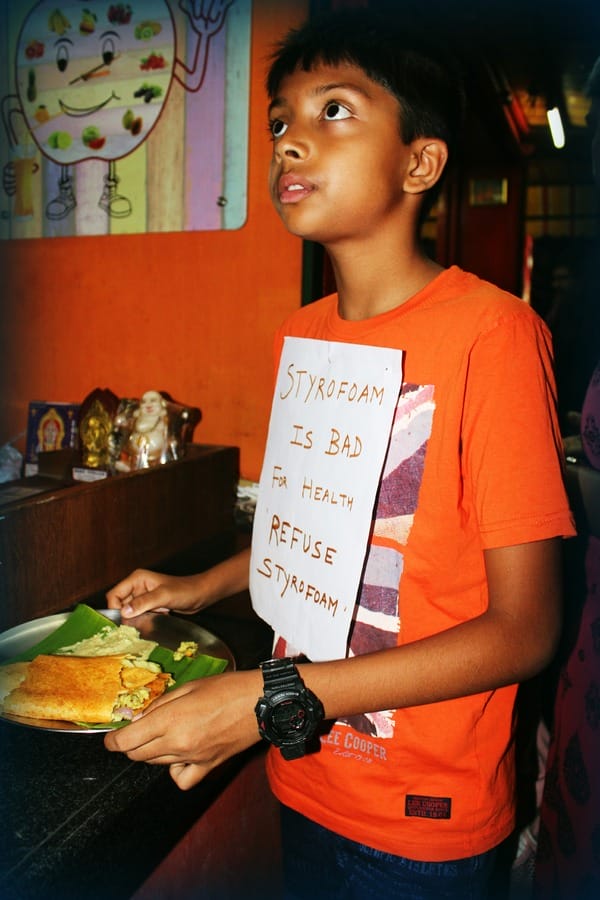
Do you know what is used to make disposable cups? The cups are made of polystyrene which contains a harmful chemical compound called styrene. This constituent makes polystyrene dangerous and its usage hazardous to human health and to nature. It contaminates even the food that is stored in it and also causes bacterial infection, gastro problems and skin allergies. Studies have even proved that its usage causes cancer. In spite of these effects, polystyrene disposable items continue to be widely used for coffee mugs, egg cartons, salad containers, plates and trays.
“Our initiative is to create awareness among people about the harmful effects of styrofoam. Collectively, we as responsible consumers, should ask for safe alternatives for our environment and our health.”
– Neetu, KMB volunteer
Dropped on the ground, thrown out of a car window, heaped onto an already full rubbish bin, or inadvertently carried off by a gust of wind, they immediately begin to pollute the environment. Indeed, landscapes littered by plastic packaging have become common in many parts of the world.
We, the children of Sarjapur road, are raising our voice against the usage of plastic and disposables, so that our echo may shape a better tomorrow.
Pic: Sujatha
We gathered at a nearby eating joint where we ordered and ate from steel plates with banana leaves, giving a clear message to the owners that consumers were aware and want change. We communicated the same to the shop owners and requested them to switch to eco-friendly products and/or steel plates. The shop owners were very receptive and have promised to look into these options.
We also shouted the slogans ‘Say no to plastic’ and ‘Say no to disposables’ to call attention to our cause. Every consumer who was eating from styrofoam plates was educated about its harmful effects and urged to demand for eco-friendly options of cutlery from such eating joints. A formal letter with our request was handed over to the shop owners.
The use of plastic bags and disposables is a major hurdle to clean up the city. Hence, we have joined hands together to fight the battle against this non-degradable menace.
Everyone prefers convenience, but changing our habits and taking the responsibility of refusing to use plastic bags and disposable items will make this world green.
We, the children of Sarjapur road, therefore urge all citizens of Bangalore to boycott the usage of plastic and disposable items.
Related Articles
Children pave the way for a plastic-free Bengaluru
Anti-litter campaign by JP Nagar students
Trash mob by Kumaran’s Children’s home students cleans the streets
Students clear black spots at HSR BDA complex