Part 2: The cluster of the ‘plant-detritus-eating darkling’ beetles
Lesson learnt: Never forget to get your tiled roof cleaned annually especially when you live under trees, which shed leaves and flowers that get sticky as they rot.
We considered ourselves lucky to live in a home whose frontage was shaded by mature social forestry trees, mainly West Indian mahoganies and Pongamia (Indian beech). The trees managed to survive their initial perilous years of existence and now the parking spots in front of our home are hotly contested. Auto and cab drivers seem to have telepathically passed the word around that this is a good spot to park their vehicles and take a nap. Whenever our car is not parked outside, it’s inevitable to see one or two such vehicles. Little did we know that a few years down the line we would rue the welcome shade of the trees for other reasons.
Some years ago, the monsoon rains just wouldn’t end. It rained through May, June, July and August and carried on through September. Normally, we celebrate the rains but that year we needed the rains to stop as we had missed the cleaning cycle for our tiled roof over the summer. We foolishly thought we had May and frankly, we were tired. The actual cleaning of the tiles, which took about 1–2 hours, involved a lot of back and forth.
Read more: My family and other insects: The perils of ecological living
Someone had to come to North Bangalore, from a village near Kanakapura, to clean the roof tiles. It had to be someone, who was comfortable climbing Mangalore-tiled roofs and wouldn’t break either limbs or tiles in the process! This necessitated some skill. The story behind finding the right replacement tiles is another adventure waiting to be told. The problem in brief is that with Standard Tiles in Yelahanka shutting down, the particular type of double-groove tile we have on our roof is not available, for either love or money, as the saying goes.
Dealing with a home invasion
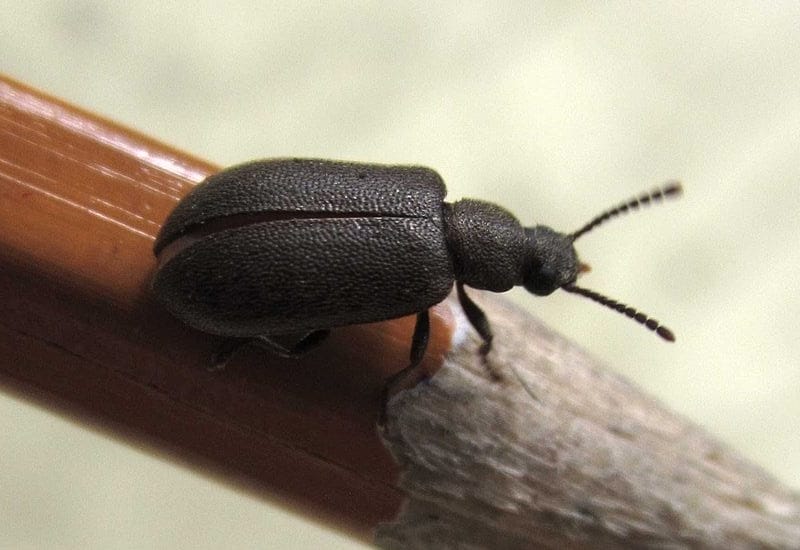
Come mid-September, my husband and daughter, then in kindergarten, felt something biting them at night. It was neither mosquitoes nor ants for we couldn’t hear the former or see the latter. We didn’t have a cot, as I didn’t believe in them, or sofas or chairs and the rest of the family suffered through my preference! Finally one night, my husband managed to squish something as it was biting him. We switched the lights on, to see a black insect in his palm. For a second, I thought we were harbouring crazy-sized bed bugs or ticks.
Once I calmed down, I realised it was a small beetle. We didn’t know till then that beetles could bite or sting and as we found out later, they don’t. Rather, they produce a secretion that irritates the skin. We ignored that beetle but every day we found a few more, on the cane curtains, the bed covers, and the diwan. They were pretty much invisible on our black slate flooring till our feet squished them.
Days turned to weeks and it was beetles wherever we turned, teeny ones, mid-size ones and large ones. Of course, it didn’t occur to us to look up at our ceiling for that’s where they were falling from; from the tiny gaps between the underside clay tiles. We called pest control, asked friends working in the natural sciences, researched online, and sent pictures of the beetle to various people…but to no avail. I finally stumbled on an article online, which discussed the menace of the darkling beetles in rural Kerala and how they were proving extremely hard to get rid of. Their name sounded ominous too, ‘plant-detritus-eating darkling beetles’, like some alien species.
Read more: Pongal Bird Count: What winged friends teach us amidst the urban chaos
Reining in the darkling beetles
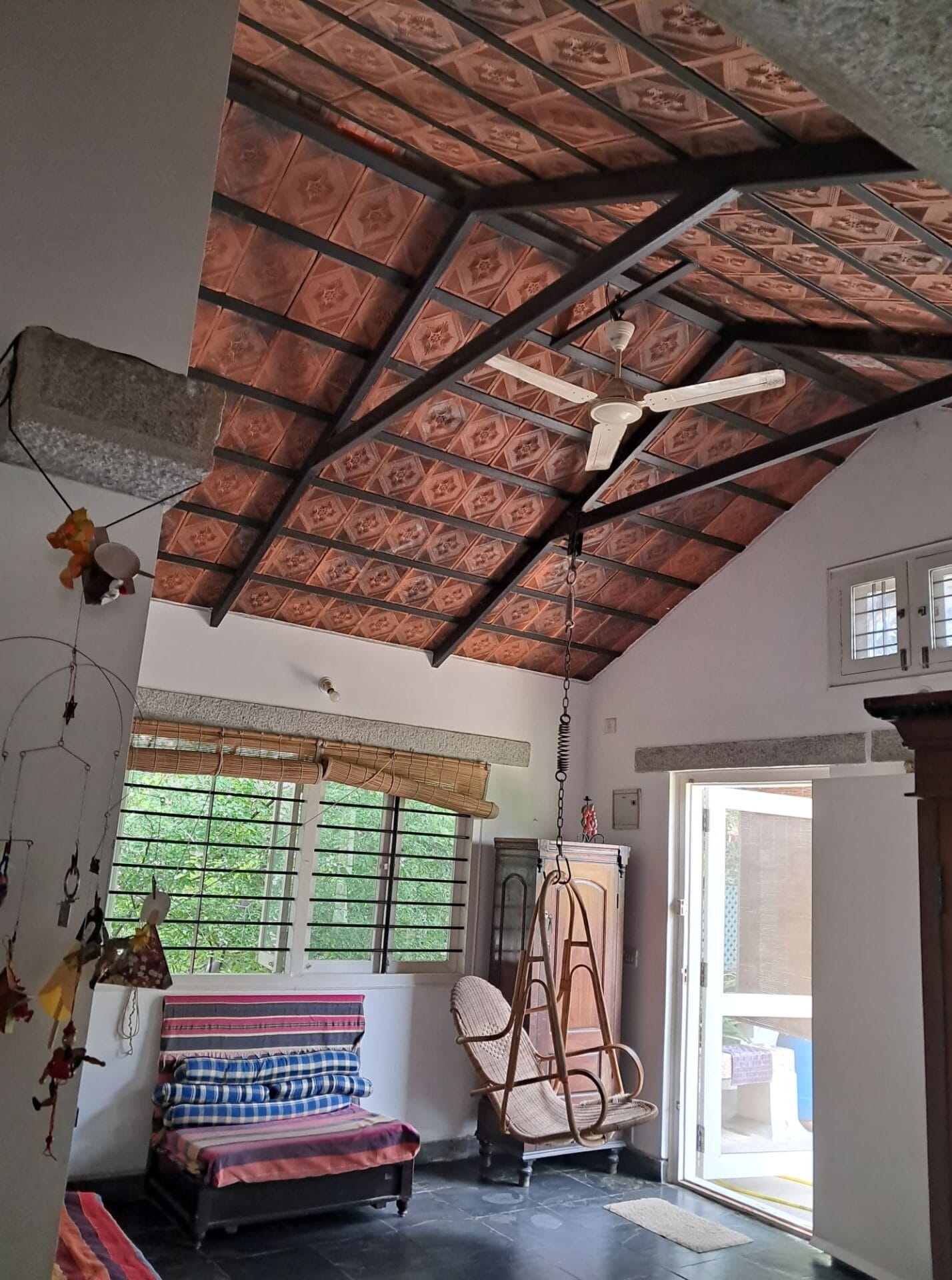
Turns out they love rotting leaves, they thrive on them. And, the various nooks, crevices, ridges and valleys of our tiled roof were beetle haven that year, especially with the top layer of leaf buffet laid on. The story didn’t end with us clearing kilograms of nitrogen-rich leaf compost from our roof later that year. Oh no, that would have been too easy.
These creatures had moved into the gaps between the roof and underside tiles, so the next year the heavens (I mean our ceiling) sent us another rain of beetles. After much trial and error, including smoking our home (with wood smoke), we tried a mix of kerosene and an organic compound whose run-off wouldn’t damage the ecology. Our go-to tile man from Kanakapura had to make regular visits to apply the mix on top of our tiles. Thankfully, the beetle rain decreased the next year and the year after.
Now, we are at the stage, where our daughter nonchalantly remarks about the not-so-welcome yet regular seasonal house guests, whose numbers are now somewhat manageable — “The Muplis (as they are more commonly called after the place that first suffered their menace) are back.” To make life more exciting, during the peak of the beetle rain, we were forced to relocate from our summer quarters to our winter ones. By which I mean we moved from the cooler tiled-roof half of the house to the warmer clay-block-vaulted half, which thankfully remains beetle-free.