Given the current garbage situation in Bangalore, it is interesting to take note of the future generation’s perspectives on the same. Around 2,000 civic club members from CMCA (Children’s Movement for Civic Awareness) voiced their opinion on the whole issue and students from 50 schools signed and submitted a memorandum to Shankarlinge Gowda, the then commissioner of Bruhat Bangalore Mahanagara Palike (BBMP), on August 3rd.
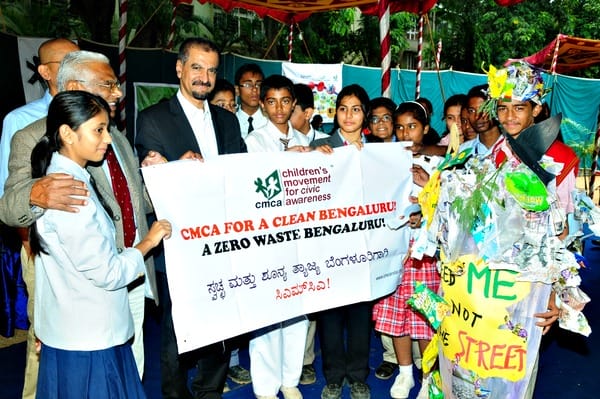
CMCA civic club children handing over the memorandum to the then BBMP Commissioner Shankarlinge Gowda. Pic: CMCA
A few of the schools that took part in the drive are Sacred Heart Girls High School, Army Public School, St Josephs Boys High School, Prasiddhi School, Baldwin Boys High School, St Josephs Indian High School, St Aloysius Boys High School, Frank Anthony Public School and Delhi Public School.
They made a fervent appeal to the Bruhat Bengaluru Mahanagara Palike to implement an effective solid waste management system for Bengaluru by:
- Making waste segregation in homes, medical and commercial establishments compulsory.
- Completely banning the use of plastic bags in the city.
- Introducing effective systems to ensure E-Waste and toxic waste is collected and disposed safely.
- Creating scientific landfills that don’t pollute and poison our own environment and that of surrounding villages, threatening our right to health and life.
- Ensuring greater transparency in awarding and implementing garbage removal and disposal contracts.
- Ensuring that contractors collect and dispose our waste as per rules and law.
- Ensuring Pourakarmikas employed by garbage contractors are secured of minimum wages and safe working conditions.
- Launching a massive and sustained public education drive in Bangalore to ensure citizens stop littering the streets and start segregating waste in their homes.
The children promised to stop the complete usage of polythene bags and littering. They also said that they would educate others around them to be sensitive to the problems and conditions of Pourakarmikas and treat them with respect and dignity.
CMCA is a 12 year old civil society organisation which runs an innovative civic club program across 6 cities and villages in Karnataka, to inculcate civic and democratic values in children. For more details visit www.cmcaindia.org⊕